

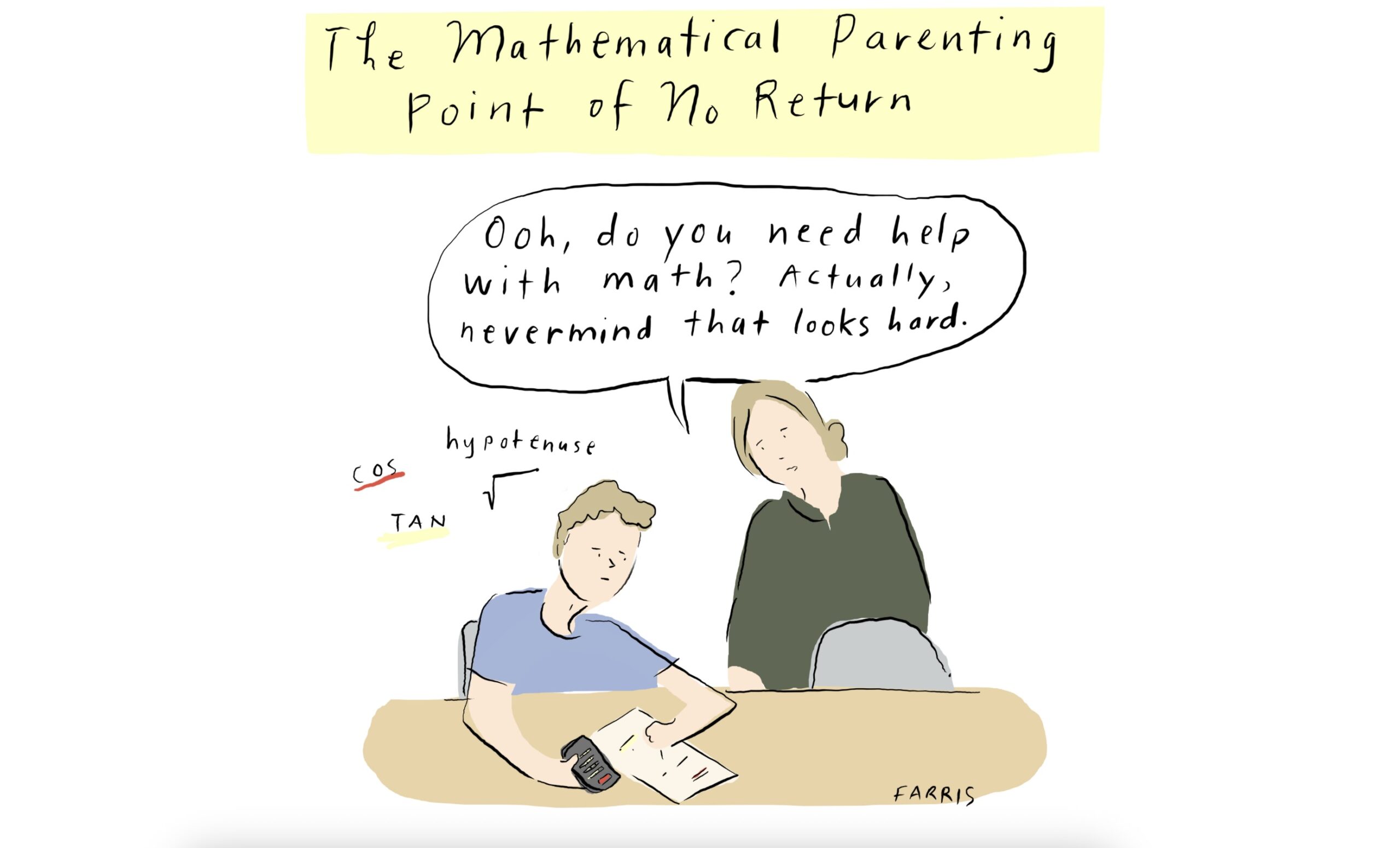
The Evolution of Parental Involvement in Mathematics Education and the Impact of Modern Pedagogical Shifts on the American Household has become a central point of discourse among educators, developmental psychologists, and families as the complexity of K-12 curricula continues to advance beyond the traditional foundational knowledge of previous generations. This phenomenon, often colloquially referred to as the "mathematical point of no return," describes the specific juncture in a child’s academic trajectory where the complexity of the subject matter—ranging from abstract algebra to trigonometric functions—surpasses the functional memory or educational background of the parents. While parental involvement has long been cited as a primary indicator of student success, the shifting landscape of "New Math" and Common Core standards has created a unique friction point in the domestic sphere, fundamentally altering how families interact with academic challenges.
The Intersection of Pedagogy and Parental Competence
For decades, the primary role of a parent in mathematics homework was one of reinforcement through rote memorization and algorithmic repetition. However, the transition toward conceptual understanding over procedural fluency has left many parents feeling disenfranchised. According to data from the National Center for Education Statistics (NCES), while over 80% of parents of elementary school students report feeling "very confident" helping with homework, that number drops precipitously to below 40% by the time students enter high school.
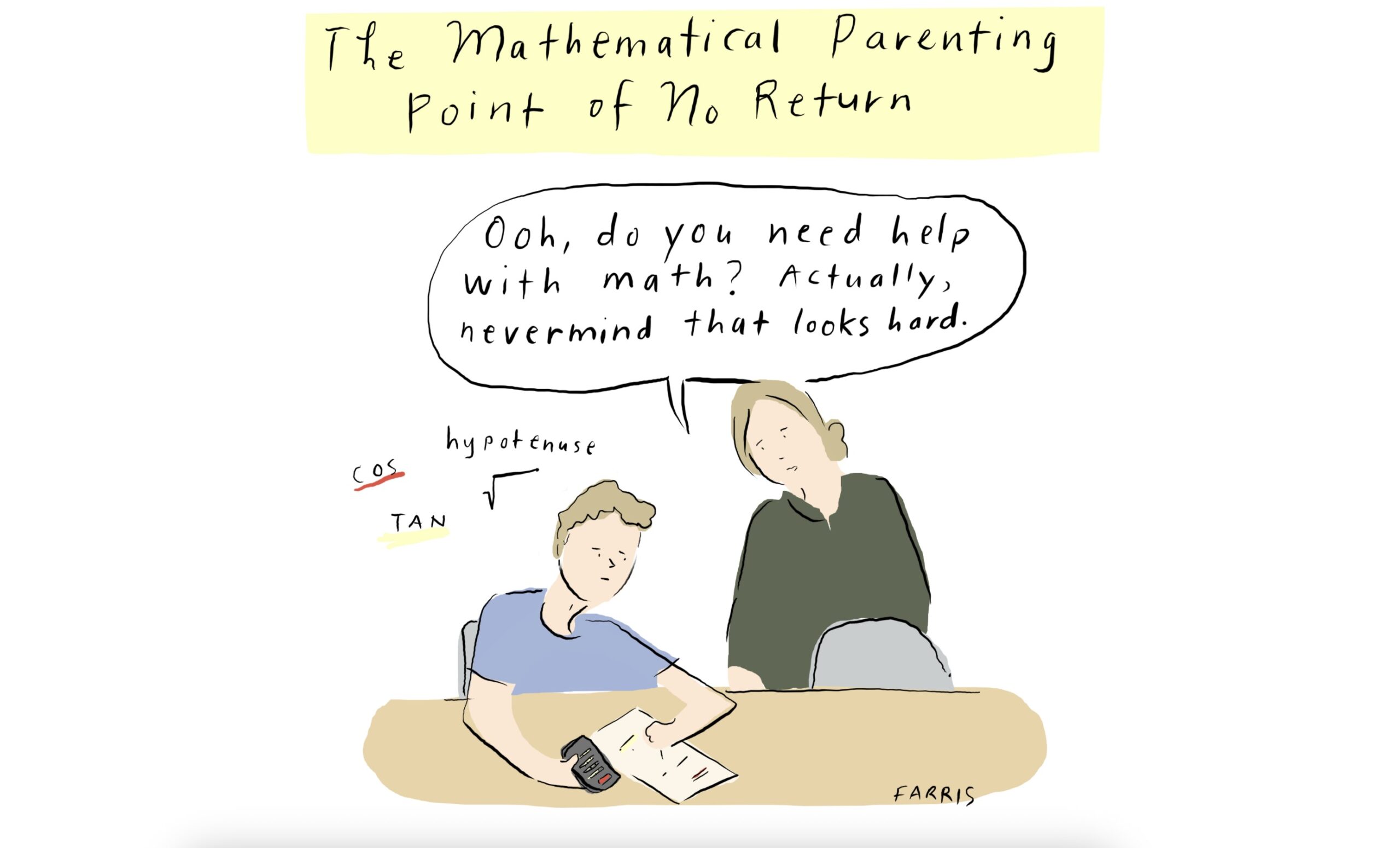
The modern curriculum emphasizes the "why" behind mathematical operations rather than just the "how." For instance, where a parent might have learned to "carry the one" in a traditional addition problem, a contemporary student might be required to use "partial sums" or "number bonds" to demonstrate a deeper grasp of base-ten logic. This divergence often leads to what sociologists call "educational dissonance," where the parent’s attempt to assist is met with the student’s insistence that the method is "wrong," even if the final answer is correct. This tension was recently highlighted in a viral cultural commentary by Dr. Grace Farris, whose work underscores the vulnerability parents face when confronted with their own academic limitations in the face of their children’s growth.
Chronology of the Mathematical Shift: From Sputnik to Common Core
The evolution of mathematics education in the United States has moved through several distinct eras, each leaving a different "math thumbprint" on the parents of today.
- The Post-Sputnik Era (1950s–1960s): Following the launch of the Soviet satellite, the U.S. introduced "New Math," which focused on set theory and modular arithmetic. Parents of this era were the first to experience the gap between their own schooling and their children’s abstract curricula.
- The "Back to Basics" Movement (1970s–1980s): A reaction to the perceived failures of New Math, this era returned to drills, multiplication tables, and standardized algorithms. Many of today’s Gen X and older Millennial parents were educated in this environment, prioritizing speed and accuracy over conceptual theory.
- The Standards-Based Reform (1990s–2000s): Introduced by the National Council of Teachers of Mathematics (NCTM), this period began the shift back toward problem-solving and communication in math.
- The Common Core State Standards Initiative (2010–Present): This era formalized the requirement for students to understand multiple pathways to a solution. It is this specific shift that has caused the most significant hurdle for parents who were trained in a single-methodology system.
Gender Stereotypes and the "Math Anxiety" Cycle
A critical component of the dialogue surrounding parental math assistance is the persistence of gendered stereotypes. Research published in the journal Psychological Science suggests that "math anxiety" can be contagious. When parents—particularly mothers, who historically bear a disproportionate share of the "homework load"—express a lack of confidence in mathematics, it can negatively impact their children’s achievement and self-perception of ability.

However, modern discourse is beginning to challenge the "bad at math" narrative. Professional women, including those in high-level medical and scientific fields, have begun to speak out against the cultural trope that women are inherently less capable in STEM (Science, Technology, Engineering, and Mathematics). The emergence of the "growth mindset" philosophy, pioneered by psychologist Carol Dweck, encourages parents to model curiosity rather than frustration. By viewing a difficult calculus problem not as a personal failure but as a "fun puzzle" or a "playful inquiry," parents can mitigate the transfer of anxiety.
Supporting Data: The Economic and Social Impact of the Homework Gap
The inability of parents to provide high-level math support has significant socioeconomic implications. Families with higher disposable income often bridge this "competence gap" by hiring private tutors or enrolling children in supplemental programs such as Kumon or Mathnasium. According to market research, the private tutoring market in the U.S. is projected to grow by over $7 billion by 2026, driven largely by parental anxiety over STEM subjects.
For families without these resources, the "point of no return" can lead to a widening achievement gap. Data from the Pew Research Center indicates that students from lower-income households are less likely to have a parent who can assist with advanced mathematics, placing a heavier burden on the school system to provide equitable after-school support. This has led many school districts to implement "Parent Math Nights" and digital resource portals—such as recorded teacher lectures on Google Classroom—to "tutor the tutor" and bring parents up to speed on modern methodologies.

Case Studies: Adaptive Strategies in the Modern Home
The response to this educational hurdle varies widely among parents, revealing a spectrum of adaptive strategies:
- The Re-Learner: Some parents view their children’s education as a second chance to master the subject. Instances of parents returning to college to earn degrees in mathematics specifically to support their children’s academic journeys highlight a radical commitment to educational equity within the home.
- The Digital Navigator: With the rise of Khan Academy, Photomath, and YouTube educators, many parents have shifted their role from "instructor" to "resource curator." In this model, the parent does not need to know the answer but must know how to help the child find a reliable source for the explanation.
- The Specialized Household: In dual-parent households, there is often a tactical division of labor. One parent may handle humanities and social sciences, while the "designated math parent"—often an engineer or accountant—takes over when the curriculum reaches trigonometry or physics. However, as noted by many families, even the "expert" parent eventually reaches a limit when confronted with graduate-level theory or highly specific modern pedagogical techniques.
Official Responses and Educational Analysis
Educational experts argue that the parental "point of no return" is not necessarily a negative milestone. Dr. Jo Boaler, a professor of mathematics education at Stanford University, suggests that the most effective way for parents to help is not by providing answers, but by asking "productive questions." Questions such as "How do you know that is true?" or "Can you explain your thinking to me?" allow the student to take the lead, reinforcing their own understanding through teaching.
Furthermore, the integration of technology in the classroom has provided a safety net for parents. The use of Learning Management Systems (LMS) allows parents to view the same instructional materials as the students. This transparency is designed to reduce the "homework wars" by ensuring that the language used at home aligns with the language used in the classroom.

Implications for the Future of STEM Literacy
As the global economy becomes increasingly dependent on data science, artificial intelligence, and engineering, the pressure on the K-12 math pipeline has never been higher. The "mathematical point of no return" is a symptom of a more rigorous and necessary academic standard. While it creates temporary discomfort for parents, it also signifies that the next generation is being equipped with tools that surpass those of their predecessors.
The broader implication is a shift in the definition of "parental support." In the 21st century, being an "involved parent" in education may no longer mean being a subject matter expert. Instead, it involves fostering a resilient environment where "not knowing" is seen as the first step in the learning process. By deconstructing the stigma of being "bad at math" and embracing the collaborative nature of modern education, parents can help their children navigate the complexities of a high-tech future, even if they can no longer solve the equations themselves.
In conclusion, the evolution of mathematics education has effectively moved the "goalposts" for parental assistance. While the transition from being a child’s primary teacher to a fellow learner can be humbling, it provides a unique opportunity for families to model lifelong learning. As curricula continue to advance, the focus will likely remain on bridging the gap between classroom innovation and domestic support, ensuring that the "point of no return" becomes a milestone of progress rather than a barrier to success.