

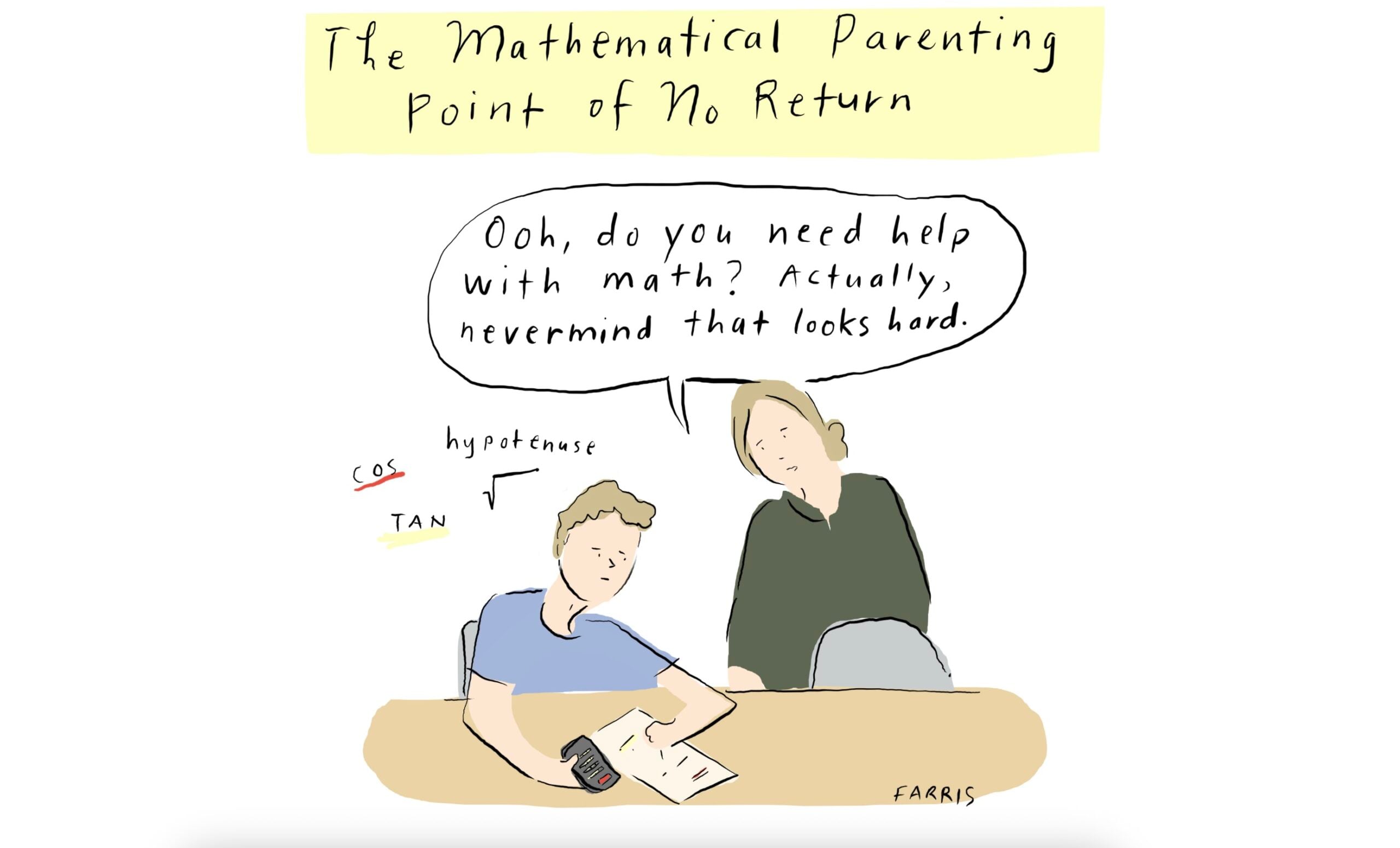
The landscape of American mathematics education has undergone a seismic shift over the last two decades, creating a complex dynamic between students, educators, and parents. This evolution is defined not only by changes in curriculum—frequently categorized under the umbrella of "New Math" or Common Core standards—but also by a shifting philosophy regarding parental involvement and the psychological impact of mathematical "mindsets." As students progress through increasingly rigorous STEM (Science, Technology, Engineering, and Mathematics) tracks, many parents find themselves reaching a "mathematical point of no return," where the complexity of the subject matter exceeds their own recollection or professional expertise. This phenomenon has sparked a national dialogue among educators and families concerning the role of the home environment in fostering mathematical literacy and the long-term implications of parental attitudes toward the subject.
The Paradigm Shift in Pedagogy and Parental Roles
For much of the 20th century, mathematics education in the United States focused heavily on the linear acquisition of skills, rote memorization of formulas, and the speed of calculation. However, contemporary pedagogical approaches, championed by figures such as Denise Gaskins and Jo Boaler of Stanford University, emphasize a more conceptual and playful engagement with the subject. Gaskins, an author and educator, posits that mathematics should be viewed as a series of puzzles to be explored rather than a rigid ladder of skills to be climbed. This shift from "answer-getting" to "problem-solving" has fundamentally changed how homework is structured and how parents are expected to interact with it.
Historically, parental involvement in homework was often minimal. Data from the early 2000s suggests that many parents in previous generations were only peripherally involved in daily assignments. Today, however, the expectations vary wildly depending on district policy and socioeconomic factors. Some school districts have moved away from routine elementary homework entirely, focusing instead on "scaffolded" projects that require parental facilitation. Others maintain high-volume workloads that necessitate hours of nightly supervision. This variance has created a divide in the parental experience, with some acting as "project managers" and others as "co-learners" who must re-educate themselves alongside their children.
The Point of No Return: When Students Surpass Parents
A recurring theme in the modern educational experience is the moment a child’s curriculum surpasses the parent’s comfort zone. This "point of no return" is not limited to parents who struggled with mathematics in their youth; even professionals in finance, engineering, and the hard sciences report moments of humility when faced with their children’s higher-level coursework.
In a notable trend within collegiate-level STEM education, students are increasingly entering advanced placement tracks that introduce concepts like multivariable calculus and linear algebra earlier than previous generations. This acceleration often leads to a role reversal within the household. For instance, an engineer who served as the primary math resource for their children during middle school may find themselves "surpassed" by a daughter or son in a "Calculus 5" or advanced differential equations course. While this transition can be a source of parental pride, it also highlights the necessity for external resources, such as peer tutoring, online modules, and specialized instructors, to fill the gap left when parental expertise is exhausted.
The Gendered Discourse and the Myth of the "Math Person"
One of the most contentious aspects of the current dialogue surrounding mathematics is the persistence of gendered stereotypes. Sociological research has long documented a trend in which women are more likely than men to self-identify as being "bad at math." Educators warn that these admissions, even when intended as self-deprecating humor or honest reflection, can have a detrimental effect on children—particularly daughters.
A landmark study from the University of Chicago on "parental math anxiety" revealed that when parents who are anxious about math help their children with homework, their children learn significantly less math over the school year and develop their own anxieties toward the subject. This suggests that the attitude a parent projects is often more influential than their actual proficiency.
Professional mathematicians and educators are increasingly calling for an end to the "math person" myth. They argue that mathematics, much like reading or music, is a skill that can be developed through persistence rather than an innate talent one is either born with or lacks. The culture of saying it is "cute" to be bad at math is being challenged by a new generation of female mathematicians and scientists who emphasize that mathematics is a beautiful, elegant, and—most importantly—accessible field for everyone.
Chronology of the Homework Evolution (2000–2026)
To understand the current state of mathematical parenting, it is essential to look at the timeline of educational shifts over the last quarter-century:
- 2000–2010: Traditional algorithms remain the dominant form of instruction. Parental involvement is largely focused on checking answers and ensuring the memorization of multiplication tables.
- 2010–2015: The widespread adoption of Common Core State Standards introduces "New Math" techniques, such as number bonds and area models. This creates significant friction as parents struggle to help with methods they did not learn themselves.
- 2015–2020: The rise of digital platforms like Google Classroom and Khan Academy begins to shift the burden of instruction away from the parent and toward online resources. "Playful math" movements gain traction in homeschooling and supplemental education circles.
- 2020–2023: The COVID-19 pandemic forces parents into the role of primary facilitators of learning. This period exposes the "math anxiety" of many parents and highlights the disparities in home support systems.
- 2024–Present: A post-pandemic "rebalancing" occurs. Many schools reduce homework loads to focus on student well-being, while others double down on "rigor" to combat learning loss, further widening the gap in the parental experience.
Supporting Data: The Impact of Parental Engagement
Quantitative analysis of student performance underscores the importance of the home environment. According to data from the National Center for Education Statistics (NCES):
- Socioeconomic Correlation: Students whose parents have higher levels of educational attainment tend to perform better in mathematics, not necessarily because the parents "know the answers," but because they provide a structured environment and access to supplemental resources.
- The "Anxiety Gap": Students of parents with high math anxiety score, on average, 15% lower on standardized math assessments when those parents are heavily involved in homework help, compared to when they are not.
- Persistence in STEM: Students who report having "math-positive" role models at home are 3.5 times more likely to pursue a degree in a STEM field, regardless of their parents’ actual professional background.
Broader Impact and Implications for the Future
The implications of how we navigate mathematical parenting extend far beyond the kitchen table. As the global economy becomes increasingly data-driven, mathematical literacy is a primary gatekeeper for high-paying careers in technology, medicine, and environmental science.
The current debate suggests a need for a "middle ground" in parental involvement. Experts suggest that instead of trying to be the "expert" who provides solutions, parents should model the behavior of a "curious learner." This involves asking open-ended questions—such as "What would it mean to have half a solution to this equation?"—rather than focusing solely on the final numerical result. By embracing curiosity and playfulness, parents can foster a "growth mindset" in their children, ensuring they remain confident even when the subject matter becomes difficult.
Furthermore, the rise of "Bonus Aunts" and "speed-dial experts"—friends or family members with advanced degrees who can step in when a parent hits their limit—represents a new form of communal learning. This "village" approach to education allows children to see mathematics as a collaborative human endeavor rather than a solitary struggle.
In conclusion, the "mathematical point of no return" should not be viewed as a failure of parenting, but as a natural milestone in a child’s educational journey. As pedagogical methods continue to evolve, the most valuable gift a parent can provide is not a correct answer, but a resilient attitude toward challenge. By dismantling gendered stereotypes and embracing the "math is for everyone" philosophy, the next generation of students will be better equipped to view mathematics not as a hurdle to be cleared, but as a powerful tool for understanding the world.