

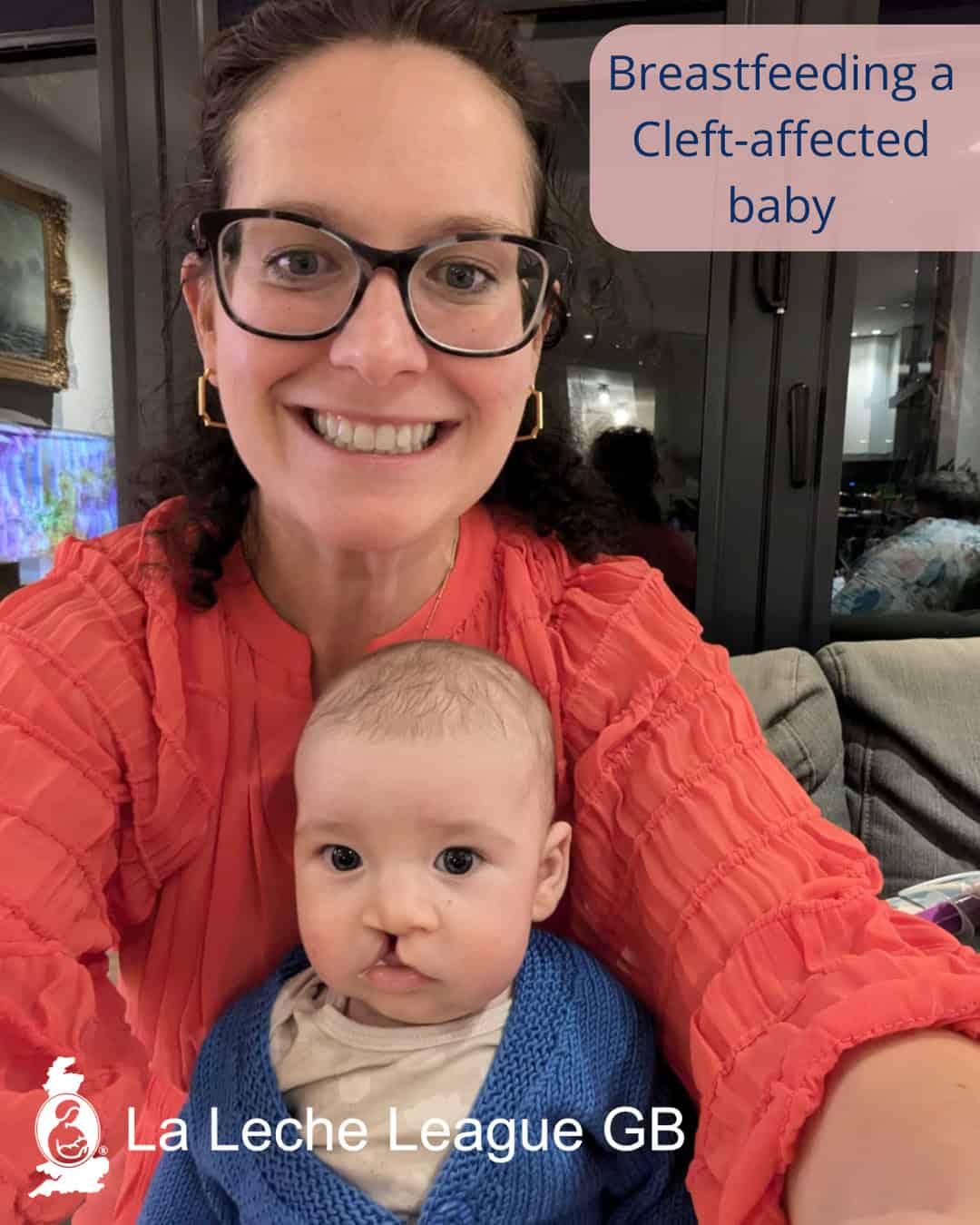
The journey of parenthood often presents unforeseen challenges, but for Sarah Muir-Little and her husband, the anticipation of their second child, Russell, was overshadowed by an antenatal diagnosis of cleft lip and palate. This discovery, made during a routine 20-week scan, initiated a determined quest to ensure their son could experience the benefits of breastfeeding, despite initial medical advice suggesting it would be impossible. Sarah’s story highlights the resilience required to navigate complex medical conditions, adapt conventional feeding methods, and advocate for personalized care in the face of established protocols.
Antenatal Diagnosis and Initial Prognosis
The initial weeks of Sarah’s pregnancy had already been emotionally taxing, with a close family member in intensive care. The 20-week scan, intended to be a moment of joyous discovery, delivered a dual revelation: the gender of their baby boy, followed by a stark medical pronouncement. The sonographer’s question, "Have you heard of a cleft lip?", quickly led to a midwife explaining that their baby’s condition, a cleft lip and palate, would likely preclude breastfeeding. This pronouncement marked the beginning of what Sarah describes as "our battle."
A cleft lip or palate occurs when the structures forming the baby’s upper lip or the roof of the mouth (palate) do not fully fuse during early fetal development. This congenital condition affects approximately 1 in every 700 babies globally, making it one of the most common birth differences. While babies with only a cleft lip can often breastfeed with some adaptations, those with a cleft palate face significant challenges because they cannot generate the necessary suction pressure to extract milk from the breast. Surgical repair is typically required before direct breastfeeding becomes a viable option for these infants. The Cleft Lip and Palate Association (CLAPA) in the UK provides extensive support and resources for families affected by cleft conditions, emphasizing a multidisciplinary approach to care.
For Sarah, who had recently weaned her toddler in preparation for nursing her new baby, the news was profoundly upsetting. Breastfeeding had been a cornerstone of her maternal identity, and the perceived loss of this experience with Russell evoked a deep sense of grief. However, a glimmer of hope emerged when a specialist nurse clarified that a "breastfeeding journey" was still possible, though it might differ significantly from her previous experience. The nurse explained that the full extent of the palate’s involvement would only be known after birth, but confirmed that if the palate was affected, the absence of suction would make direct breastfeeding challenging. She also outlined the necessity of multiple surgeries for Russell in his first year – one to repair the lip and another for the palate – with further procedures anticipated later in childhood.
Paving the Way: Research and Preparation for Adaptive Feeding
Undeterred by the initial prognosis, Sarah embarked on an intensive research effort. She meticulously scoured the websites of CLAPA and La Leche League International (LLLI), along with other reputable sources, searching for accounts of successful breastfeeding experiences following palate surgery. The findings, while limited, provided crucial insights: maintaining a sufficient milk supply and adapting feeding methods were paramount.
Sarah had successfully breastfed her toddler, indicating her capacity for milk production. However, traditional pumping had been inefficient for her, often yielding minimal milk and only from one side. She recalled painstakingly expressing small quantities by hand to build a freezer stash previously, a testament to her dedication. Armed with new knowledge and a heightened resolve, she believed she could meet Russell’s milk demands with improved pumping techniques.
The second critical component was adapting feeding methods. Her research pointed towards direct hand expression into the baby’s mouth or the use of nursing supplementers. The latter, involving a thin tube delivering milk to the baby while latched, seemed more practical for long-term feeding. In the UK market, two primary nursing supplementer systems are designed for cleft babies. One operates on gravity, providing a slow milk flow, while the other features a squeezable bottle for controlled milk delivery. Sarah acquired both systems for evaluation.
Initial trials with the supplementers presented their own set of difficulties. The gravity-fed system offered a flow too slow for effective feeding, while the squeezable bottle, though capable of delivering ample milk, proved awkward to hold. Conventional advice suggested the "dancer hold" for babies struggling with latch due to issues like low muscle tone or prematurity, where the index finger and thumb form a ‘U’ shape supporting the baby’s chin. Practicing this hold with a doll, however, felt unmanageable alongside the supplementer bottle. Neither system immediately resonated with Sarah as a viable solution.
Russell’s Arrival and Innovative Adaptations
Upon Russell’s birth, the immediate priority was to ensure he received vital colostrum. This was administered via syringe, with a finger simultaneously placed in his mouth to encourage sucking, while Sarah waited for her full milk supply to establish. The plan was then to introduce feeding at the breast with a supplementer. A serendipitous discovery occurred when some wrongly ordered syringes perfectly fitted the supplementer tube. The midwife team, supportive of Sarah’s efforts, provided larger syringes from the labour ward. With some ingenuity, Sarah drilled holes in the screw-on caps of these larger syringes, creating a snug fit for the supplementer tube. It is crucial, as safety guidelines emphasize, that any caps are removed when feeding colostrum directly with a syringe to prevent choking hazards, and feeding should be slow and monitored carefully.
The standard recommendations for supplementer use involve either introducing the tube after the baby has latched or taping it to the breast prior to latching, ensuring the baby takes both the breast and tube simultaneously, with the tape positioned away from the mouth. Given Russell’s fragile latch due to the lack of suction, inserting the tube post-latch was impractical. Taping the tube to the breast, while potentially feasible, created a long, flapping section of tubing that was difficult to manage with a newborn’s small mouth. Sarah decided to tape the tube very close to the nipple, facilitating easier insertion into Russell’s mouth. This required experimentation with different types of tape and placement, often leading to frustration and milk loss, but ultimately yielded a functional system capable of delivering a decent amount of milk at a controlled speed.

Despite establishing a method, Sarah sought further assistance, finding the simultaneous handling of Russell and the supplementer incredibly challenging. Many healthcare professionals lacked experience with such adapted feeding techniques, and some voiced concerns about potential aspiration – the risk of milk entering the baby’s airway. These challenges, however, only solidified Sarah’s determination. Her journey through a magical home birth, followed by the frustrations of difficult feeding moments, fortified her resolve to continue.
Establishing a Sustainable Feeding Routine
The dancer hold continued to be a source of stress for both Sarah and Russell. Achieving the correct position was difficult, and Russell would repeatedly bob on and off the breast, struggling to latch. Sarah observed that he calmed down and fed well when placed on her other breast (without tape) where she directly expressed milk into his mouth, confirming his hunger. The immediate task was to find a calm and effective latching method with the supplementer in place.
Sarah had primarily used the cradle hold with her toddler, finding it the most natural position. After consulting with a specialist at Great Ormond Street Children’s Hospital, a renowned center for pediatric care, they opted to continue with the cradle hold. While this position resulted in more milk loss from the side of Russell’s mouth, it was deemed more appropriate for a newborn and familiar to Sarah, prioritizing relaxed feeds for both mother and baby. While some advice suggested plugging the lip cleft with the breast or keeping the cleft side elevated to minimize milk loss, Sarah and her husband focused on achieving a deep, calm latch in the cradle position. In the early weeks, feeds often left both mother and baby quite wet from lost milk around the tape, a testament to the fiddliness of the process, yet Sarah felt it was unequivocally worthwhile.
Over time, Sarah and Russell developed a synchronous feeding rhythm. Sarah controls the milk flow via the syringe, pausing when Russell pauses. They have learned to discern the optimal rate: neither too slow, requiring excessive sucking efforts before swallowing, nor so fast as to overwhelm him. Sarah discovered that refilling the syringe while Russell was still at the breast would upset him due to the interruption of milk flow, necessitating either putting him down or holding him differently during refills to manage his expectations.
Navigating External Perceptions and Professional Advice
Sarah’s unconventional feeding journey elicited a range of reactions. A friend, initially questioning the extensive effort to bridge the gap until post-surgery breastfeeding, later observed them feeding and remarked, "I got it: I was already breastfeeding." Another friend, witnessing them from across a restaurant, commented, "Oh, so the worries about Russ not being able to breastfeed didn’t come to fruition!" Such affirmations brought Sarah immense joy, validating her efforts.
However, not all feedback was positive. A paediatrician expressed reservations, stating that their method was not what they recommended, asserting that specialist cleft bottles were "safe and effective." Sarah perceived this as an implication that their chosen method was unsafe or ineffective. Such comments, particularly from healthcare professionals, required considerable resilience to brush off. Sarah, however, remained convinced of the efficacy of their approach, citing Russell’s consistent weight gain and apparent enjoyment of feeding at the breast as irrefutable evidence. While acknowledging that she didn’t "love" the necessity of the supplementer, she deeply valued the ability to breastfeed Russell to the best of their capacity, ensuring he received all the associated health benefits and strengthening their bond.
Evolution of the Feeding Method and Broader Implications
Around ten weeks of age, Russell began to show increased discomfort with the tape in his mouth. This prompted another adaptation: Sarah started taping the tube much further away from the nipple, eventually progressing to feeding without tape entirely. This demanded greater coordination but became manageable as both mother and baby became more adept. Throughout this evolving process, there were moments that felt like setbacks, with Russell occasionally becoming upset or refusing to feed. In these instances, Sarah consciously reminded herself that Russell was first and foremost a baby, and his cleft was a secondary factor. She learned to differentiate between issues common to all infants, such as distraction around three months of age, and those directly related to his cleft.
Currently, Russell is recovering from surgeries to reconstruct his lip and hard palate. Post-operatively, once the initial effects of morphine subsided, he initially fed exclusively from a bottle for a few days. However, upon returning to the supplementer, he rejected bottles, perhaps associating them with the discomfort of recovery, or simply finding the supplementer less effortful. Sarah acknowledges that expressing milk and managing all feeds can be exhausting, underscoring the vital role of her husband’s support throughout this challenging period. His contributions, from bottle washing to night feeds and providing reassurance, have been instrumental in their shared success.
Sarah Muir-Little’s experience transcends a personal anecdote; it serves as a powerful testament to parental advocacy and the potential for individualized, adaptive care in complex medical scenarios. Her unwavering determination to provide breast milk for Russell, despite medical advisories and practical difficulties, highlights the profound bond fostered through breastfeeding and the numerous health benefits it confers, particularly for vulnerable infants. The World Health Organization (WHO) and UNICEF advocate for breastfeeding as the optimal source of nutrition for infants, offering immunological protection, promoting healthy development, and reducing the risk of various childhood illnesses. For babies with cleft conditions, breast milk can be especially beneficial in preventing ear infections and respiratory issues, which they are often more susceptible to.
This family’s journey underscores several critical implications for healthcare practice and parental support. Firstly, it champions a patient-centered approach that considers individual circumstances and parental preferences, even when deviating from standard protocols. Secondly, it highlights the invaluable role of organizations like CLAPA and La Leche League in empowering parents with information and community support. Lastly, it calls for greater flexibility and education among healthcare professionals regarding adaptive feeding techniques, ensuring that parents are supported rather than discouraged when pursuing non-traditional but effective methods.
Every day that Sarah and Russell use the supplementer is a bonus for Russell’s health and their bond, demonstrating that the effort was profoundly worthwhile. Sarah Muir-Little stands immensely proud of what they are achieving together, proving that with determination, innovation, and unwavering support, a "breastfeeding journey" can indeed unfold, even in the most challenging circumstances.