

Baby sign language has emerged as a significant developmental tool in early childhood education, offering a bridge for communication between pre-verbal infants and their caregivers. While traditional language acquisition typically begins between 12 and 18 months of age, research indicates that infants possess the cognitive capacity to communicate basic needs through gestures as early as six months. By utilizing a simplified version of American Sign Language (ASL), parents can tap into an infant’s developing motor skills to facilitate a two-way dialogue months before the child’s vocal tract is physically capable of producing articulate speech.
The Evolution and Scientific Foundation of Infant Signing
The concept of teaching sign language to hearing infants gained academic prominence in the 1980s and 1990s, largely driven by the research of Dr. Joseph Garcia and Dr. Linda Acredolo. Observations of hearing children born to deaf parents revealed that these infants often began signing effectively at a much earlier age than their peers began speaking. This led to the hypothesis that the "frustration gap"—the period between when a child knows what they want and when they can say it—could be significantly narrowed through gestural communication.
Empirical studies have since supported the efficacy of this approach. Research funded by the National Institutes of Health (NIH) followed groups of infants who were taught baby sign language and compared them to a control group. The findings suggested that infants who signed not only experienced fewer episodes of frustration but also demonstrated slightly higher IQ scores in later childhood and a more robust verbal vocabulary upon entering primary school. These findings effectively debunked the common myth that signing delays speech; rather, it appears to serve as a linguistic scaffolding that encourages earlier verbalization.
A Chronology of Developmental Readiness
The implementation of baby sign language follows a specific biological and cognitive timeline. Understanding these milestones is essential for caregivers to set realistic expectations and maintain a consistent teaching environment.
- The Observational Phase (4–6 Months): At this stage, an infant’s eyesight and ability to track movement have matured sufficiently to observe hand gestures. While they cannot yet replicate the signs, they are beginning to form the neural associations between a specific gesture and its real-world outcome (e.g., the sign for "milk" and the arrival of a bottle).
- The Receptive Phase (6–8 Months): Infants begin to demonstrate "receptive language," meaning they understand the signs performed by the parent. During this window, a child may look toward a high chair when the parent signs "eat," indicating that the cognitive link has been solidified.
- The Expressive Phase (8–12 Months): As fine motor skills develop, infants begin to sign back. Initial signs may be "approximations"—imperfect versions of the gesture—similar to how a toddler’s first words are often mispronounced.
- The Integration Phase (12–24 Months): As verbal skills emerge, children often sign and speak simultaneously. Eventually, as the ease of speech surpasses the effort of signing, the child naturally transitions to purely verbal communication.
Primary Benefits: Emotional Intelligence and Cognitive Growth
The advantages of baby sign language extend beyond the simple convenience of knowing when a child is hungry. The practice has profound implications for emotional regulation and the parent-child bond.
Reduction in Cortisol and Frustration
Temper tantrums in toddlers are frequently the result of an inability to communicate complex needs or desires. When a child can clearly signal that they are "cold," "tired," or "finished," the immediate needs are met, preventing the escalation of stress hormones. This creates a more harmonious household environment and allows the child to feel a sense of agency and self-efficacy.
Enhanced Joint Attention
Signing requires "joint attention," a state where the parent and child are both focused on the same object and each other. This is a foundational element of social-emotional development. By engaging in this focused exchange, parents reinforce the child’s social cues and strengthen the secure attachment necessary for healthy psychological growth.
Linguistic and Cognitive Scaffolding
Learning signs activates the same areas of the brain responsible for verbal language processing. By providing a symbolic representation for objects and actions early on, parents are essentially "priming" the brain for the complexities of syntax and grammar that will follow in later years.
Strategic Implementation: How to Teach an Infant to Sign
Successful instruction requires a disciplined but playful approach. Experts in early childhood development suggest a three-pillar strategy: association, repetition, and reinforcement.
Step 1: Start with the Familiar
Caregivers should identify high-frequency activities that occur daily. Introducing signs for "milk," "more," or "sleep" provides immediate utility. By focusing on signs that result in a tangible reward for the infant, the motivation to learn remains high.
Step 2: Consistent Repetition
The sign should always be performed in conjunction with the spoken word and the presence of the object. For example, when offering a bottle, the parent should sign "milk," say the word "milk," and then provide the milk. This multi-sensory approach (visual, auditory, and tactile) accelerates the learning process.
Step 3: Positive Reinforcement
When an infant makes an attempt to sign, it should be met with immediate verbal praise and the fulfillment of the request. Even if the sign is physically incorrect, acknowledging the attempt as a successful communication encourages the child to continue experimenting with gestures.
Essential Lexicon: Descriptions of the Top 20 Functional Signs
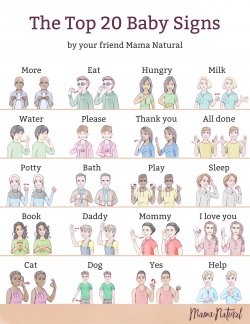
For parents beginning this journey, the following 20 signs provide a comprehensive foundation for daily communication.
- More: Bring the fingertips of both hands together to touch their respective thumbs, then tap the fingertips of both hands together repeatedly.
- Eat: Using the same hand shape as "more," tap your fingertips against your lips.
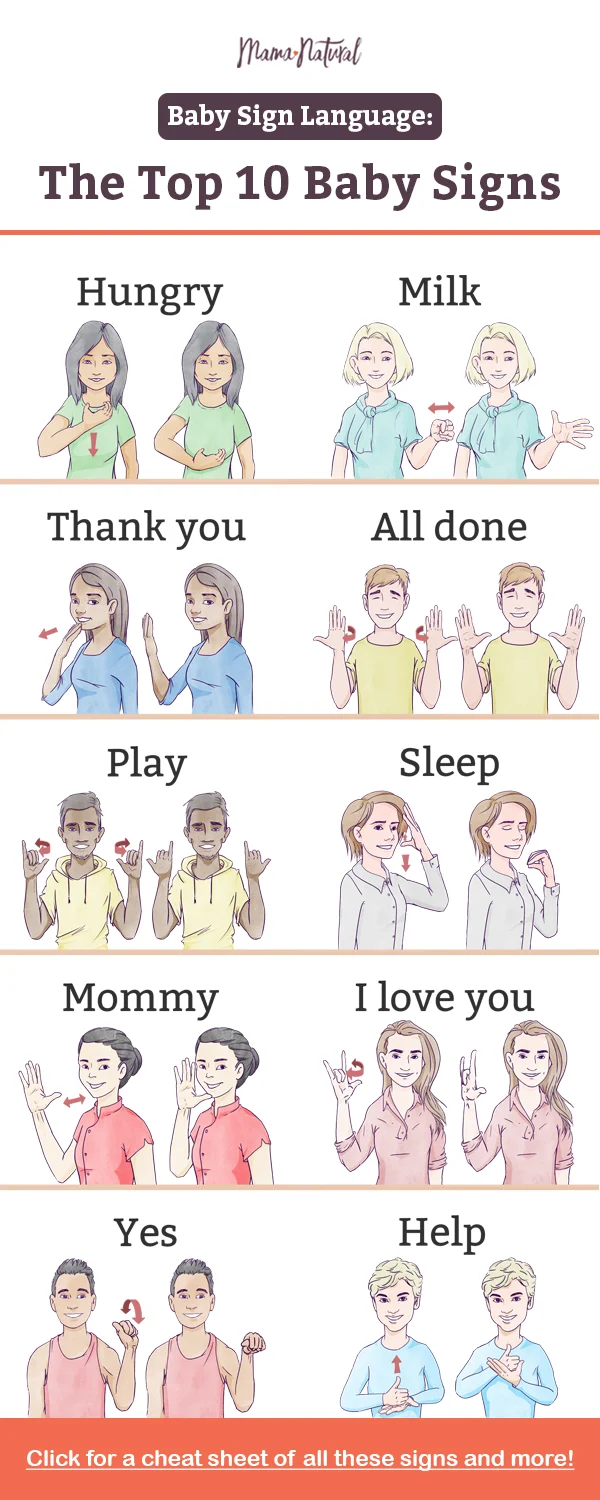
- Hungry: Place a flat palm against the chest and slide it down toward the stomach, mimicking the path of food.
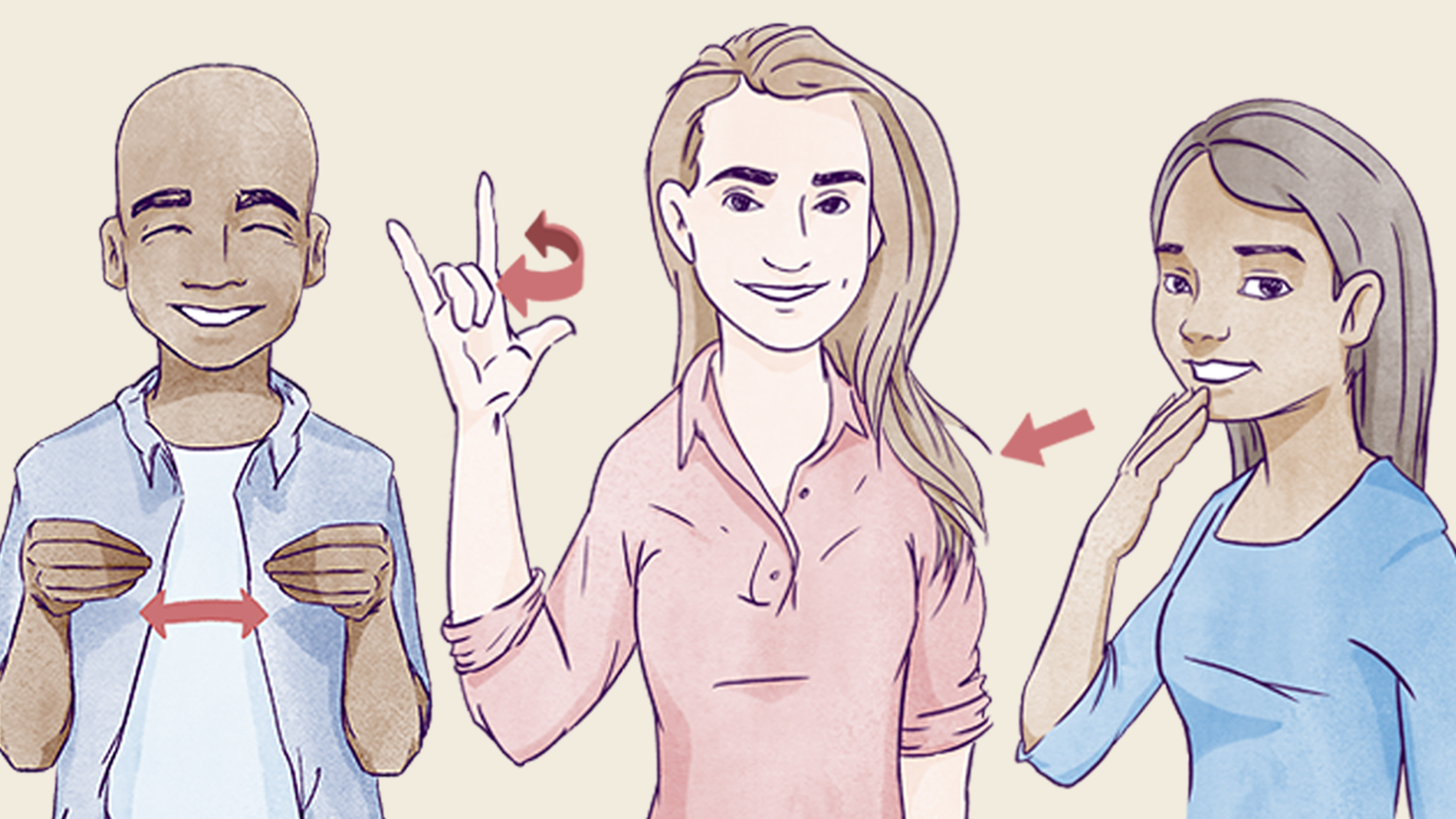
- Milk: Open and close a fist as if milking a cow.
- Water: Form a "W" with the three middle fingers and tap the index finger against the chin.
- Please: Place a flat palm on the chest and move it in a circular motion.
- Thank You: Touch the fingertips to the chin and move the hand forward and down, similar to blowing a kiss.
- All Done: Start with palms facing the chest and then flip them outward to face the world.
- Change (Diaper): Form both hands into "hooks" with the index fingers, then rotate the wrists to switch their positions.
- Potty: Place the thumb between the index and middle fingers (forming the letter ‘T’ in ASL) and shake the hand side to side.
- Bath: Form fists and rub them up and down the chest, mimicking a scrubbing motion.
- Play: Extend the thumb and pinky finger while tucking the middle fingers, then twist the wrists back and forth.
- Sleep: Place an open hand over the forehead and draw it down toward the chin, closing the fingers and eyes simultaneously.
- Book: Place palms together and then open them as if opening a hinge, keeping the pinky fingers touching.
- Daddy: Tap the thumb of an open hand against the forehead.
- Mommy: Tap the thumb of an open hand against the chin.
- Dog: Pat the thigh and then snap the fingers.
- Cat: Use the thumb and index finger to "pull" imaginary whiskers away from the side of the face.
- I Love You: In this simplified version, cross the arms over the chest in a self-hug. (Note: The formal ASL sign involves extending the thumb, index, and pinky).
- Help: Place a closed fist (with thumb up) on top of a flat, open palm and lift both hands upward together.
Clinical Perspectives and Broader Implications
Speech-language pathologists (SLPs) frequently utilize sign language as a therapeutic intervention for children with developmental delays, autism spectrum disorder (ASD), or Down syndrome. In these contexts, signing is not just a "head start" for healthy infants but a critical lifeline for children who face significant barriers to verbalization.
However, even within the general population, the implications of widespread baby sign language usage are significant. As more childcare centers and preschools integrate basic signing into their curricula, we see a shift toward a more inclusive and communicative early childhood environment. This "gestural revolution" acknowledges that infants are sophisticated thinkers who often have much to say long before they have the words to say it.
Conclusion: The Value of Patience and Persistence
While the benefits of baby sign language are well-documented, the process requires significant parental patience. It is common for infants to go through a "plateau" where they understand dozens of signs but refuse to perform them. Experts urge caregivers to remain persistent, as the cognitive benefits are occurring even in the absence of expressive output.
Ultimately, baby sign language is about more than just "hacks" for parenting; it is about respecting the infant as an active participant in the family dynamic. By providing the tools for early expression, parents foster a lifelong foundation of communication, trust, and mutual understanding. The transition from a crying infant to a signing toddler marks a profound milestone in human development—one that highlights the incredible plasticity and potential of the early human mind.
