

The Physiological and Developmental Context of Infant Communication
To understand the utility of baby sign language, one must examine the chronological gap in human development. Most infants begin to understand the nuances of language and the names of familiar objects between six and nine months of age. However, the physiological coordination required for spoken language—involving the precise manipulation of the diaphragm, vocal cords, tongue, and lips—often does not mature sufficiently for clear speech until 12 to 18 months.
This developmental lag creates a period of "communication frustration." While an eight-month-old may clearly recognize that they are thirsty or that a diaper is uncomfortable, they lack the verbal tools to convey these specific needs, leading to the default biological response: crying. Baby sign language serves as a functional intervention during this period. Research conducted in the late 20th century, most notably by Dr. Linda Acredolo and Dr. Susan Goodwyn, suggests that infants can begin to associate specific hand shapes with objects or needs as early as four months, though they generally lack the motor control to "sign back" until the seven-to-nine-month window.
Quantitative and Qualitative Benefits for Infant Development
The implementation of baby sign language is associated with several key developmental outcomes, supported by decades of observational and longitudinal data.
Reduction in Behavioral Volatility
A primary driver for the adoption of BSL is the mitigation of temper tantrums. Pediatric psychologists note that many early childhood outbursts are the result of communicative failure. When an infant can signal "milk" or "all done" rather than screaming to signify the end of a meal, the emotional temperature of the household remains lower. This provides a measurable benefit to parental mental health and reduces the stress response in the infant.
Cognitive and Self-Esteem Reinforcement
Communication is a fundamental building block of self-esteem. When an infant makes a sign and receives the corresponding response from a caregiver, it reinforces the child’s sense of agency. This "contingent responsiveness" proves to the child that their actions have a direct, predictable impact on their environment. Experts suggest that this early mastery of a skill contributes to a more confident approach to later learning milestones.
Impact on Verbal Literacy
A common concern among parents is whether teaching signs will delay speech. However, a study funded by the National Institutes of Health (NIH) compared infants who used sign language with those who did not. The findings indicated that the "signing" group actually scored higher on standardized language tests in later childhood. While research is occasionally mixed on whether BSL accelerates talking, there is a consensus among speech-language pathologists that it does not hinder verbal development. Instead, it reinforces the symbolic nature of language—the concept that a specific sound or gesture represents a specific object.
A Chronological Framework for Implementation
Teaching baby sign language is a process of gradual introduction and consistent reinforcement. Experts suggest a phased approach based on the infant’s age and motor development.
- The Observational Phase (4–6 Months): Parents begin using signs during daily routines. At this stage, the infant is primarily absorbing the visual information and beginning to link gestures with outcomes.
- The Recognition Phase (6–8 Months): The infant may show signs of excitement or recognition when a parent uses a sign, such as "milk" before a feeding.
- The Imitation Phase (8–12 Months): The infant begins to attempt the signs. These initial attempts may be "clunky" or imprecise—similar to how early speech is often garbled—but should be met with immediate positive reinforcement.
The Foundational Lexicon: 20 Essential Signs
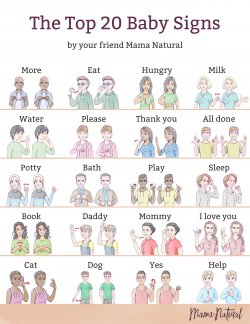
For parents beginning this journey, the focus should remain on high-utility words that appear frequently in an infant’s daily schedule. The following 20 signs represent the core vocabulary of the BSL movement.
Essential Needs
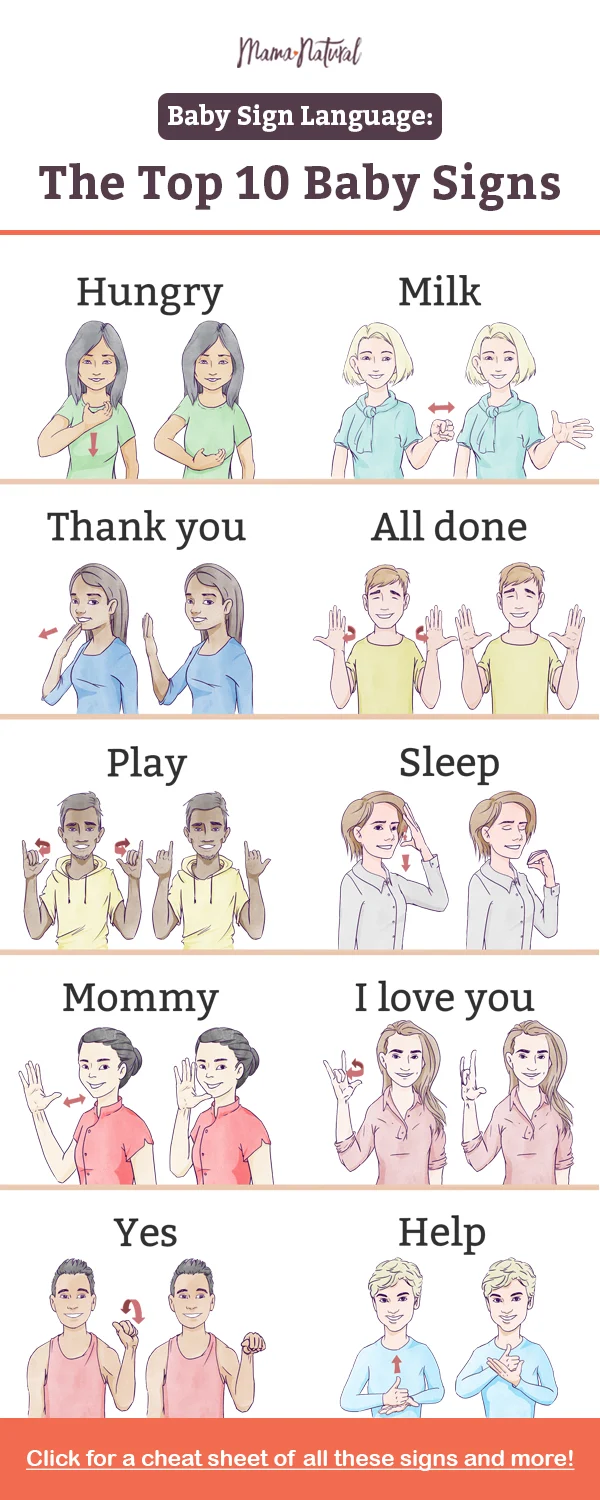
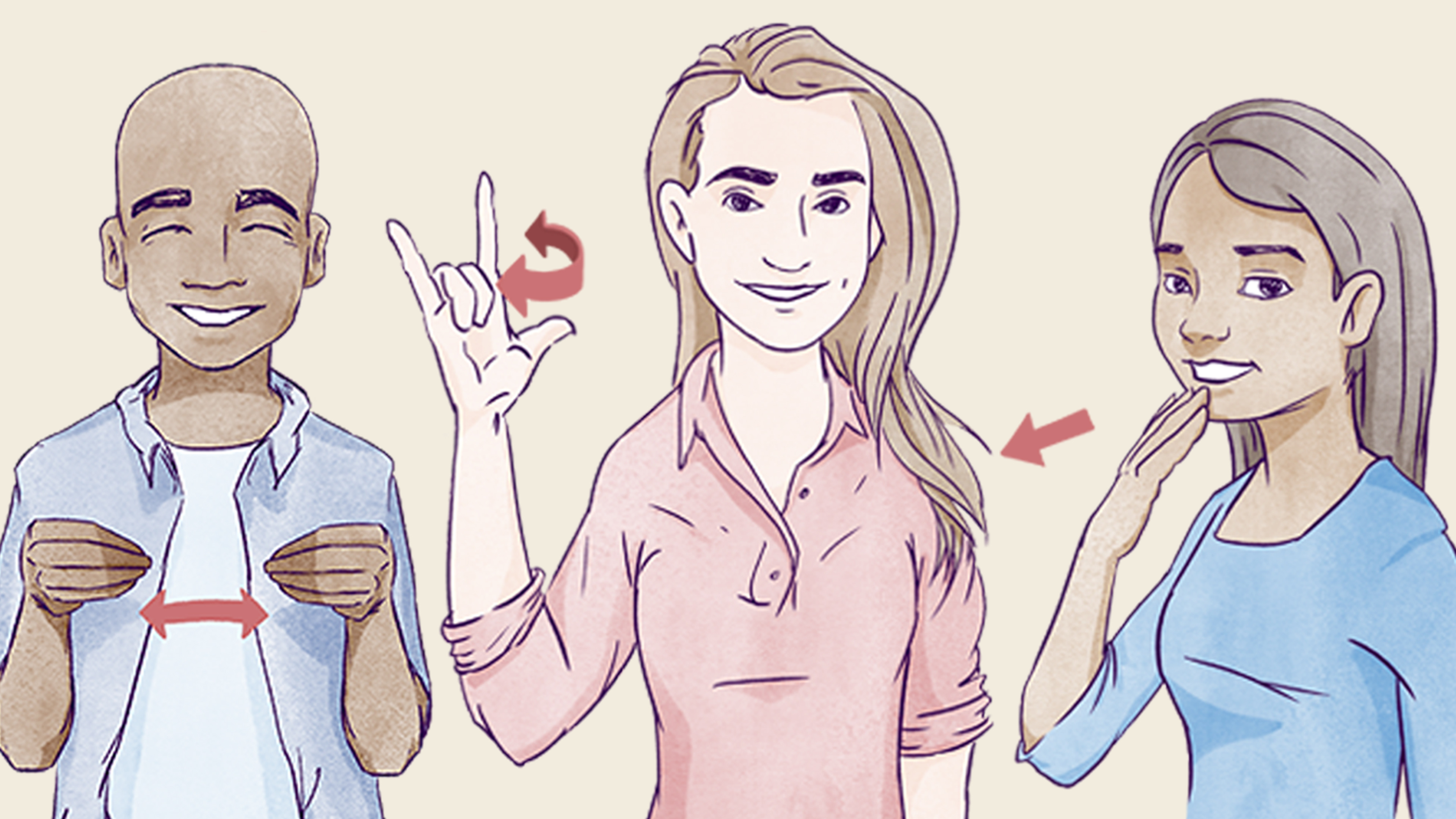
- Milk: This is often the first sign taught. It is performed by making a fist and then opening and closing it, mimicking the motion of milking a cow.
- Eat: This sign uses a "squished O" hand shape (fingers pressed to the thumb), which is then tapped against the lips repeatedly.
- Hungry: To signify hunger, a flat palm is placed on the chest below the chin and slid down toward the stomach, representing the path of food.
- Water: Using the ASL "W" (three middle fingers extended), the index finger is tapped against the chin.
- Potty: This sign is vital for early toilet training. It involves tucking the thumb between the index and middle fingers (the "T" handshape in ASL) and shaking the hand side-to-side.
Manners and Interaction
- More: This is perhaps the most versatile sign. Both hands are formed into "squished O" shapes and tapped together at the fingertips.
- Please: A flat palm is placed against the center of the chest and moved in a clockwise circular motion.
- Thank You: The fingertips are touched to the chin and then moved forward and down, similar to the motion of blowing a kiss.
- Help: This sign requires two hands. The dominant hand makes a "thumbs up" and is placed on the flat palm of the non-dominant hand. Both hands are then lifted upward together.
- All Done: Both hands are held up with palms facing the body, then quickly flipped outward so the palms face the caregiver.
Family and Household
- Mommy: The hand is held open with fingers spread, and the thumb is tapped against the chin.
- Daddy: Using the same open-hand shape as "Mommy," the thumb is tapped against the forehead.
- Dog: This simplified sign involves patting the thigh and then snapping the fingers (or just mimicking the snap).
- Cat: The index finger and thumb pinch together near the side of the mouth and pull outward, mimicking the stroke of a whisker.
- I Love You: In BSL, this is often simplified to a self-hug, crossing both arms over the chest with closed fists.
Routine and Environment
- Sleep: The hand starts at the forehead with fingers spread and is pulled down to the chin as the fingers close, mimicking eyes shutting.
- Bath: Both hands are formed into fists and moved up and down the torso as if scrubbing with a washcloth.
- Book: The palms are placed together and then opened like the hinge of a book, keeping the "spine" (the bottom edges of the hands) connected.
- Play: Both hands form a "Y" shape (thumb and pinky extended, middle fingers tucked) and are twisted back and forth at the wrists.
- Yes: The hand is formed into a fist and tilted up and down at the wrist, mimicking a nodding head.
Expert Perspectives and Clinical Analysis
Pediatricians generally view baby sign language as a beneficial supplementary tool rather than a replacement for verbal interaction. Dr. Howard Levy, a specialist in neurodevelopmental disabilities, notes that the key to success is "verbal pairing." For the sign to be effective in promoting future literacy, the caregiver must say the word clearly while performing the gesture. This creates a multi-sensory learning environment—visual, auditory, and kinesthetic.
Furthermore, speech-language pathologists emphasize that BSL should not be used as a diagnostic tool for hearing or speech delays in isolation. While it can help children with delays, its primary purpose in the general population is the enhancement of the existing developmental trajectory.
Broader Implications for Early Education
The integration of baby sign language into daycare centers and preschools reflects a broader shift toward "infant-led" care. By empowering infants to communicate, educators can provide more personalized care, resulting in more efficient operations and higher levels of engagement.
In a societal context, the popularity of BSL underscores a growing parental emphasis on early cognitive stimulation. While critics occasionally argue that it places undue pressure on infants to "perform," the prevailing evidence suggests that when approached with a playful and patient attitude, BSL fosters a deeper bond between parent and child. It transforms the pre-verbal months from a period of guesswork into a period of active, two-way dialogue, setting a foundational precedent for the child’s future communicative and social-emotional health.
