

The practice of utilizing simplified gestural communication, commonly referred to as baby sign language, has transitioned from a niche pedagogical method to a mainstream developmental tool utilized by parents and early childhood educators worldwide. This communication system, largely derived from American Sign Language (ASL), serves as a bridge for infants who have developed the cognitive capacity to communicate their needs but lack the physiological maturity of the vocal cords and mouth required for articulate speech. By providing a manual alternative to vocalization, baby sign language aims to mitigate the frustration inherent in the "pre-verbal gap," a period typically spanning from six months to two years of age.
The Evolution and Theoretical Framework of Infant Signing
The contemporary application of baby sign language traces its academic roots back to the 1980s, primarily driven by the research of Dr. Linda Acredolo and Dr. Susan Goodwyn. Their longitudinal studies suggested that infants who used symbolic gestures to communicate showed accelerated language development and higher IQ scores in later childhood compared to those who did not. While the "accelerated intelligence" claim remains a subject of debate within the linguistic community, the core utility of the practice—enhancing immediate communication—is widely accepted by pediatricians and speech-language pathologists.
The physiological basis for baby sign language lies in the differing rates of motor skill development. An infant’s gross and fine motor skills in their hands typically mature significantly faster than the complex muscular coordination required for speech. While the larynx and tongue require intricate, high-speed movements to produce phonemes, the hands can perform recognizable shapes and motions months earlier. Consequently, the adoption of baby sign language is not seen as a replacement for speech, but rather a temporary scaffolding that supports the underlying cognitive structures of language, such as intent, turn-taking, and symbolic representation.
Developmental Chronology and Readiness Milestones
The implementation of baby sign language follows a predictable developmental timeline. Most child development experts suggest that parents begin introducing signs when an infant is approximately four months old. At this stage, the infant’s eyesight has developed sufficiently to track hand movements, and their cognitive ability to associate a gesture with an object or action begins to coalesce.
However, the "expressive" phase of signing—where the infant signs back—typically does not occur until between seven and nine months of age. This delay is attributed to the time required for the infant to master the motor control necessary to replicate the gestures they have observed. The progression generally follows a three-stage arc:
- Observation (4–6 Months): The infant notices the parent’s hand movements during routine activities but does not yet associate them with specific meanings.
- Recognition (6–8 Months): The infant begins to understand the meaning of signs. They may show excitement or anticipation when a parent signs "milk" or "bath."
- Production (8–12 Months): The infant attempts their first signs. These are often "approximations"—simplified versions of the adult sign—much like "babbling" is an approximation of spoken words.
Quantifiable Benefits and Psychological Impact
The integration of sign language into early childhood development offers several measurable benefits that extend beyond simple communication.
Reduction in Cortisol and Frustration
Research into infant behavior suggests that a significant portion of "temper tantrums" in children aged 12 to 18 months stems from an inability to communicate specific needs. When an infant can sign for "water" or "sleep," the physiological stress response—marked by cortisol spikes—is significantly reduced. This leads to a more stable emotional environment for both the child and the caregiver.
Self-Esteem and Cognitive Agency
By successfully influencing their environment through signing, infants gain a sense of agency. Psychologists note that when an infant’s needs are met because they communicated them effectively, it fosters a sense of security and self-worth. This early mastery of a skill serves as a confidence booster, reinforcing the child’s desire to learn further communicative tools.
Linguistic Reinforcement
A common concern among parents is that signing might delay verbal speech. However, a 2006 study published by the University of Western Ontario, among others, confirmed that baby sign language does not hinder verbal development. In many cases, it reinforces verbal skills because parents tend to speak the word clearly while performing the sign, providing the infant with both a visual and auditory stimulus simultaneously.
Methodology for Effective Instruction
The transition from a non-signing to a signing household requires a structured approach based on consistency and repetition. Experts recommend three primary strategies for parents:
- Contextual Familiarity: Instruction should begin with high-frequency objects and activities that are already part of the infant’s daily routine. Signs for "milk," "eat," "mom," and "dad" are the most effective starting points because they provide immediate reinforcement.
- Persistent Repetition: The "learning curve" for an infant can be several months long. Caregivers are encouraged to sign every time they say the corresponding word, regardless of whether the infant appears to be paying attention. The cumulative effect of this exposure eventually leads to a cognitive breakthrough.
- Positive Reinforcement: When an infant makes an attempt to sign, even if the gesture is imprecise, it is vital to provide immediate rewards—either by fulfilling the request or offering verbal praise. This reinforces the "cause and effect" nature of communication.
The Core Vocabulary: A Technical Breakdown of Essential Signs
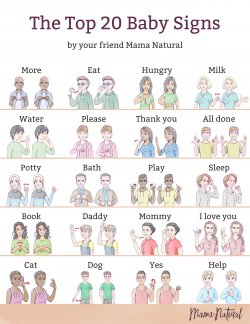
To facilitate a standardized approach, the following 20 signs are recognized as the foundational vocabulary for pre-verbal infants. These are simplified versions of ASL designed for developing motor skills.
Biological and Immediate Needs
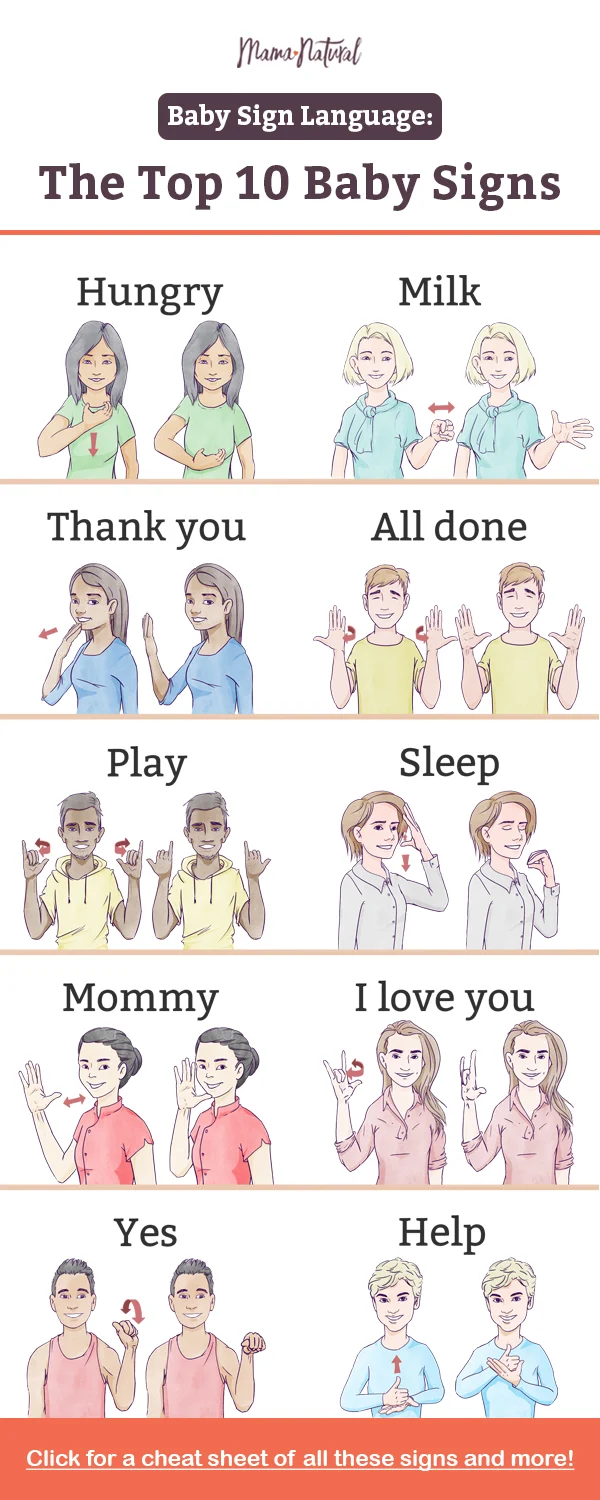
- Milk: Created by making a fist and then opening and closing the hand, mimicking the action of milking a cow. This is often the first sign an infant masters.
- Eat: The tips of the fingers and thumb are brought together and tapped against the lips.
- Hungry: The hand is placed flat against the chest and moved downward toward the stomach, tracing the path of food.
- Water: The index, middle, and ring fingers are extended to form a "W," while the thumb and pinky are tucked. The index finger then taps the chin.
- Sleep: The hand starts at the forehead with fingers spread and is pulled down over the face until the fingers close, symbolizing eyes shutting.
- Potty: The thumb is tucked between the index and middle fingers (the "T" handshape in ASL) and the fist is shaken side-to-side.
Social Graces and Behavioral Cues
- Please: The palm is placed flat on the chest and moved in a circular motion.
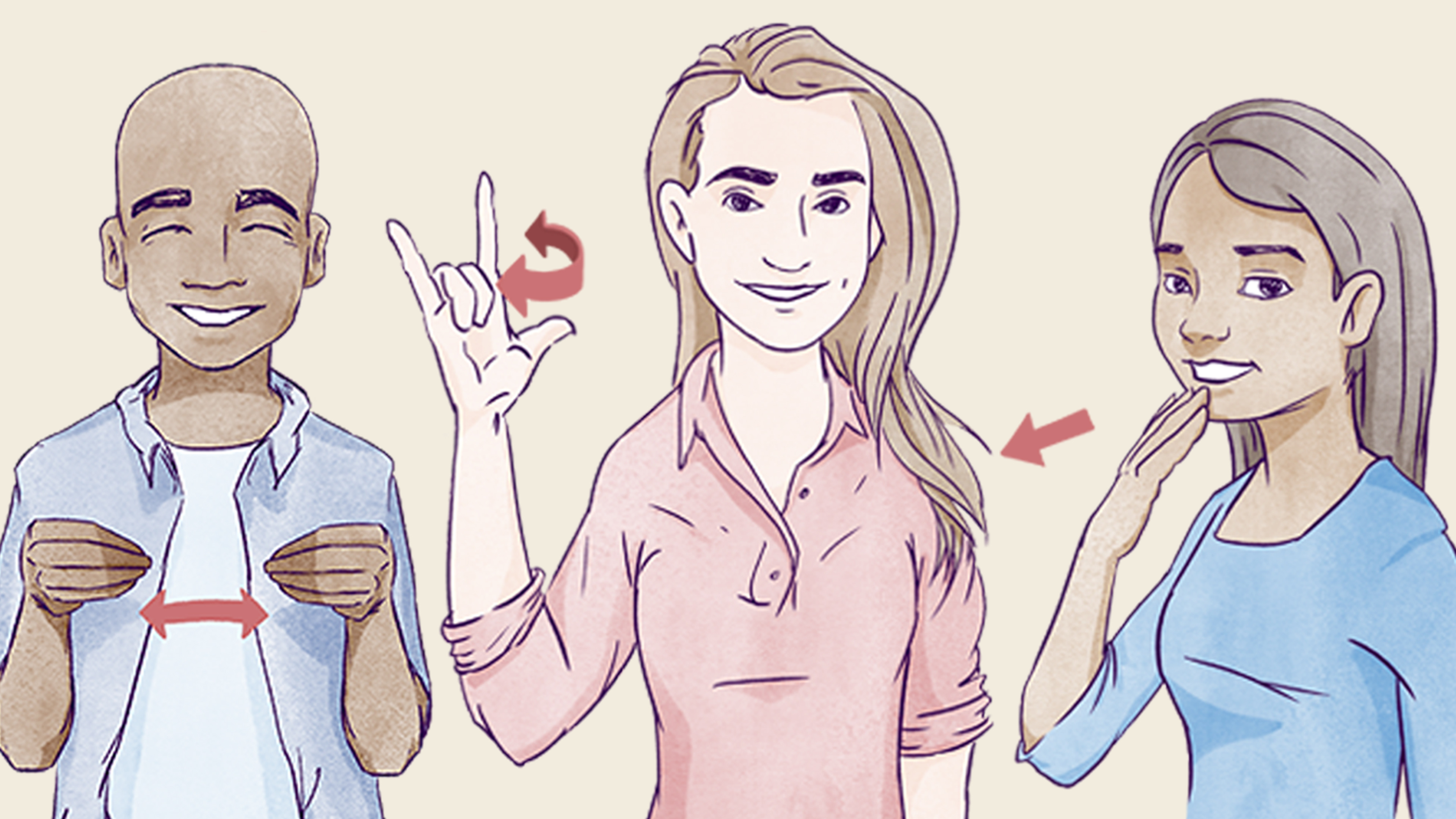
- Thank You: The fingers are moved from the lips outward toward the person being thanked, similar to blowing a kiss.
- More: The fingertips of both hands are brought together and tapped against each other repeatedly. This is a critical sign for reducing mealtime frustration.
- All Done: Both hands are held up with palms facing the chest and then flipped outward to face the caregiver.
- Help: The dominant hand is formed into a "thumbs up" and placed on the flat palm of the non-dominant hand. Both hands are then lifted together.
- Yes: The hand is formed into a fist and tilted up and down at the wrist, mimicking a nodding head.
Routine and Environment
- Bath: Both hands are formed into fists and rubbed up and down the chest, mimicking the action of scrubbing.
- Change: Both hands are closed into fists with the index fingers hooked. The wrists are crossed and then rotated to switch the top and bottom hand.
- Book: The palms are placed together and then opened as if hinging at the spine of a book.
- Play: Using the "Y" handshape (thumb and pinky extended), the wrists are twisted back and forth.
- Mommy and Daddy: Both signs use an open hand with fingers spread. For "Mommy," the thumb taps the chin; for "Daddy," the thumb taps the forehead.
- Dog and Cat: "Dog" is indicated by snapping the thumb and middle finger or patting the thigh. "Cat" is signed by using the thumb and index finger to mimic pulling whiskers away from the face.
- I Love You: In this context, it is often simplified by crossing the arms over the chest in a self-hug gesture.
Expert Perspectives and Broader Societal Implications
The medical community’s response to baby sign language is largely positive, provided it is used as a supplement to, rather than a replacement for, verbal interaction. The American Academy of Pediatrics (AAP) notes that any form of consistent, responsive communication between a parent and child is beneficial for brain development.
Furthermore, the rise of baby sign language has had broader implications for inclusivity. By normalizing gestural communication in the hearing population, it fosters a greater societal understanding of the Deaf community and ASL. It also provides a vital tool for children with developmental delays or those on the autism spectrum, who may face greater challenges with verbal communication.
In conclusion, baby sign language represents a significant advancement in our understanding of early childhood cognition. By recognizing that an infant’s desire to communicate precedes their ability to speak, parents can utilize these 20 foundational signs to create a more harmonious, communicative, and emotionally secure environment. While the process requires substantial patience and repetition, the eventual "payoff"—hearing a child’s needs before they can speak a single word—is regarded by many as a transformative milestone in modern parenting.
