

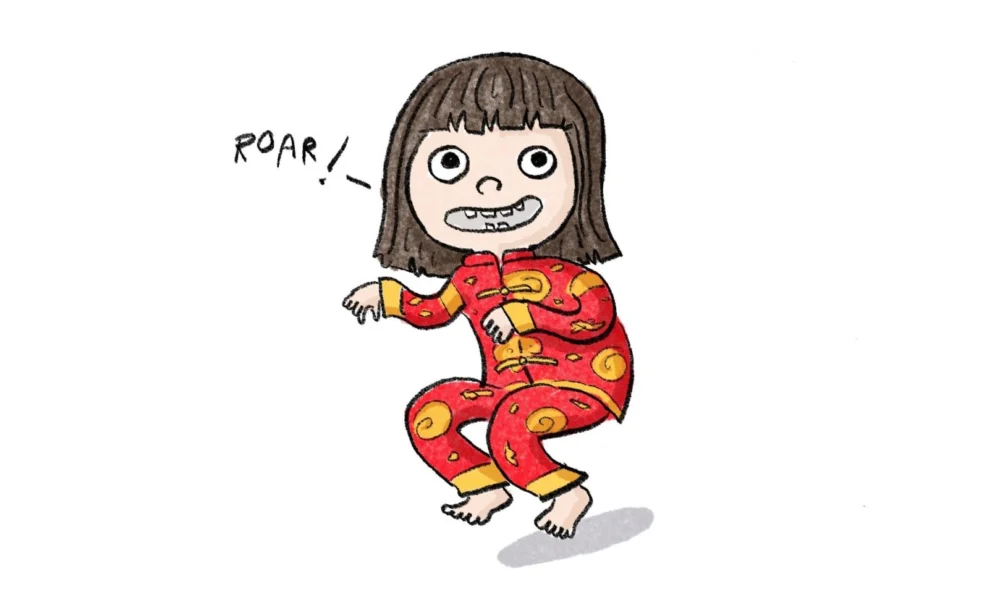
The intersection of digital media, personal illustration, and cultural heritage reached a significant point of community engagement in mid-February 2026, as audiences gathered online to observe the transition into the Year of the Horse. Central to this discourse was a series of illustrated reflections by renowned author and artist Ruth Chan, published on the influential lifestyle platform Cup of Jo, founded by Joanna Goddard. The work, which blended the traditional symbolism of the Lunar New Year with raw, personal accounts of grief and resilience, sparked a multi-day period of intense reader interaction, highlighting the role of specific, vulnerable storytelling in fostering cross-cultural empathy within increasingly polarized digital spaces.
The Artistic Catalyst and Community Response
On February 13, 2026, Ruth Chan released an illustrated essay that navigated the complex emotional landscape of celebrating a new year while carrying the weight of the previous year’s hardships. The narrative focused on the concept of the "little lion"—a reference to the traditional lion dance performed during Lunar New Year to bring good luck and drive away evil spirits—as a metaphor for internal strength. Chan’s work specifically addressed the dichotomy of experiencing profound personal loss, such as the death of a parent, alongside moments of renewal, such as the birth of a child or the beginning of a new lunar cycle.
The response was immediate and statistically significant for the platform. Within the first 24 hours, hundreds of readers documented their emotional reactions, with a recurring theme of "shared catharsis." Many users reported "bursting into tears," a phenomenon that psychologists often attribute to the "identifiability effect," where specific, individual stories evoke stronger empathetic responses than abstract data or generalized statements. The comments, spanning from February 13 to February 19, 2026, served as a digital archive of collective mourning and hope, with readers from diverse backgrounds finding common ground in the "universal thread" of the human experience.
Chronology of Engagement: February 13–19, 2026
The engagement timeline reveals a sustained period of reflection among the platform’s readership:
- February 13: The article is published. Initial reactions focus on the aesthetic beauty of Chan’s illustrations and the immediate emotional impact. Readers begin sharing their "favorite places to cry in public," turning a private vulnerability into a shared community badge of honor.
- February 14: On the traditional Lunar New Year’s Eve, the conversation shifts toward family traditions. Readers discuss "Little New Year" (the Festival of the Kitchen God) and the preparation of dumplings. The dialogue expands to include the intersection of multiple heritages, such as families celebrating Jewish, Gregorian, and Chinese New Years simultaneously.
- February 15–17: The discourse moves toward the therapeutic value of the work. Readers who experienced a "painful and difficult week" cite the essay as a necessary tool for emotional regulation.
- February 18–19: Late-stage engagement addresses the broader sociopolitical implications of the work. Commenters begin to analyze why certain cultural segments resist stories from "subcultures" outside their own, concluding that specific storytelling is the most effective bridge for cultural divides.
Cultural Context: The Year of the Horse and the Lion Dance
The 2026 Lunar New Year marks the beginning of the Year of the Horse. In the Chinese zodiac, the Horse is associated with energy, independence, and the pursuit of freedom, but it is also a symbol of tireless service and emotional depth. Chan’s choice to use the "lion" imagery within the Year of the Horse context is a deliberate nod to the Lion Dance (wu shi), a centerpiece of New Year festivities.
The Lion Dance is more than a performance; it is a ritual of purification. The lion, operated by two dancers, mimics the movements of a feline to "pluck the greens" (cai qing), symbolizing the attainment of wealth and health for the coming year. By framing the internal human struggle as a "little lion" that "roars" within everyone, Chan’s work reframes resilience not as the absence of fear or sadness, but as the active, rhythmic movement through it—much like the dance itself.
The Role of Independent Institutions: Yu and Me Books
A notable detail in Chan’s 2026 illustrations was a tribute to Yu and Me Books, an independent bookstore located in Manhattan’s Chinatown. This inclusion provided a factual anchor to the narrative, grounding the abstract emotions in a physical community space. Yu and Me Books, the first female-owned Asian American bookstore in NYC, has become a symbol of resilience itself, having navigated a devastating fire and subsequent rebuilding process in recent years.
The mention of such institutions highlights a growing trend in digital storytelling: the "hyper-local" influence. By referencing specific landmarks of the Asian American experience, Chan’s work moves beyond performative diversity and into the realm of authentic cultural preservation. Data from the American Booksellers Association suggests that independent bookstores, particularly those serving marginalized communities, saw a 12% increase in community-led events in 2025, a trend that Chan’s work both reflects and encourages.
Implications for Digital Discourse and Empathy
The reception of Chan’s work offers a case study in the "relatability of the specific." One reader noted the confusion regarding why certain political or social segments—specifically referencing the MAGA movement—often "balk at listening to memories and experiences that aren’t part of their subculture." This observation touches on a critical area of sociological study regarding "ingroup" versus "outgroup" empathy.
Research indicates that when stories are presented through a lens of "universal humanity" without erasing cultural specificity, they are more likely to bypass the defensive mechanisms of cognitive dissonance in polarized audiences. The 2026 Lunar New Year discourse on Cup of Jo suggests that art remains one of the few remaining "neutral grounds" where individuals from disparate political backgrounds can acknowledge shared vulnerabilities, such as the loss of a parent or the anxiety of a new year.
Broader Impact on the Publishing and Arts Industry
The success of Chan’s illustrated reflections also underscores the shifting landscape of the publishing industry. Ruth Chan, known for her acclaimed book Uprooted and her popular comics regarding the global phenomenon BTS, represents a new generation of "multi-hyphenate" creators who leverage digital platforms to build direct relationships with their audience.
The "Cup of Jo effect"—where a single post can trigger a massive wave of emotional and commercial engagement—demonstrates the continued power of curated, high-trust digital environments. For the arts industry, this signifies a move away from traditional gatekeeping and toward a model where vulnerability and cultural specificity are valued as much as technical skill.
Conclusion: A Year of Repair and Rebuilding
As the Year of the Horse progresses, the themes of "repair and rebuilding" mentioned by readers remain central to the public consciousness. The transition from the Year of the Snake (2025) to the Year of the Horse (2026) was described by many as a shedding of skin—a difficult but necessary process of leaving behind a year that many characterized as "painful."
The collective roar of the "little lions" in February 2026 serves as a reminder that cultural celebrations are not merely about the festivities themselves, but about the communal processing of time. Through the work of artists like Ruth Chan and platforms like Cup of Jo, the 2026 Lunar New Year has been documented not just as a date on a calendar, but as a profound moment of global human connection, proving that when stories are told with enough specificity, they eventually belong to everyone.
