

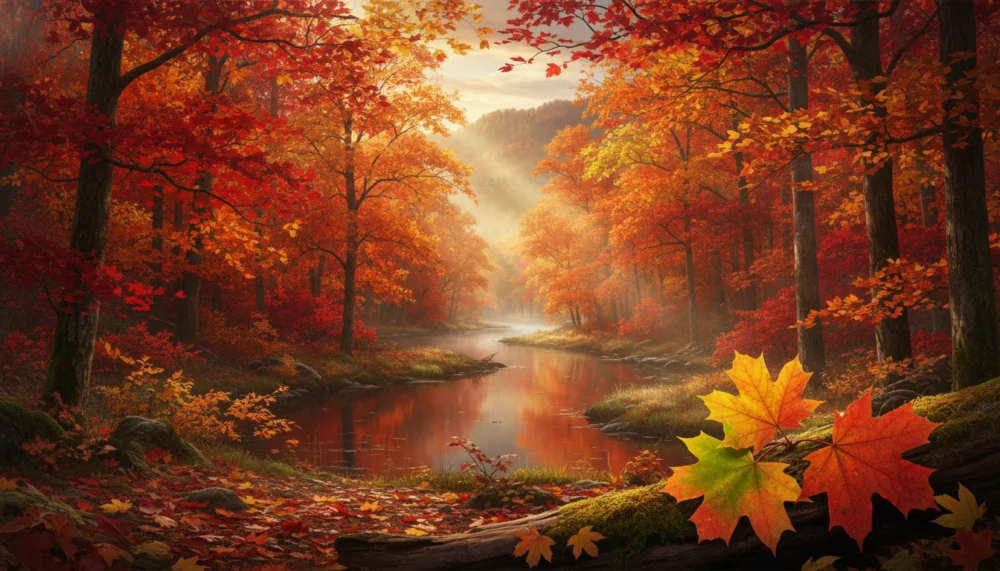
As the days grow shorter and the air turns crisp, one of nature’s most spectacular displays begins: the changing of the leaves. While we admire the vibrant reds, oranges, and yellows, this transformation is actually a complex biological response to environmental shifts. Understanding why leaves change color requires a look into the chemistry of plant life and the survival strategies of deciduous trees.
The Role of Chlorophyll and Photosynthesis
During the spring and summer, leaves serve as the primary food factories for trees. Through a process called photosynthesis, they convert sunlight, water, and carbon dioxide into energy-rich sugars. The key to this process is chlorophyll, a pigment that absorbs sunlight and gives leaves their characteristic green color.
Chlorophyll is so abundant during the growing season that it masks all other pigments present in the leaf. Because it is constantly being used and broken down, the tree must continuously replenish its supply to maintain its energy production throughout the warmer months.
The Signal for Change
As autumn approaches, the amount of daylight decreases and temperatures begin to drop. These environmental cues signal to the tree that it is time to prepare for winter, a period of dormancy. In response, the tree slows down its metabolic processes and eventually stops the production of chlorophyll altogether.
Revealing Hidden Pigments: Carotenoids and Flavonoids
Once the green chlorophyll begins to disappear, other pigments that were present in the leaf all along finally become visible. These are known as carotenoids and flavonoids. These pigments are responsible for the brilliant yellows and oranges we see in species like hickories, birches, and aspens.
Carotenoids are the same pigments found in carrots and corn, while flavonoids contribute to the yellow hues in many flowers. Because these pigments are more stable than chlorophyll, they linger in the leaf tissue long after the green has faded, providing a consistent display of gold and amber each year.
The Creation of Reds and Purples: Anthocyanins
Unlike yellows and oranges, the brilliant reds and purples seen in maples, oaks, and dogwoods are not always present in the leaf. Instead, these colors are produced by pigments called anthocyanins, which are synthesized in the leaf during the late summer and early autumn.
As the veins that transport fluids into and out of the leaf begin to close, sugars become trapped within the leaf structure. In the presence of bright sunlight and cool temperatures, these sugars react to form anthocyanins. These pigments serve as a form of ‘sunscreen,’ protecting the leaf’s remaining biological processes as the tree recovers as many nutrients as possible before the leaf falls.
Factors Influencing Color Intensity
The intensity and variety of autumn colors are heavily influenced by the weather. The most spectacular displays usually occur when a succession of warm, sunny days is followed by cool, crisp nights that remain above freezing. This specific combination maximizes sugar production and prevents those sugars from moving out of the leaf, leading to high concentrations of red pigments.
- Temperature: Cool nights are essential for anthocyanin production, but early frosts can kill the leaf tissue prematurely, leading to duller colors.
- Moisture: Drought conditions during the growing season can cause leaves to drop early, while a wet spring followed by a moderate summer usually leads to the best fall foliage.
- Light: High light intensity increases the brilliance of reds, which is why the outer leaves of a tree often appear more vibrant than those in the shaded interior.
The Final Stage: Abscission and Leaf Fall
As the color transformation reaches its peak, the tree prepares to shed its leaves entirely. This is achieved through a process called abscission. At the base of each leaf stem, a specialized layer of cells known as the abscission zone begins to develop. These cells gradually swell and harden, cutting off the flow of nutrients and water.
Once the connection is sufficiently weakened, the leaf is held on only by thin vascular strands. A gust of wind or the weight of rain is often enough to break these strands, causing the leaf to fall to the ground. This survival mechanism protects the tree from water loss and structural damage caused by heavy snow during the winter months.
Why Do Some Leaves Turn Brown?
In some species, such as certain oaks and beeches, the leaves do not show vibrant colors but instead turn a dull brown. This is caused by tannins, which are bitter-tasting waste products left behind after all other pigments have broken down. In some cases, these brown leaves may even cling to the tree throughout the winter, a phenomenon known as marcescence.
Regional Variations in Foliage
Geography plays a massive role in the types of colors observed. For instance, the Northeastern United States is world-renowned for its reds due to the high concentration of sugar maples. In contrast, the Western United States is famous for the shimmering gold of its vast aspen groves, where carotenoids dominate the landscape.
Understanding the science behind the season adds a layer of appreciation to the beauty of autumn. From the chemical breakdown of chlorophyll to the weather-dependent synthesis of anthocyanins, every leaf tells a story of survival and transition.
Conclusion
The changing of the leaves is far more than just a visual treat; it is a sophisticated biological process that ensures the longevity of the forest. By recycling nutrients and entering a state of dormancy, trees prepare themselves for the challenges of winter, leaving us with a breathtaking reminder of nature’s cyclical patterns.
