

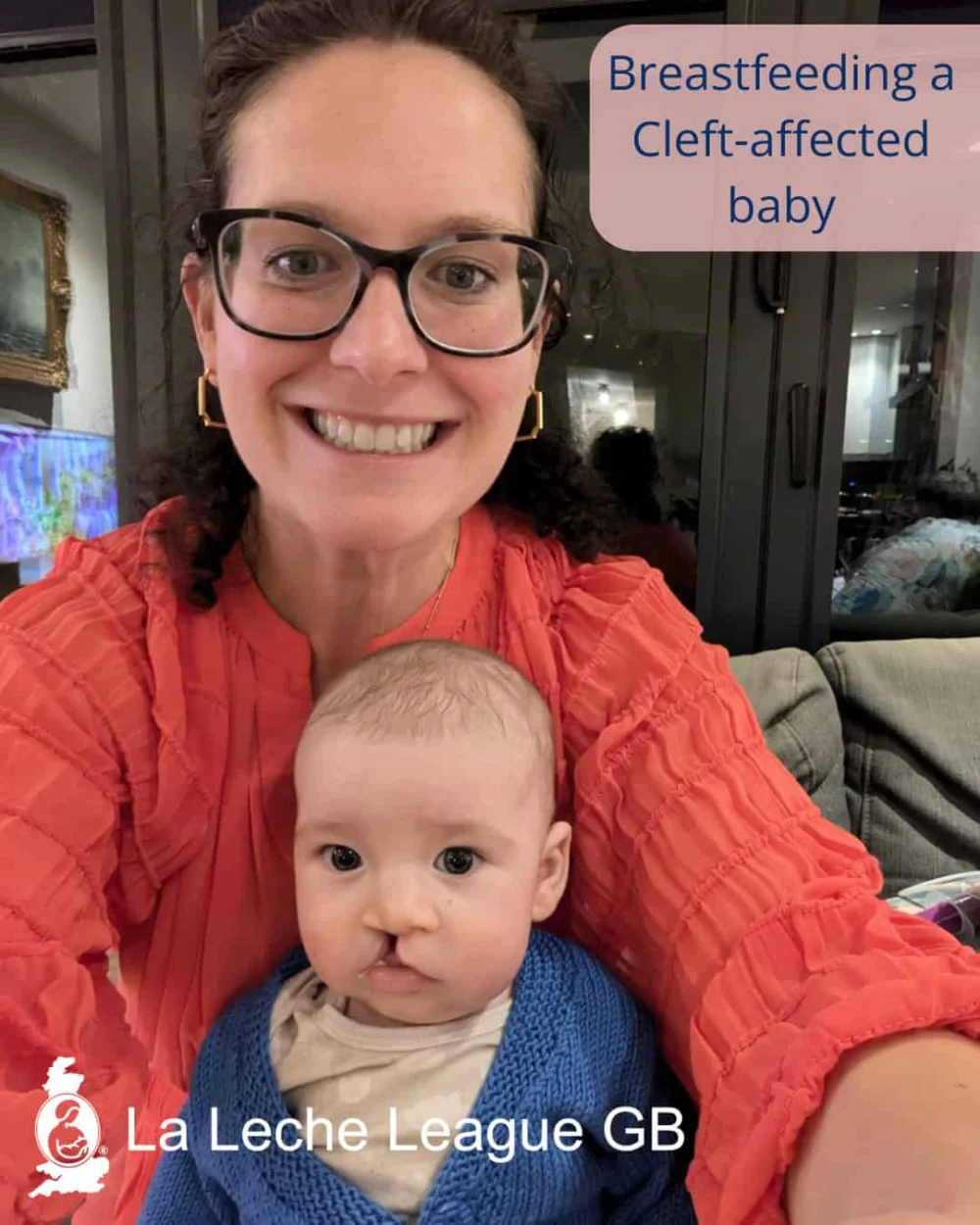
The journey of new parenthood is often filled with unexpected challenges, but for Sarah Muir-Little, the path to nurturing her son, Russell, was defined by an early antenatal diagnosis that threatened to derail her deeply held desire to breastfeed. Russell was diagnosed with a cleft lip and palate at his 20-week scan, a condition that medical professionals initially suggested would make breastfeeding impossible. This revelation marked the beginning of a determined and innovative quest by Muir-Little to ensure her son received the benefits of breast milk, a story that highlights parental resilience, adaptive care strategies, and the evolving understanding of complex feeding needs.
Understanding Cleft Lip and Palate: A Medical Overview
Cleft lip and palate are among the most common birth anomalies, affecting approximately 1 in 700 babies globally, with slight variations in prevalence across different populations and ethnicities. The condition occurs when the structures forming a baby’s upper lip or the roof of the mouth (palate) do not fully join together during early fetal development. This can result in a range of presentations, from a small notch in the lip to a complete separation extending into the nose, and from a partial cleft palate to a complete division of both the hard and soft palate.
Medically, cleft lip and palate are categorized based on their severity and location. A cleft lip, with or without an alveolar (gum line) involvement, can often allow for breastfeeding with certain adaptations, as the baby may still be able to form a seal around the nipple. However, a cleft palate presents a more significant challenge for direct breastfeeding. The inability to create the necessary suction pressure within the oral cavity, due to the opening in the palate, prevents the baby from effectively drawing milk from the breast. For these infants, surgical repair of the palate is typically required before direct breastfeeding without supplemental aid becomes viable. In the UK, organizations like the Cleft Lip and Palate Association (CLAPA) provide crucial support and information to families affected by these conditions, guiding them through diagnosis, treatment, and feeding strategies.
The standard medical pathway for babies with cleft palate often involves specialized feeding bottles designed to facilitate milk intake without requiring suction. These bottles typically feature elongated nipples and a squeezable mechanism to deliver milk directly into the baby’s mouth. Surgical intervention usually involves multiple stages: lip repair often occurs around three to six months of age, followed by palate repair between six and twelve months. Further surgeries may be required later in childhood to address speech, dental, or aesthetic concerns.
An Antenatal Diagnosis Amidst Family Strain
Sarah Muir-Little’s pregnancy had already been overshadowed by a period of intense emotional strain. For six weeks, her father-in-law had been in intensive care, diverting emotional resources and preventing the usual excitement associated with pregnancy. It was against this backdrop that the 20-week anomaly scan delivered an unexpected and profound blow. What began with the joyful news of expecting a boy quickly shifted to concern when the sonographer inquired, "Have you heard of a cleft lip?"
A midwife subsequently explained the full extent of the diagnosis: Russell had both a cleft lip and palate. The immediate and most distressing implication, as conveyed by the medical team, was that breastfeeding would likely be impossible. For Muir-Little, who had recently weaned her toddler in preparation for nursing her new baby, this news was devastating. Breastfeeding had been a cornerstone of her maternal identity, and the prospect of its loss felt like a deep grief. "Breastfeeding was a huge part of what I felt made me a mum, and I grieved its loss," she recounted, articulating a sentiment shared by many mothers who face unexpected barriers to their feeding goals.
However, a specialist nurse offered a glimmer of hope, clarifying that while traditional breastfeeding might be challenging, some form of "breastfeeding journey" could still be possible. The extent of the palate involvement, and thus the difficulty in generating suction, would only be fully known after Russell’s birth. The nurse also outlined the formidable surgical path ahead for Russell: two operations within his first year to repair the lip and palate, with potential for additional procedures later in childhood. This information, while providing clarity, underscored the complex medical journey awaiting the family.
Paving the Way for Adaptation: Research and Preparation
Undeterred by the initial prognosis, Muir-Little embarked on an intensive research mission. She delved into resources provided by CLAPA and La Leche League, alongside other online sources, searching for any examples of successful breastfeeding experiences for babies with cleft palates, particularly after surgery. The findings were sparse but offered critical insights that fueled her determination: maintaining a robust milk supply and finding alternative methods to deliver milk to the baby while at the breast.
The first point, milk supply, seemed within her control. She had successfully breastfed her toddler, albeit with some challenges in pumping. Her previous experience of building a freezer stash, often through laborious hand expressing, gave her confidence in her ability to meet the demands of a new baby. She reasoned that with improved pumping knowledge and techniques, she could ensure an adequate supply of expressed breast milk.
The second point, alternative milk delivery, presented a more intricate challenge. Muir-Little investigated various methods, including direct hand expressing into the baby’s mouth and the use of nursing supplementers. A nursing supplementer, a device designed to deliver supplemental milk via a thin tube while the baby is latched at the breast, emerged as the most practical long-term solution. In the UK, two primary nursing supplementer systems are available for cleft babies. Both typically consist of a bottle with a thin tube that is positioned in the baby’s mouth alongside the nipple. One system relies on gravity for milk flow, often resulting in a slow feed, while the other features a squeezable bottle for more controlled delivery. Muir-Little purchased both systems to evaluate their suitability.
Her initial trials with the supplementers, even with a doll, revealed practical difficulties. The gravity-fed system was too slow, while the squeezable bottle, though capable of delivering sufficient milk, was awkward to hold. The recommended "dancer hold," a technique often used for babies with low muscle tone or prematurity to help them stay attached, felt impossible to execute simultaneously with a supplementer. This early experimentation highlighted the gap between theoretical advice and the realities of practical application, underscoring the need for personalized adaptation.
Russell’s Arrival and the Innovative Feeding Protocol
Baby Russell arrived, and the initial days were a delicate dance of feeding expressed colostrum via syringe, while simultaneously encouraging sucking with a finger in his mouth, a method to stimulate oral motor skills and prepare him for the breast. The plan was to transition to feeding at the breast with a supplementer as Muir-Little’s milk supply increased.
A fortuitous coincidence provided an unexpected solution: some incorrectly ordered syringes perfectly fitted the supplementer tube. Leveraging this, and with the kind assistance of the midwife team who sourced larger syringes, Muir-Little ingeniously modified the screw-on caps of these larger syringes by drilling a snug hole for the tube. This created a custom-fitted, controllable delivery system. It is important to note that when using syringes for feeding, safety guidelines, such as removing caps to prevent choking hazards and feeding slowly, must always be rigorously followed.

The standard advice for supplementer use typically involves either inserting the tube after the baby has latched or taping it to the breast before latching. However, Russell’s fragile latch, due to the lack of suction, made the former unfeasible. The latter, taping a long tube to the breast, seemed too cumbersome for a newborn’s tiny mouth. Muir-Little devised her own strategy: taping the tube very close to the nipple, allowing for easier insertion into Russell’s mouth. This required experimentation with different tapes and positions, leading to initial frustration and some milk loss, but eventually yielded a functional system capable of delivering a steady and adequate flow of milk.
Despite her resourcefulness, Muir-Little encountered a lack of specialized experience among many healthcare professionals regarding her unique feeding method. Some voiced concerns about potential aspiration, echoing the conventional wisdom against non-standard approaches. Yet again, her determination proved paramount. After a week marked by the euphoria of a home birth and the frustration of feeding difficulties, she had established a system that, while unconventional, felt right and effective for Russell.
Navigating Early Weeks: Positioning, Support, and Skepticism
The early weeks of feeding were characterized by persistent challenges, particularly with positioning. The recommended dancer hold continued to prove difficult, often leading to stress for both mother and baby. Russell would bob on and off the breast, struggling to maintain a latch. Muir-Little discovered that switching him to the non-taped breast and directly expressing milk into his mouth would calm him, confirming his hunger and the effectiveness of her milk. The challenge lay in achieving a calm, consistent latch with the supplementer in place.
Drawing on her prior experience, Muir-Little largely favored the cradle hold, finding it the most natural and comfortable. A consultation with a specialist at Great Ormond Street Children’s Hospital validated this choice, acknowledging that while it might result in more milk loss from the side of Russell’s mouth due to the cleft, the familiarity and comfort for both mother and baby were paramount for establishing relaxed feeds. Rather than focusing on techniques like plugging the cleft with the breast or keeping the cleft side up to minimize milk loss, the emphasis shifted to achieving a deep latch in the cradle position and ensuring a calm feeding environment. These initial feeds were messy, often leaving both of them wet from lost milk, but the perceived benefits outweighed the practical difficulties.
Over time, Muir-Little and Russell developed a rhythm. She learned to control the milk flow via the syringe, pausing when he paused, and adjusting the rate to prevent him from becoming overwhelmed or frustrated. She observed that refilling the syringe while he was still at the breast would upset him, leading her to either put him down or re-position him during refills to manage his expectations.
The emotional impact of their unique feeding journey was profound. While some friends expressed initial skepticism about her extensive efforts, witnessing their feeding sessions transformed their understanding. One friend remarked, "Oh, so the worries about Russ not being able to breastfeed didn’t come to fruition!" Such affirmations provided immense joy and validation for Muir-Little.
However, not all feedback was positive. A paediatrician, observing their method, expressed concern, stating that it wasn’t what they recommended, as specialized cleft bottles were "safe and effective." This implicit criticism, particularly from a healthcare professional, was disheartening and required considerable resilience to overcome. Muir-Little remained resolute, confident in her approach given Russell’s consistent weight gain and apparent enjoyment of feeding at the breast. Her rationale was clear: while the supplementer wasn’t ideal, it enabled them to breastfeed "the best we can and getting all the benefits."
Evolving Techniques and Overcoming Hurdles
As Russell grew, their feeding method continued to evolve. Around ten weeks of age, he began to show discomfort with the tape in his mouth. In response, Muir-Little gradually moved the tape further from the nipple, eventually eliminating it entirely. This required a higher degree of coordination but became manageable as both mother and baby grew accustomed to the process.
The journey was not without its setbacks. There were moments when it felt like they had regressed, with Russell becoming upset or refusing to feed. In these instances, Muir-Little learned to differentiate between issues related to his cleft and common infant behaviors. She recognized that many of these challenges, such as becoming easily distracted around three months, were typical for all babies, regardless of a cleft diagnosis. This perspective helped her navigate the difficulties with a clearer understanding and renewed patience.
Post-Surgical Recovery and Continued Dedication
Currently, Russell is recovering from significant surgery to reconstruct his lip and hard palate. The immediate post-operative period presented new hurdles. Once the effects of morphine subsided, Russell initially refused all feeding methods except a bottle for a few days. However, upon returning to the supplementer, he rejected bottles entirely. This shift, whether due to an association of bottles with a difficult hospital stay or the perceived ease of the supplementer, meant that Muir-Little was back to expressing all his milk and managing every feed – an undeniably exhausting endeavor.
This demanding journey has been a testament to teamwork, with her husband providing unwavering support through bottle-washing, night feeds while Muir-Little pumped, and crucial emotional reassurance. Every day that they continue to use the supplementer is viewed as a victory, a bonus for Russell’s health and the irreplaceable bond forged through breastfeeding. "Every day that we use the supplementer is a bonus for Russ’s health and our bond, so wherever we get to is better than if we had not tried," Muir-Little stated, expressing immense pride in their shared achievement.
The Broader Impact: Advocacy, Individualized Care, and Maternal Resilience
Sarah Muir-Little’s story resonates far beyond her family, serving as a powerful case study for individualized care in complex medical situations. It challenges conventional medical advice that may, at times, overlook the profound emotional and physical benefits of breastfeeding for both mother and child. Her experience highlights several critical implications for healthcare systems and parental advocacy:
- Challenging Assumptions: The initial blanket statement that breastfeeding would be impossible underscores a need for healthcare professionals to offer nuanced and hopeful advice, focusing on possibilities and adaptations rather than definitive prohibitions. While acknowledging limitations, the emphasis should be on supporting parental goals whenever medically safe and feasible.
- Importance of Parental Advocacy and Research: Muir-Little’s proactive research and determination to find alternative solutions were crucial. Her journey exemplifies how informed parents, armed with information and resilience, can navigate complex medical landscapes and advocate for personalized care.
- Innovation in Feeding Techniques: Her improvisation with syringes and modified supplementer use demonstrates that established medical devices may not always perfectly fit every individual’s needs. There is a continuous need for flexibility and innovation in clinical practice, recognizing that families often develop effective, tailored solutions.
- Psychological and Emotional Benefits of Breastfeeding: Beyond the nutritional advantages, Muir-Little’s narrative powerfully illustrates the deep emotional connection and sense of maternal identity derived from breastfeeding. The ability to breastfeed, even with adaptations, provided her with immense satisfaction and reinforced her bond with Russell.
- Need for Holistic Support: The contrasting reactions from friends and medical professionals highlight the varied levels of understanding and support available. A holistic approach to care for families of cleft-affected babies must include not only surgical and nutritional guidance but also robust emotional and practical support for feeding choices.
- Evolving Medical Guidelines: As more stories like Russell’s emerge, there is an opportunity for medical guidelines to evolve, integrating a broader range of successful feeding strategies and emphasizing patient-centered care that prioritizes parental goals where appropriate.
Sarah Muir-Little’s unwavering commitment to breastfeeding Russell, despite significant medical and practical hurdles, stands as a testament to the power of maternal instinct and adaptive problem-solving. Her journey, meticulously documented and shared, offers inspiration and practical insights for other families facing similar challenges, reinforcing the message that with determination, support, and ingenuity, a fulfilling breastfeeding journey can be achieved, even under the most complex circumstances.
