

The practice of baby sign language, a specialized form of gestural communication designed to bridge the gap between an infant’s cognitive desire to communicate and their physical ability to produce speech, has transitioned from a niche pedagogical tool to a mainstream developmental standard in early childhood education. By utilizing a simplified version of American Sign Language (ASL), parents and caregivers are increasingly adopting these techniques to foster earlier interaction with infants who have not yet reached verbal milestones. As the understanding of neuroplasticity and early childhood psychology expands, baby sign language is being recognized not merely as a convenience for reducing household stress, but as a significant contributor to emotional regulation and cognitive scaffolding.
Historical Context and the Rise of Gestural Communication
The formalization of baby sign language as a developmental tool began in the late 20th century, primarily influenced by the observations of Dr. Joseph Garcia and the research of Drs. Linda Acredolo and Susan Goodwyn. In the 1980s, Garcia noted that hearing children of deaf parents began communicating their needs much earlier than children in hearing households, often using signs as early as six to nine months of age. This discrepancy suggested that while the vocal apparatus (larynx and tongue control) takes nearly a year or more to mature, the manual dexterity and cognitive capacity to associate gestures with meanings develop much sooner.
In the 1990s, a long-term study funded by the National Institutes of Health (NIH) followed a group of infants who were taught sign language compared to a control group. The findings suggested that signing children not only experienced less frustration but also exhibited slightly higher scores on standardized language tests in later childhood. This research catalyzed a shift in the parenting landscape, leading to the proliferation of instructional materials and the integration of signing into daycare curricula across North America and Europe.
Developmental Milestones and Chronology
The implementation of baby sign language follows a specific chronological trajectory aligned with an infant’s physiological growth. Understanding this timeline is essential for caregivers to manage expectations and ensure the learning process is supportive rather than pressured.
- Introduction Phase (4 to 6 Months): At this stage, an infant’s eyesight is sufficiently developed to observe and track hand movements. While the infant lacks the motor control to replicate signs, this period is critical for "receptive language" building. Caregivers are encouraged to begin consistent signing during daily routines.
- Recognition Phase (6 to 8 Months): Infants begin to show signs of understanding. They may respond to a sign (such as "milk" or "bath") with excitement or by looking toward the object mentioned, indicating that the cognitive link between gesture and object has been established.
- Production Phase (8 to 12 Months): Most infants develop the fine motor skills required to sign back during this window. Initial attempts are often "approximations"—simplified versions of the sign that may not be perfectly accurate but are recognizable in context.
- Transition to Verbalization (12 to 24 Months): As vocal cords mature, children naturally begin to pair signs with spoken words. Eventually, as the ease of speech surpasses the effort of signing, the child will gradually phase out the gestures in favor of verbal communication.
Scientific Analysis of Cognitive and Emotional Benefits
The benefits of baby sign language extend beyond the functional utility of knowing when a child is hungry or tired. Experts in child psychology point to three primary areas of impact:
Reduction in Frustration and Temper Tantrums
A significant portion of early childhood "temper tantrums" is attributed to communication breakdowns. When a child has a specific need but lacks the verbal vocabulary to express it, the resulting frustration often manifests as crying or physical outbursts. Data suggests that providing a gestural outlet allows children to bypass this frustration, leading to a calmer domestic environment and more effective "co-regulation" between parent and child.
Enhanced Self-Esteem and Agency
By being "heard" and understood before they can speak, infants develop an early sense of agency. This empowerment reinforces their self-esteem, as they realize their actions can directly influence their environment and ensure their needs are met. This creates a positive feedback loop that encourages further exploration and learning.
Language Reinforcement without Delay
A common concern among parents is whether signing will delay speech development. However, research from the University of Western Ontario indicates that the opposite is often true. The repetitive pairing of a sign with a spoken word provides a multi-sensory learning experience—visual, kinesthetic, and auditory—which can reinforce linguistic pathways in the brain. The consensus among speech-language pathologists is that baby sign language serves as a precursor, not a replacement, for verbal skills.
A Lexicon for Early Communication: The Essential 20 Signs
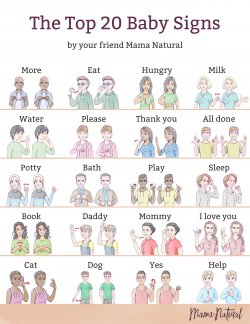
To effectively implement this tool, caregivers generally focus on a core vocabulary related to the infant’s immediate needs and environment. The following twenty signs represent the foundational lexicon of modern baby sign language.
1. More: This is often the first sign taught. It is performed by bringing the fingertips of both hands together repeatedly. It allows the child to request more food, play, or attention.
2. Eat: Using the same hand shape as "more," the fingertips are tapped against the lips. This distinguishes a general desire for "more" from a specific need for nourishment.
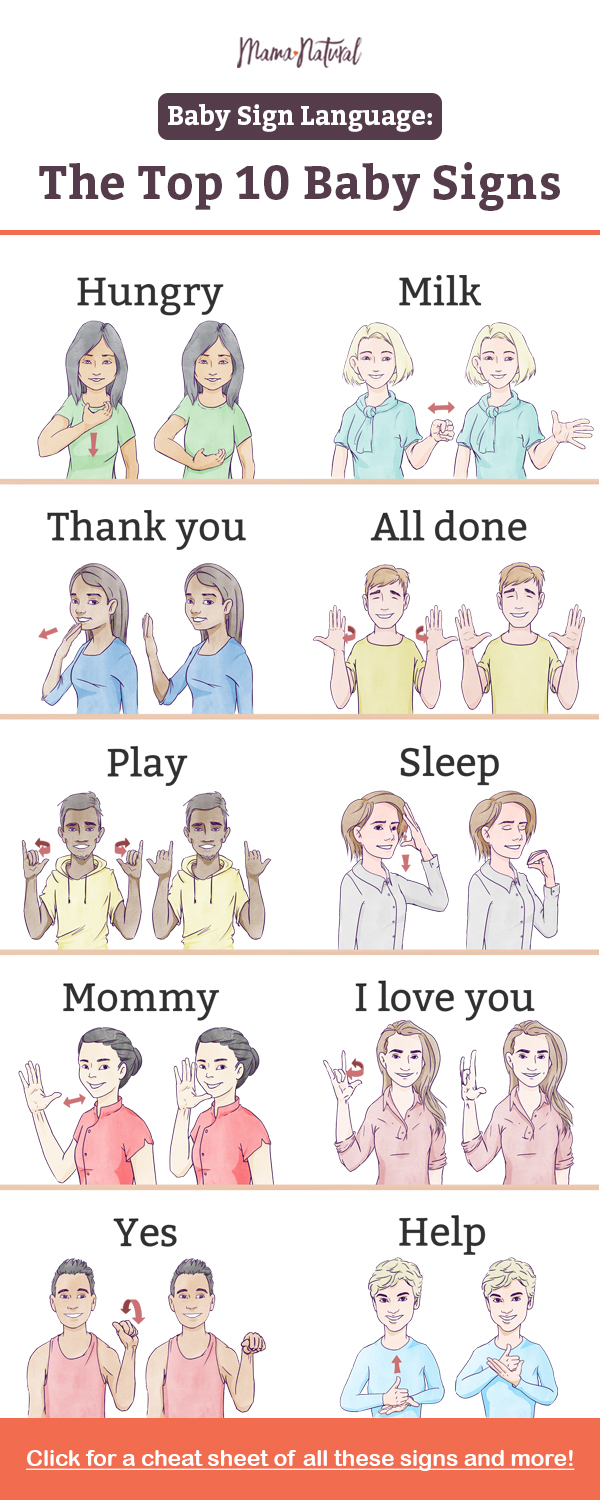
3. Hungry: A flat palm starts under the chin and slides down to the stomach, mimicking the path of food. This is a vital sign for identifying the source of distress.
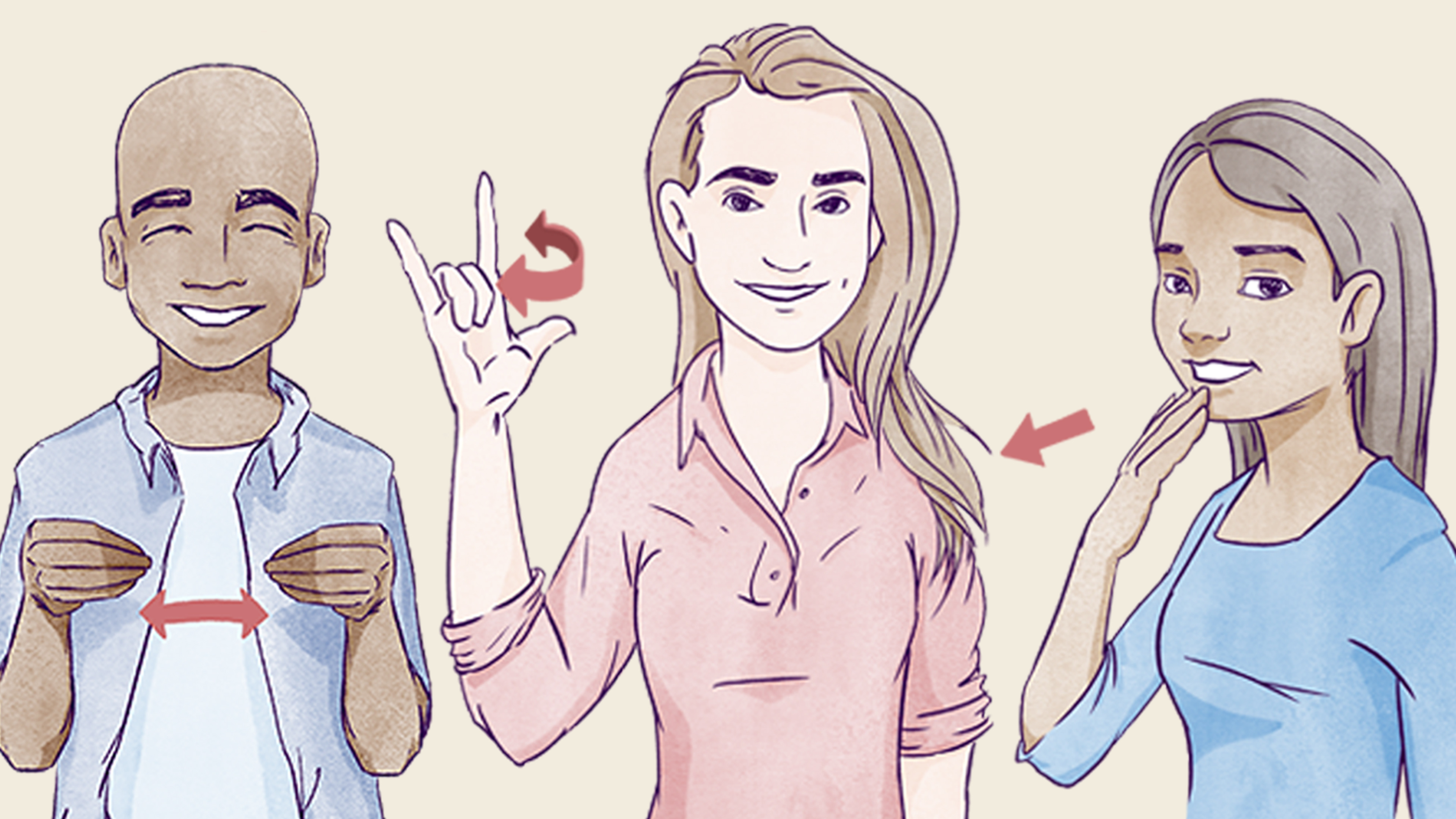
4. Milk: Perhaps the most frequently used sign, it mimics the action of milking a cow by opening and closing a fist. It is essential for infants who are still primarily bottle or breastfed.
5. Water: Formed by making a "W" with the three middle fingers and tapping the index finger against the chin.
6. Please: A flat palm is moved in a circular motion over the chest. This introduces the concept of social manners and soft requests.
7. Thank You: Fingers are moved from the chin outward, similar to the motion of blowing a kiss.
8. All Done: Both hands are held up with palms facing in, then flipped outward. This is crucial for ending meal times or activities without protest.
9. Change: This more complex sign involves hooked index fingers on both hands, with the wrists crossing and rotating. It allows a child to communicate discomfort from a soiled diaper.
10. Potty: The thumb is tucked between the index and middle fingers (the letter ‘T’ in ASL) and shaken. This is often a precursor to successful toilet training.
11. Bath: Fists are rubbed up and down the chest, mimicking the act of scrubbing.
12. Play: Thumbs and pinkies are extended while other fingers are folded, and the wrists are shaken.
13. Sleep: The hand starts at the forehead with fingers spread and is pulled down to the chin as the fingers close, symbolizing eyes shutting.
14. Book: Palms are placed together and then opened like a book hinge.
15. Daddy: An open hand with fingers spread taps the thumb against the forehead.
16. Mommy: The same hand shape as "Daddy," but the thumb taps the chin.
17. Dog: A hand is tapped against the thigh and then the fingers are snapped, mimicking the universal gesture for calling a canine.
18. Cat: Using the thumb and index finger to "pull" imaginary whiskers away from the side of the face.
19. I Love You: In baby sign language, this is often simplified to crossing the arms over the chest in a self-hug, representing affection and security.
20. Help: A "thumbs up" on the dominant hand is placed on the flat palm of the non-dominant hand and lifted upward, signifying the need for assistance.
Perspectives from the Medical and Educational Communities
The American Academy of Pediatrics (AAP) and various early childhood development organizations have largely supported the use of baby sign language, provided it is used to supplement rather than replace verbal interaction. "The key is the ‘total communication’ approach," states Dr. Elena Rossi, a pediatric developmental specialist. "When parents sign while speaking, they are providing a richer linguistic environment. It’s not about teaching a second language; it’s about giving the child a bridge to their first one."
Speech-language pathologists also emphasize that baby sign language can be an inclusive tool. For children with developmental delays or those on the autism spectrum, gestural communication can provide a vital lifeline during the years when verbal communication might be lagging. Furthermore, it creates an early awareness of and respect for the Deaf community and ASL as a legitimate and sophisticated language.
Broader Socio-Economic and Educational Implications
The widespread adoption of baby sign language has led to a burgeoning industry of "baby sign" classes and resources, reflecting a broader societal trend toward "proactive parenting." However, beyond the commercial aspects, the implications for early literacy are significant. Children who are exposed to symbolic representation (where a gesture represents an object) at an early age may develop an earlier understanding of the symbolic nature of letters and words.
Additionally, the "parent-child synchrony" developed through signing—the process of paying close attention to a child’s subtle physical cues—has long-term benefits for emotional intelligence. Caregivers who sign tend to be more "attuned" to their children, which is a primary factor in secure attachment theory.
Conclusion
Baby sign language stands as a testament to the evolving understanding of infant intelligence. It challenges the traditional view of the "pre-verbal" stage as a period of passive observation, instead revealing it to be a time of active, albeit quiet, cognitive engagement. While the process requires significant patience and a commitment to constant repetition, the result is a unique window into a child’s mind months before they can utter their first word. As research continues to validate the emotional and cognitive advantages of early gestural communication, it is likely that baby sign language will remain a permanent and valued fixture in the landscape of early childhood development.