

The consumption of coffee, a daily ritual for millions globally, presents specific considerations for individuals who are pregnant, planning pregnancy, or breastfeeding. While the taste, warmth, and comfort of a good cup of coffee are widely cherished, health guidelines often recommend limiting or entirely avoiding caffeine intake during these critical life stages. Consequently, decaffeinated coffee emerges as a popular and often preferred alternative. However, the method by which coffee beans are decaffeinated is not uniform, and recent attention has been drawn to the varying safety profiles of these processes, particularly concerning the use of chemical solvents. For discerning consumers, especially expectant and new mothers, understanding these methods is paramount, with the Swiss Water Process frequently highlighted as the industry’s chemical-free "Gold Standard."
Caffeine Consumption During Pregnancy and Lactation: The Medical Consensus
Medical and public health organizations universally advise caution regarding caffeine intake during pregnancy and breastfeeding. The American College of Obstetricians and Gynecologists (ACOG) and the World Health Organization (WHO) suggest limiting caffeine intake to less than 200 milligrams per day for pregnant individuals, roughly equivalent to one 12-ounce cup of coffee. This recommendation stems from research indicating that high caffeine consumption may be associated with an increased risk of miscarriage, preterm birth, and low birth weight. Caffeine readily crosses the placenta, exposing the developing fetus, whose metabolism is not equipped to process the stimulant efficiently. Similarly, for breastfeeding mothers, caffeine can pass into breast milk, potentially causing irritability, sleeplessness, and gastrointestinal upset in the infant. Given these potential risks, many mothers opt for decaffeinated beverages to mitigate any adverse effects while still enjoying their preferred flavors. The emphasis on organic coffee in the original context further underscores a holistic approach to maternal and infant health, advocating for the avoidance of agricultural chemicals and pesticides often found in conventionally grown coffee.

The Decaffeination Landscape: A Historical Overview
The quest to remove caffeine from coffee beans dates back to the early 20th century. The first commercially successful decaffeination process was developed by Ludwig Roselius in Germany in 1903, utilizing benzene as a solvent. While effective, benzene was later identified as a carcinogen, leading to the development of alternative methods. Over the decades, various techniques emerged, broadly categorized into solvent-based and non-solvent-based processes. Each method aims to extract caffeine while preserving the coffee’s flavor profile, a delicate balance that significantly influences the final product’s quality and consumer appeal. The evolution of decaffeination has been driven by both health safety concerns and a desire to maintain the sensory attributes of coffee.
Chemical-Based Decaffeination Methods: Processes and Concerns

The majority of commercially available decaffeinated coffee today is produced using solvent-based methods, which fall into two primary categories: direct-solvent and indirect-solvent processes.
-
Direct-Solvent Process: This method involves directly soaking green coffee beans in chemical solvents such as methylene chloride or ethyl acetate.
- Methylene Chloride (Dichloromethane – DCM): In this process, green coffee beans are steamed and then soaked repeatedly in methylene chloride, which bonds with and extracts the caffeine molecules. The beans are then thoroughly rinsed and steamed again to remove any residual solvent. Methylene chloride is a colorless liquid with a sweet, penetrating odor. While regulators like the U.S. Food and Drug Administration (FDA) permit its use, setting limits on residual solvent levels (e.g., 10 parts per million), concerns persist regarding its classification as a potential carcinogen and neurotoxin, particularly with long-term occupational exposure. For consumers, the primary concern revolves around the possibility of trace residues, even if below regulatory thresholds.
- Ethyl Acetate: Often marketed as a "natural" decaffeination method because ethyl acetate is a compound found naturally in fruits like apples and bananas, it is typically synthesized for industrial use. The process is similar to methylene chloride, where steamed beans are soaked in ethyl acetate. This solvent is considered less toxic than methylene chloride, and its "natural" association can be appealing. However, it is still a chemical solvent, and the process involves synthetic ethyl acetate, not directly derived from fruit. Some critics argue that while generally safer, it still represents a chemical intervention that can alter the coffee’s inherent characteristics.
-
Indirect-Solvent Process: In this method, the chemical solvent does not directly contact the coffee beans. Instead, green coffee beans are first soaked in hot water, which extracts both caffeine and flavor compounds. The beans are then removed, and the caffeine-laden water is treated with a solvent (like methylene chloride or ethyl acetate) to extract the caffeine. Once the solvent has absorbed the caffeine, it is separated from the water, and the now caffeine-free, flavor-rich water is reintroduced to the beans for reabsorption of the flavor compounds. While this process theoretically minimizes direct contact between the beans and the solvent, the principle remains that chemical solvents are integral to the decaffeination.
The growing public awareness of chemical additives in food and beverages has led to increased scrutiny of these methods. Reports in news outlets frequently highlight the use of certain chemicals, prompting consumers to seek out alternatives that offer greater peace of mind, especially for vulnerable populations such as pregnant and breastfeeding mothers. The long-term effects of even trace chemical residues, particularly on developing systems, remain a subject of ongoing scientific inquiry and public discourse.
The Swiss Water Process: A Chemical-Free Standard
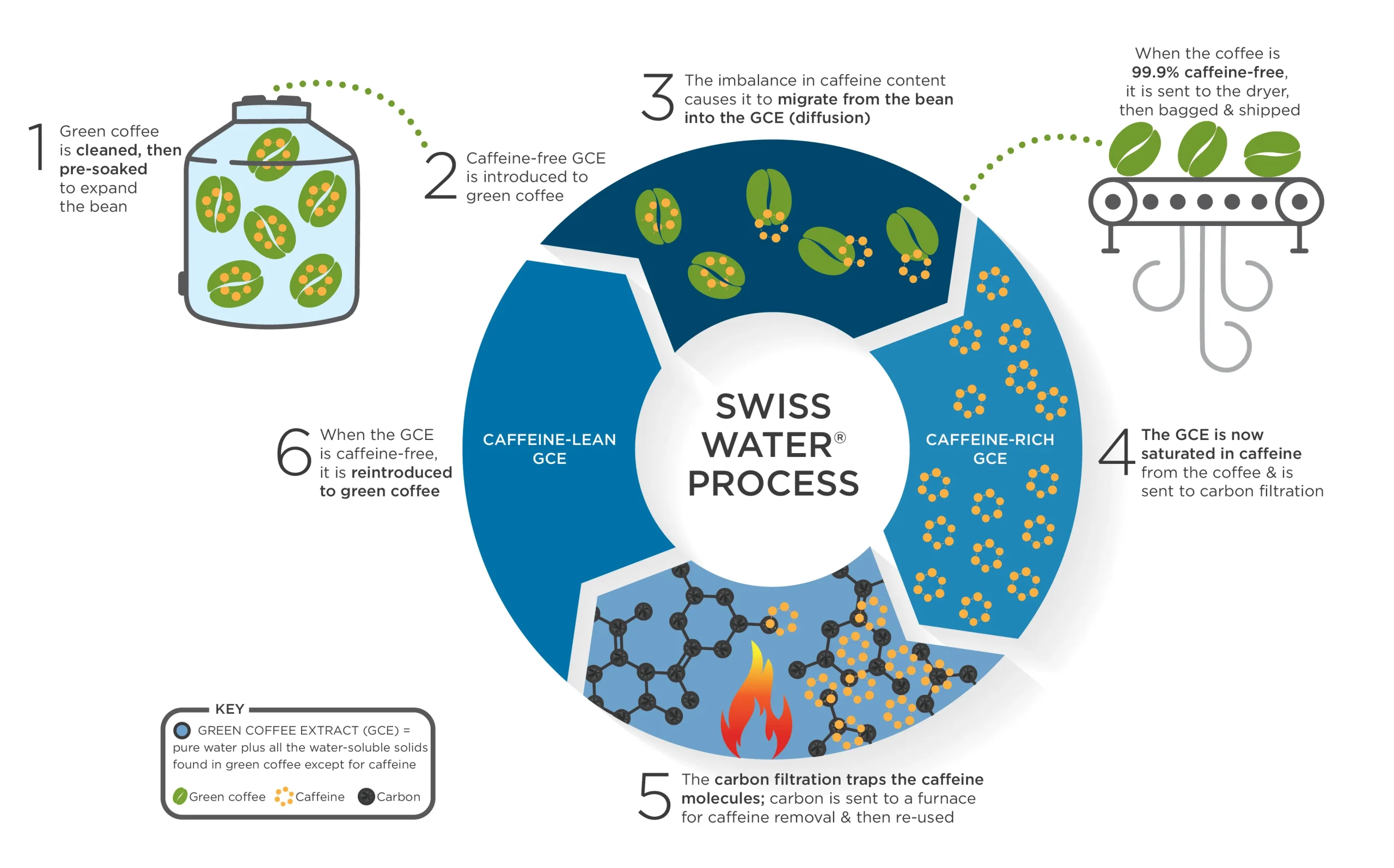
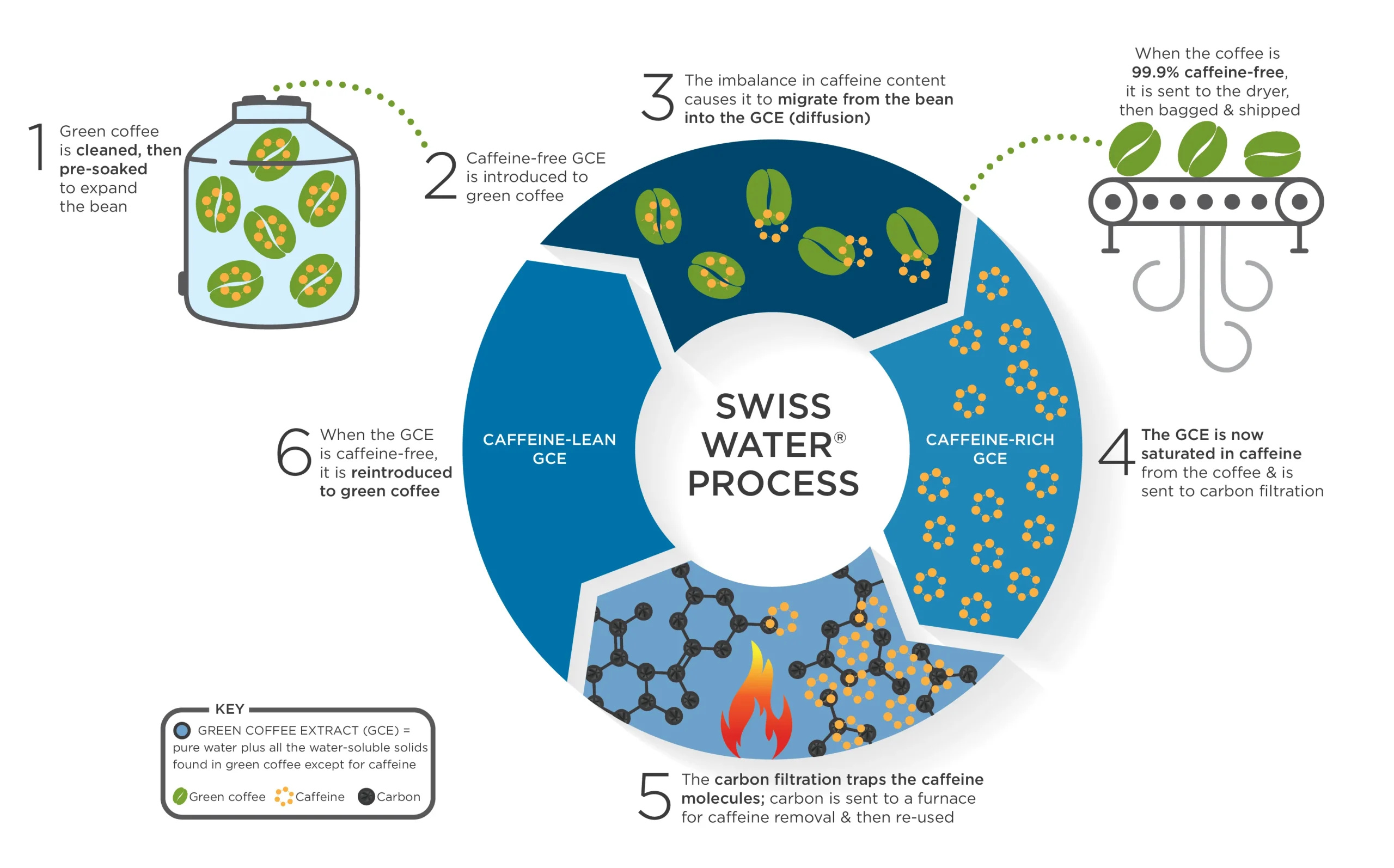
Amidst these concerns, the Swiss Water Process stands out as a pioneering and globally recognized chemical-free method for decaffeinating coffee. Developed in Switzerland in 1933 and formally introduced for commercial use in 1988, it represents a significant departure from solvent-based techniques. The process is patented and is explicitly 100% water-based, ensuring no chemical solvents are ever used to extract caffeine. This makes it an ideal choice for health-conscious individuals, particularly pregnant and breastfeeding mothers seeking to avoid potentially harmful chemical residues.

The mechanics of the Swiss Water Process are ingenious and rely on the principles of osmosis and solubility:
- Soaking and Expansion: The process begins by soaking a batch of high-quality green coffee beans in hot water. This step causes the beans to expand and allows the caffeine and soluble flavor components to migrate into the water, creating a "Green Coffee Extract" (GCE) that is rich in both.
- Caffeine Separation: The caffeine-laden GCE is then passed through a proprietary activated charcoal filter. This filter is designed with a specific porosity that traps larger caffeine molecules while allowing the smaller flavor molecules to pass through. This crucial step separates the caffeine from the flavor compounds.
- Flavor Restoration: The resulting caffeine-free GCE, now rich in the original coffee’s flavor compounds, is then reintroduced to a fresh batch of green coffee beans. Because the GCE is already saturated with flavor components (but no caffeine), the caffeine in the new beans naturally migrates into the GCE via osmosis until equilibrium is reached, leaving the beans decaffeinated but with their intrinsic flavor largely intact.
- Continuous Cycle: This process continues for approximately 8-10 hours, with the GCE being continuously filtered to remove caffeine and then reused. The activated charcoal filters are regularly regenerated to maintain efficiency. The entire cycle is meticulously monitored to ensure that the coffee reaches the target of 99.9% caffeine-free status without compromising its taste.
The key advantage of the Swiss Water Process lies in its purity. By utilizing only water and carbon filters, it completely avoids the use of chemical solvents like methylene chloride or ethyl acetate. This not only safeguards against potential chemical residues but also preserves the original flavor characteristics of the coffee beans more effectively, as the flavor components are carefully retained and reintroduced. The transparency and certification associated with the Swiss Water Process provide an additional layer of assurance for consumers.
Supporting Data and Official Endorsements

The preference for chemical-free decaffeination aligns with broader public health recommendations emphasizing clean eating and minimizing exposure to artificial substances. While direct comparative studies on the long-term health effects of trace solvent residues in decaf coffee versus chemical-free methods are complex and ongoing, the precautionary principle often guides consumer choices, especially for pregnant and nursing individuals. Organizations like the American Pregnancy Association, by highlighting the Swiss Water Process, implicitly endorse methods that prioritize purity and safety. The coffee industry itself has seen a surge in demand for transparent, ethically sourced, and health-conscious products, with chemical-free decaf being a significant part of this trend. Specialty coffee roasters often feature Swiss Water Process decaf prominently, recognizing its value proposition to a growing segment of the market.
Broader Impact and Implications
The rise of methods like the Swiss Water Process reflects a significant shift in consumer preferences and industry practices.

- Consumer Empowerment: Informed consumers are increasingly demanding transparency about food production processes. Knowing how their decaf coffee is processed allows them to make choices aligned with their health values.
- Specialty Coffee Market: For specialty coffee, flavor preservation is paramount. The Swiss Water Process is lauded for its ability to maintain the unique characteristics and nuanced flavors of high-quality beans, which can be diminished by some solvent-based methods. This has made it a favorite among artisanal roasters and connoisseurs.
- Environmental Considerations: While all industrial processes have an environmental footprint, water-based methods generally have a lower impact regarding chemical waste disposal compared to solvent-based alternatives.
- Regulatory Landscape: The ongoing debate around chemicals in food processing could lead to stricter regulations or increased labeling requirements, further incentivizing the adoption of chemical-free methods. The European Union, for example, has historically had stricter regulations on certain food additives and processing aids than other regions.
In conclusion, for the millions of mothers and those considering pregnancy who cherish their daily coffee ritual, the choice of decaf is not merely about caffeine removal but also about the method of decaffeination. While various processes exist, the Swiss Water Process stands out for its commitment to purity, utilizing only water to achieve 99.9% caffeine-free coffee. This chemical-free approach offers peace of mind, aligning with the highest standards of health and safety for both mother and baby. As consumer awareness continues to grow, selecting brands that prioritize organic beans and employ the Swiss Water Process for decaffeination ensures a delicious, comforting, and unequivocally safer beverage choice.