

For millions globally, the daily ritual of a warm, comforting cup of coffee is an integral part of their routine. However, for individuals navigating the delicate stages of pregnancy, attempting conception, or currently breastfeeding, the presence of caffeine necessitates a reevaluation of this beloved beverage. Health guidelines frequently advise either complete abstinence from caffeine or strict moderation to safeguard maternal and fetal health. Consequently, decaffeinated coffee emerges as an appealing and often essential alternative, yet the method by which coffee beans are decaffeinated holds significant implications for health and safety.
The Global Appeal of Coffee and Maternal Health Considerations
Coffee consumption is a global phenomenon, deeply embedded in cultural practices and personal routines. Its stimulating effects, rich aroma, and diverse flavor profiles make it a staple for many. However, the active component, caffeine, is a psychoactive stimulant that crosses the placenta and can be found in breast milk. This physiological reality has led leading health organizations, including the American College of Obstetricians and Gynecologists (ACOG) and the World Health Organization (WHO), to issue cautious recommendations. While specific limits can vary, a general consensus suggests that pregnant and breastfeeding individuals should limit their caffeine intake to no more than 200 milligrams per day – roughly equivalent to one 12-ounce cup of coffee. Exceeding this limit has been associated with potential risks such as increased miscarriage rates, low birth weight, and preterm birth, though research continues to evolve. For those seeking to eliminate these risks entirely or simply reduce their intake, decaffeinated coffee offers a bridge to maintaining their cherished coffee ritual without the stimulant effects. Beyond caffeine, a growing awareness around food purity also drives many expectant mothers to seek organic coffee, aiming to avoid exposure to pesticides and other agricultural chemicals.

A Historical Perspective on Decaffeination Methods
The quest to remove caffeine from coffee beans dates back to the early 20th century, driven by health concerns and consumer demand for a less stimulating beverage. The initial breakthrough came in 1903 when German merchant Ludwig Roselius patented the first commercial decaffeination process. This early method involved steaming coffee beans with acid or brine, then using benzene (a known carcinogen) as a solvent to extract the caffeine. While effective, the inherent dangers of benzene quickly prompted the development of alternative solvents.
Over the decades, chemical solvent-based methods became the industry standard. These typically fall into two categories:
Direct Solvent-Based Methods
In direct methods, green coffee beans are directly steeped in a chemical solvent that selectively binds to and extracts caffeine molecules. The most common solvents used historically and still to some extent today are:

- Methylene Chloride (Dichloromethane – DCM): This solvent is highly effective at removing caffeine and is also used in paint strippers and degreasers. While regulatory bodies like the U.S. Food and Drug Administration (FDA) permit trace amounts of methylene chloride (up to 10 parts per million) in decaffeinated coffee, concerns persist among public health advocates and consumers regarding its potential health implications, particularly with long-term exposure. Reports in the news, as alluded to in the original article, frequently highlight these concerns, leading to increased scrutiny and calls for stricter regulations or outright bans on its use in food products.
- Ethyl Acetate (EA): Often marketed as "natural decaf" because ethyl acetate is a naturally occurring ester found in fruits like bananas and apples. However, the ethyl acetate used for decaffeination is typically synthetically produced for industrial scale. In this process, beans are soaked directly in ethyl acetate, which extracts the caffeine. While considered less toxic than methylene chloride, the use of a chemical solvent still raises questions for many consumers, especially those prioritizing a chemical-free diet during pregnancy.
Indirect Solvent-Based Methods
Indirect methods aim to prevent direct contact between the solvent and the coffee beans. First, the beans are soaked in hot water, allowing caffeine and other flavor compounds to dissolve. The water is then drained, and a chemical solvent (like methylene chloride or ethyl acetate) is added to the water to extract the caffeine from the water. The solvent is then removed from the water, and the now caffeine-free water, still rich in flavor compounds, is reintroduced to the beans. The beans reabsorb the flavor compounds, resulting in decaffeinated coffee without direct solvent contact. While this method mitigates direct exposure, the fundamental reliance on chemical solvents remains a point of contention for health-conscious consumers.
The growing public awareness of chemical residues in food and the increasing demand for "clean label" products have fueled a significant shift in consumer preferences. This shift has propelled alternative, chemical-free decaffeination processes into the spotlight, none more so than the Swiss Water Process.
The Swiss Water Process: A Chemical-Free Gold Standard
Amidst concerns surrounding chemical decaffeination, the Swiss Water Process emerged as a pioneering solution, establishing itself as the "Gold Standard" for chemical-free caffeine extraction. Developed in Switzerland in 1933, and formally introduced to the commercial market in 1988, this patented method is distinguished by its exclusive use of water to remove caffeine, ensuring that no chemical solvents ever come into contact with the coffee beans. This makes it an ideal choice for expectant mothers, nursing parents, and anyone seeking a purer coffee experience.
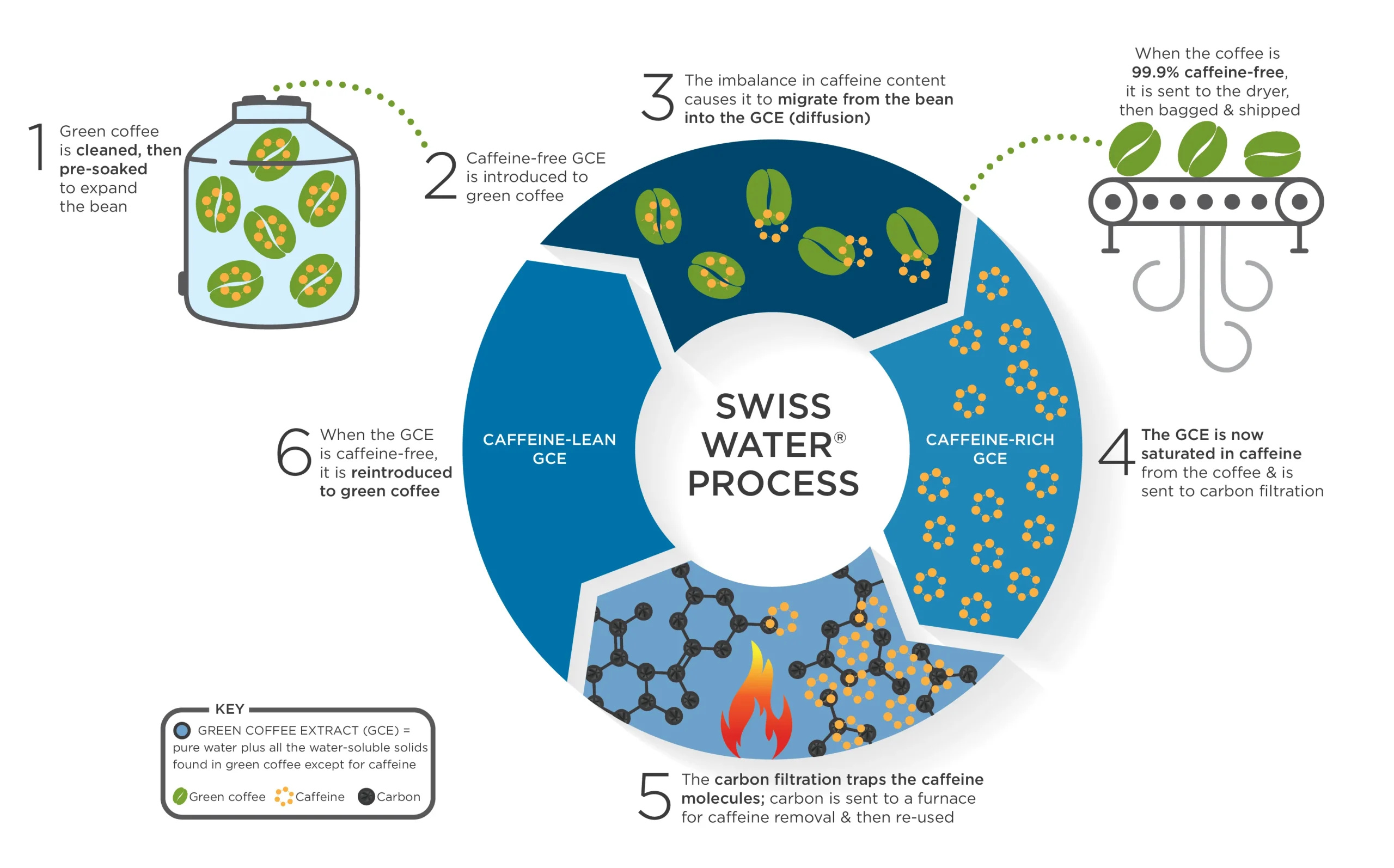
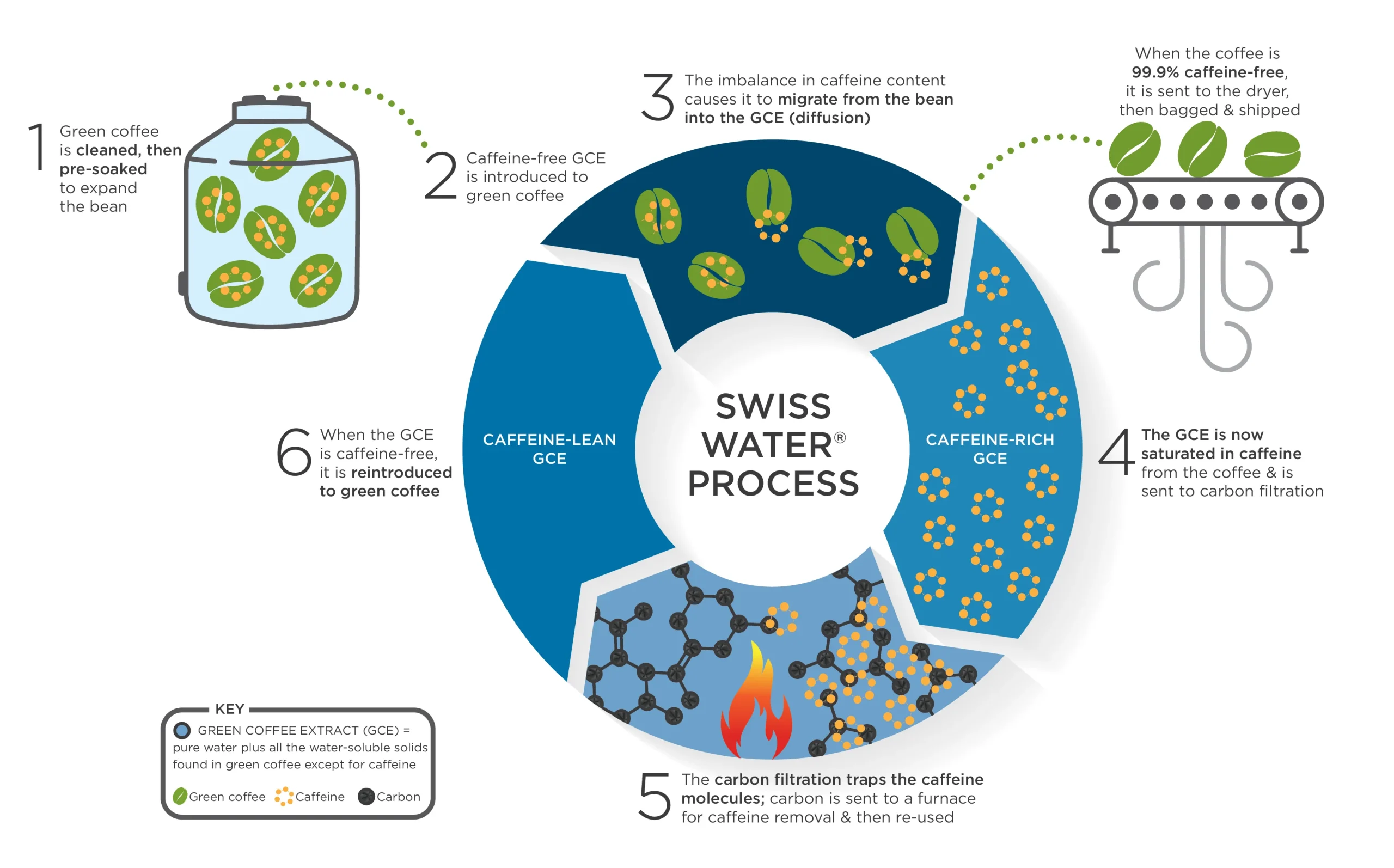
The process is a meticulous, multi-stage operation that typically spans 8 to 10 hours to achieve its remarkable 99.9% caffeine-free target. It unfolds as follows:
- Preparation and Hydration: The journey begins with carefully selected green (unroasted) coffee beans. These beans are initially hydrated and gently warmed in hot water. This crucial step causes the beans to expand, opening their cellular structure and allowing the caffeine to become soluble and migrate out.
- Caffeine Extraction and Flavor Preservation: The water, now infused with caffeine and the soluble flavor compounds from the beans, is drained. This caffeine-rich water is then passed through a proprietary activated charcoal filter, known as the "Green Coffee Extract" (GCE) filter. This filter is specially designed with a specific pore size that is large enough to trap the larger caffeine molecules but small enough to allow the smaller, desirable flavor compounds to pass through. This is the ingenious core of the Swiss Water Process – it removes only the caffeine, leaving the delicate flavor profile intact.
- Caffeine Removal and Regeneration: As the caffeine-laden GCE passes through the activated carbon, the caffeine molecules are effectively "trapped" and separated. The activated carbon is continuously regenerated, ensuring its efficiency. The result is a caffeine-free green coffee extract that still contains all the original soluble flavor compounds of the coffee.
- Flavor Reintroduction: The now caffeine-free, flavor-rich GCE is reintroduced to the original batch of green coffee beans. Over several hours, the beans reabsorb these flavor compounds from the GCE. Because the GCE is already saturated with the coffee’s flavor characteristics (minus the caffeine), there’s no osmotic pressure to pull additional flavor out of the beans. This ensures that the decaffeinated beans retain their original, nuanced taste.
- Drying and Quality Control: Once the desired caffeine level (99.9% caffeine-free) is achieved, the beans are gently dried to their original moisture content, preventing mold growth and preparing them for roasting. Throughout the entire process, rigorous quality control measures are in place to monitor caffeine levels, taste, and aroma, ensuring consistency and excellence in every batch.
The meticulous nature of the Swiss Water Process, coupled with its commitment to being 100% water-based and chemical-free, provides a significant advantage. It allows coffee lovers, especially those with specific health considerations, to enjoy their coffee knowing it has been decaffeinated using the purest method available, preserving both their well-being and the intrinsic qualities of the bean.
Expert Recommendations and Consumer Advocacy for Safer Decaf
The heightened scrutiny on food safety and ingredients has led to a growing demand for transparency in product labeling and manufacturing processes. For expectant and breastfeeding mothers, this demand is particularly acute, given the potential vulnerability of a developing fetus or nursing infant to environmental toxins.

Health organizations, while primarily focused on caffeine limits, implicitly advocate for safer food processing when advising on dietary choices. The general recommendation to opt for organic produce to minimize pesticide exposure logically extends to coffee. When combining the advice for reduced caffeine intake with the preference for organic, chemical-free products, the Swiss Water Process aligns perfectly with a holistic approach to maternal health.
Consumer advocacy groups and independent health experts have increasingly highlighted the distinctions between decaffeination methods. They emphasize the importance of understanding labels and asking questions about product sourcing and processing. The "much attention in the news lately about the dangers of certain chemicals" is a direct reflection of this advocacy, bringing to light the methods employed by "large commercial operations" that may prioritize cost-efficiency over chemical-free purity. These reports often detail the chemicals involved (like methylene chloride), their industrial uses beyond coffee, and the lingering debate over "safe" trace amounts in food products. For many, any trace amount of a known solvent in a daily beverage is unacceptable, especially during sensitive life stages.
Broader Implications for the Coffee Industry and Consumer Choice
The rise of the Swiss Water Process, and other water-based methods, signifies a broader shift in the specialty coffee industry. As consumers become more educated and health-conscious, there’s a growing market for "clean label" products that are free from artificial ingredients, unnecessary additives, and chemical residues. This trend is pushing coffee producers and roasters to adopt more transparent and health-aligned decaffeination methods.

While chemical-free decaffeination processes like Swiss Water may incur higher production costs compared to solvent-based methods, the willingness of consumers to pay a premium for certified organic and chemical-free products indicates a strong market demand. This demand is driving innovation and encouraging more companies to invest in these safer technologies. Brands that explicitly state "Swiss Water Processed" on their packaging are responding directly to this consumer desire for reassurance and quality.
The implications extend beyond just health. The Swiss Water Process is also lauded for its ability to preserve the inherent flavor characteristics of the coffee bean. By avoiding harsh chemicals, the process ensures that the unique nuances of the coffee’s origin, roast, and varietal are not stripped away, leading to a more delicious and enjoyable decaffeinated cup. This is particularly appealing to connoisseurs who appreciate specialty coffee but need to limit their caffeine.
Making an Informed Choice: Prioritizing Health and Safety
In conclusion, for mothers-to-be, those trying to conceive, or individuals who are breastfeeding, the choice of decaffeinated coffee is more than just about avoiding caffeine; it’s about choosing a product processed with their health and their baby’s well-being in mind. The information available underscores a clear preference: prioritize decaffeinated coffee that has been processed without the use of chemical solvents.

The Swiss Water Process stands as a beacon of safety and quality in the decaffeination landscape. Its 100% water-based, chemical-free approach ensures that the warmth and comfort of a great cup of coffee can be enjoyed without reservation. When selecting decaf coffee, actively seek out brands that explicitly state they use the Swiss Water Process. Furthermore, coupling this with a preference for organic coffee beans provides an additional layer of protection, ensuring a beverage free from synthetic pesticides. By making these informed choices, mothers can confidently indulge in their beloved coffee ritual, knowing they have chosen the safest and best option for themselves and their precious little ones.