

The implementation of baby sign language has transitioned from a niche pedagogical theory to a mainstream developmental strategy adopted by millions of parents and early childhood educators worldwide. This modified version of American Sign Language (ASL) is specifically designed to accommodate the nascent motor skills of infants, providing a bridge for communication before the physiological capacity for speech fully matures. By utilizing simplified gestures for essential needs and familiar objects, caregivers can establish a bidirectional dialogue with infants as young as several months old, potentially mitigating the "communication gap" that often leads to physiological and emotional distress in non-verbal children.
The Evolution and Scientific Foundations of Infant Signing
The concept of teaching sign language to hearing infants gained significant academic traction in the 1980s and 1990s, spearheaded by researchers such as Dr. Joseph Garcia and psychologists Dr. Linda Acredolo and Dr. Susan Goodwyn. Their research, often funded by the National Institutes of Health (NIH), suggested that infants possess the cognitive capacity to understand and express complex concepts long before their vocal cords and tongue musculature are sufficiently developed for spoken language.
Neurologically, the areas of the brain responsible for processing language and fine motor movements develop at different rates. While the vocal tract may not produce intelligible words until 12 to 18 months of age, the manual dexterity required for basic gesturing often emerges much earlier. By tapping into this kinesthetic window, baby sign language allows for the externalization of internal states, such as hunger, discomfort, or curiosity, through a physical medium.
Implementation Timeline and Developmental Milestones
The introduction of baby sign language follows a specific chronological progression aligned with an infant’s visual and motor development. Experts generally categorize the implementation into three distinct phases:
-
The Observational Phase (4 to 6 Months): At approximately four months, an infant’s eyesight has developed sufficiently to track hand movements and focus on the caregiver’s face and hands simultaneously. While the infant is unlikely to mimic signs at this stage, they begin the process of associative learning—linking a specific gesture with a specific outcome, such as the sign for "milk" with the act of nursing or bottle-feeding.
-
The Associative Phase (6 to 8 Months): During this window, infants begin to demonstrate clear comprehension. They may react with excitement when they see a familiar sign, indicating that the cognitive link between the symbol and the object has been solidified.
-
The Expressive Phase (8 to 12 Months): Most infants produce their first intentional signs between seven and nine months. This stage requires significant fine motor coordination. Initial signs may be "approximations"—imperfect versions of the gesture that the caregiver must interpret and reinforce through repetition.
Cognitive and Emotional Benefits: A Data-Driven Analysis
The benefits of infant signing extend beyond mere convenience, impacting the psychological and developmental trajectory of the child.
Reduction in Frustration and Emotional Regulation
Pediatric data suggests that a significant percentage of "temper tantrums" in toddlers are the direct result of communicative frustration. When a child has a specific need but lacks the verbal lexicon to express it, the resulting cortisol spike can lead to behavioral outbursts. A study conducted at the University of Western Ontario indicated that providing a gestural outlet allows children to feel "seen and heard," which correlates with higher self-esteem and more stable emotional regulation.
Impact on Verbal Acquisition
A common concern among parents is that sign language might delay spoken language by providing a "crutch." However, empirical research from the American Academy of Pediatrics and other clinical bodies suggests the opposite. The repetition of the spoken word alongside the manual sign provides dual-channel reinforcement. While some studies, such as the Paling report (2006), show mixed results regarding whether signing makes babies talk sooner, there is a consensus that it does not hinder verbal development and may actually expand the child’s early receptive vocabulary.
Pedagogical Strategies for Effective Instruction
For caregivers, the transition to a signing household requires a structured and disciplined approach. Experts recommend a three-tiered strategy:
- Contextual Familiarity: Instruction should begin with "high-utility" signs that relate to the infant’s immediate survival and comfort, such as "milk," "eat," and "more." By focusing on signs with immediate rewards, the infant is more likely to engage with the system.
- Systemic Repetition: Consistency is the primary driver of success. Caregivers are advised to perform the sign every time the corresponding word is spoken and every time the object is presented.
- Positive Reinforcement: The process must remain a low-stress, playful interaction. Clinical observations show that infants respond best to "motherese" or infant-directed speech—exaggerated facial expressions and enthusiastic verbal praise—when they successfully attempt a sign.
Technical Guide to Primary Infant Signs
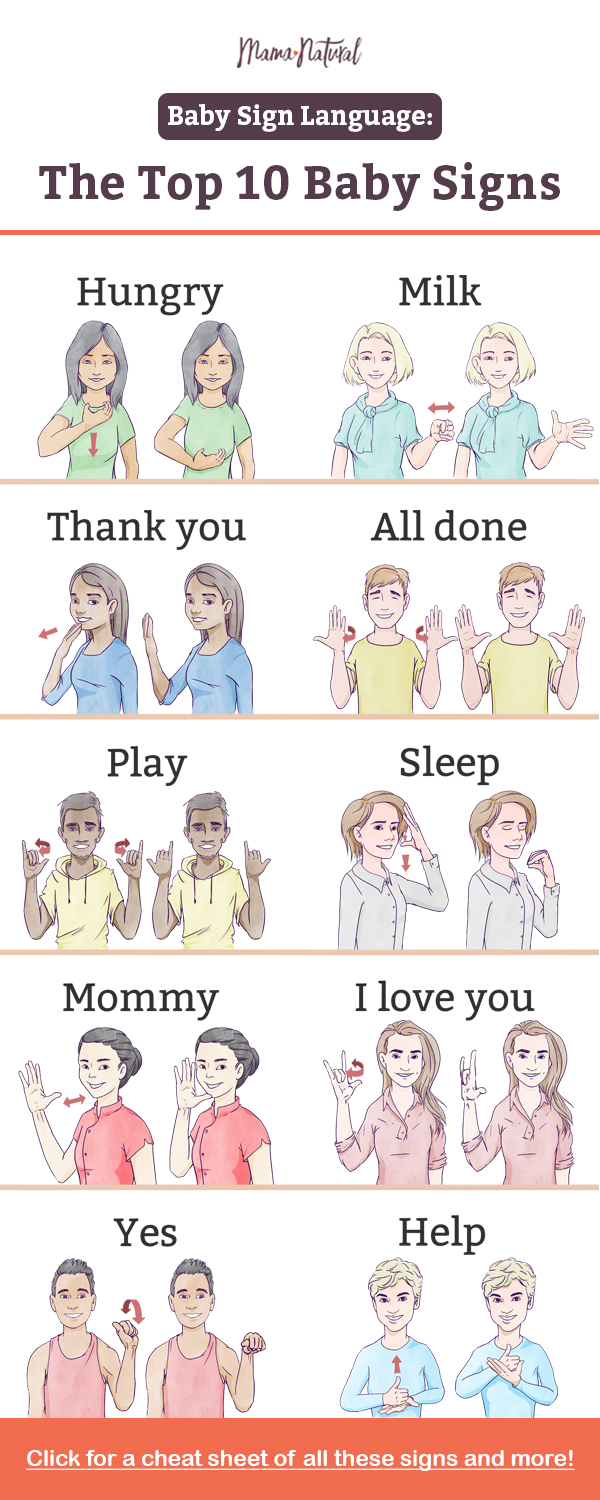
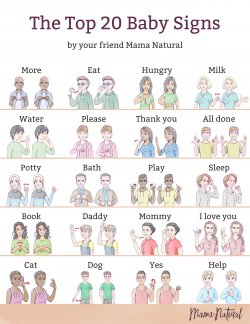
The following 20 signs represent the foundational lexicon of baby sign language, simplified from ASL for infant motor skills:
- More: Press the fingertips of both hands together repeatedly. This is often the first sign learned due to its high utility during mealtime.
- Eat: Form a flattened O-shape with the hand and tap the fingertips against the lips.
- Hungry: Place a flat palm against the chest and slide it down toward the stomach, mimicking the path of food.
- Milk: Open and close a fist in a squeezing motion, similar to milking a cow.
- Water: Form a ‘W’ with the three middle fingers and tap the index finger against the chin.
- Please: Move a flat palm in a circular motion over the chest.
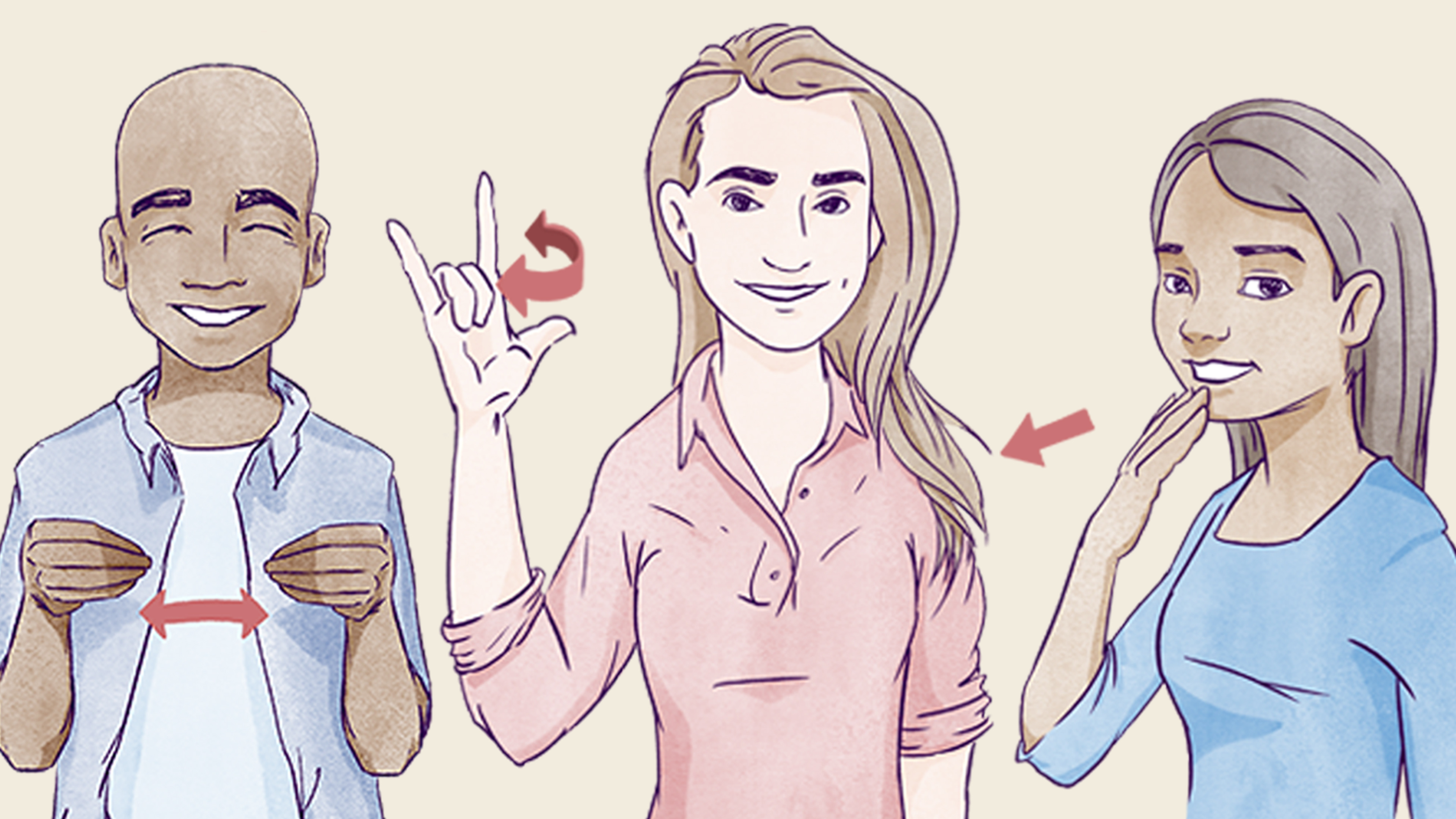
- Thank You: Touch the fingertips to the chin and move the hand forward and down, similar to blowing a kiss.
- All Done: Hold both hands up with palms facing the chest, then twist the wrists so the palms face outward.
- Change: Form hooks with the index fingers, cross the wrists, and rotate the hands around each other to signify a diaper change.
- Potty: Place the thumb between the index and middle fingers (the letter ‘T’ in ASL) and shake the hand side to side.
- Bath: Form fists and rub them up and down the torso, mimicking a scrubbing motion.
- Play: Extend the thumb and pinky finger while tucking the middle fingers (the ‘hang ten’ gesture) and rotate the wrists.
- Sleep: Start with an open hand over the forehead and draw it down to the chin while closing the fingers, symbolizing eyes closing.
- Book: Press the palms together and then hinge them open at the pinkies, mimicking the opening of a book spine.
- Daddy: Spread the fingers of one hand and tap the thumb against the forehead.
- Mommy: Use the same hand shape as "Daddy," but tap the thumb against the chin.
- Dog: Pat the thigh and then snap the fingers, mimicking the universal gesture for calling a canine.
- Cat: Use the thumb and index finger to "pull" imaginary whiskers away from the side of the mouth.
- I Love You: In the baby-simplified version, cross the arms over the chest in a self-hugging motion.
- Help: Place a closed fist (with thumb up) on top of the flat palm of the other hand and lift both together.
Expert Perspectives and Clinical Observations
Speech-language pathologists often advocate for baby sign language as an inclusive tool. "The goal is not to replace speech, but to provide a multi-modal environment for language to thrive," states the consensus among many early childhood interventionists. By involving both the visual and motor cortex, signing creates more neural pathways for language processing.
Furthermore, pediatricians note that the practice fosters a stronger bond between caregiver and child. The requirement for eye contact and the shared focus on hand gestures create a "joint attention" environment, which is a critical precursor to social-emotional intelligence and later literacy skills.
Broader Impact and Implications
As society moves toward more evidence-based parenting, baby sign language has evolved into a standard recommendation for early childhood development. The implications of this practice extend into the classroom; many preschools and daycare centers now integrate basic signs into their curriculum to manage group dynamics and reduce noise levels associated with frustrated crying.
In the long term, the use of baby sign language may contribute to higher levels of empathy and social awareness. By teaching children from a very young age that there are multiple ways to communicate and that their needs can be understood through non-verbal means, caregivers are laying the groundwork for a more inclusive understanding of human interaction. While the "signing phase" is temporary, the cognitive scaffolding it provides remains a permanent part of the child’s developmental architecture. Consistent application, patience, and a focus on the most relevant signs ensure that this tool remains a highly effective method for enhancing the early years of life.