

The landscape of children’s literature, a foundational element in shaping young minds, is undergoing a crucial examination regarding its representation of diversity. While many beloved books offer engaging stories and captivating illustrations, a significant disparity exists in how accurately they reflect the multifaceted world in which children are growing up. This article delves into the compelling reasons why diverse representation in children’s books is not merely a desirable addition but a fundamental necessity for fostering inclusive, empathetic, and well-rounded individuals. We will explore the current state of representation, the impact of this imbalance, and highlight a curated selection of books that successfully champion diversity across race, gender, disability, and sexuality, offering valuable resources for parents, educators, and librarians.
The Underrepresentation Gap in Children’s Books
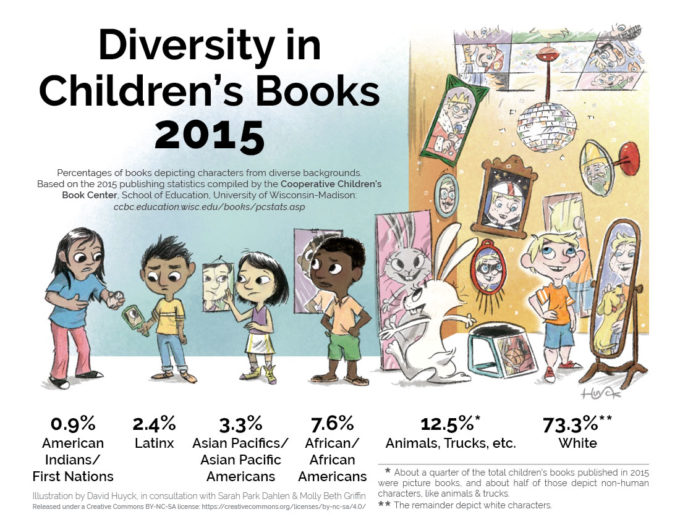
Data consistently reveals a significant underrepresentation of diverse characters in children’s books. Studies, such as those cited by NPR and The Washington Post, have highlighted that protagonists in children’s literature are overwhelmingly white and male. Even when characters are animals or anthropomorphic figures, they are frequently depicted with male characteristics. This pervasive homogeneity creates a skewed perception of reality for young readers, potentially limiting their understanding and acceptance of those who differ from the dominant narrative.
For instance, a 2015 analysis of children’s books found that white characters accounted for a disproportionately high percentage of protagonists, while characters of color made up a significantly smaller fraction. Similarly, research on gender representation indicated a lean towards male characters in both stories and illustrations. This statistical imbalance is not a benign oversight; it actively shapes how children perceive themselves and others. When a child doesn’t see themselves reflected in the stories they consume, it can lead to feelings of invisibility and alienation. Conversely, children who are consistently exposed to a narrow range of characters may develop unconscious biases and a limited worldview.
The implications of this underrepresentation extend beyond individual self-esteem. It impacts the development of empathy and understanding in all children. Books serve as powerful tools for social learning, providing windows into different lives and experiences. When these windows are largely opaque to certain groups, it hinders the growth of a society that values and embraces its inherent diversity. The experiment proposed in the original article – encouraging readers to examine the diversity within their own bookshelves – serves as a practical demonstration of this pervasive issue. Many parents and educators may be surprised to find that a significant portion of their children’s reading material features predominantly white, male protagonists, even when the children themselves are growing up in increasingly diverse communities.
The Importance of Inclusive Storytelling
The deliberate inclusion of characters from diverse backgrounds—encompassing race, ethnicity, gender identity, sexual orientation, physical and cognitive abilities, and socioeconomic status—in children’s books is crucial for several interconnected reasons.

Firstly, mirroring and validation: For children belonging to underrepresented groups, seeing themselves and their families authentically portrayed in books is profoundly validating. It communicates that their experiences are recognized, valued, and worthy of being shared. This sense of belonging is fundamental to a child’s self-esteem and their understanding of their place in the world. When a child reads a story about a character who shares their racial background, their family structure, or navigates similar challenges related to disability, it fosters a sense of connection and reinforces the idea that they are not alone.
Secondly, window into other worlds: For children from dominant groups, diverse books act as vital windows into the lives and perspectives of others. These narratives broaden their understanding, challenge stereotypes, and cultivate empathy. By engaging with characters from different cultures, abilities, or family configurations, children learn to appreciate the richness and complexity of human experience. This exposure is essential for dismantling prejudice and building a more inclusive society from an early age. For example, a story featuring a child with autism can help neurotypical children understand different communication styles and sensory experiences, fostering greater patience and acceptance.
Thirdly, preparation for a diverse world: The world outside the pages of a book is inherently diverse. Children will interact with, learn from, and work alongside people from all walks of life. Books that reflect this reality prepare them for these interactions by normalizing differences and showcasing the common humanity that binds us all. This early exposure to diversity equips children with the social and emotional intelligence needed to navigate an increasingly interconnected global community.
Finally, promoting critical thinking: Diverse narratives often explore complex themes and social issues in age-appropriate ways. This can encourage children to think critically about the world around them, question assumptions, and develop their own informed perspectives. Stories that tackle issues of prejudice, identity, or social justice can spark important conversations between children and adults, fostering deeper understanding and a commitment to fairness.
A Curated Selection of Diverse Children’s Books
The following books, beloved by children and their guardians, exemplify excellence in storytelling while championing diversity. They are categorized by age group to aid in selection.
Books for Babies and Toddlers
This stage of development is critical for early exposure to positive representations. Simple narratives with vibrant illustrations can introduce young children to a wide array of people and experiences.
-
Not Quite Narwhal by Jessie Sima: This charming story explores themes of belonging and family through the eyes of a creature who feels different. While not explicitly about race or gender, its message of unconditional love and acceptance resonates universally and can be interpreted through various lenses of diversity.
-
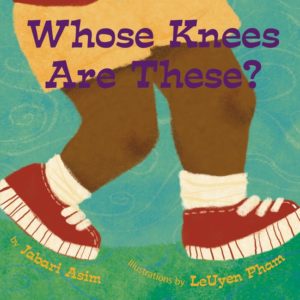
Whose Knees Are These? by Jabari Asim: A simple board book that uses playful rhymes to introduce body parts. The illustrations in this book, as in many of its contemporaries, often depict children of various racial backgrounds, offering early visual exposure to diversity.
-
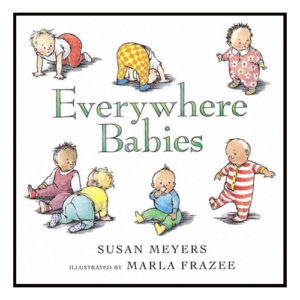
Everywhere Babies by Susan Meyers: Illustrated by the acclaimed Caldecott Honor winner Rafael López, this book celebrates the universal experience of babies. The illustrations are rich with diverse families, showcasing babies of different races and ethnicities, and highlighting the varied ways in which they are cared for and loved.
-
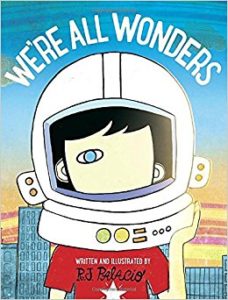
We’re All Wonders by R.J. Palacio: Adapted from the New York Times bestseller Wonder, this picture book introduces the character of Auggie Pullman, a boy with facial differences. It gently conveys the message of kindness and acceptance, emphasizing that everyone is unique and special. The original novel, Wonder, has been lauded for its portrayal of a protagonist with a visible difference and the social dynamics he navigates.
Books for Preschoolers
As children enter preschool, their understanding of the world expands, and they become more receptive to nuanced themes and character development.
-
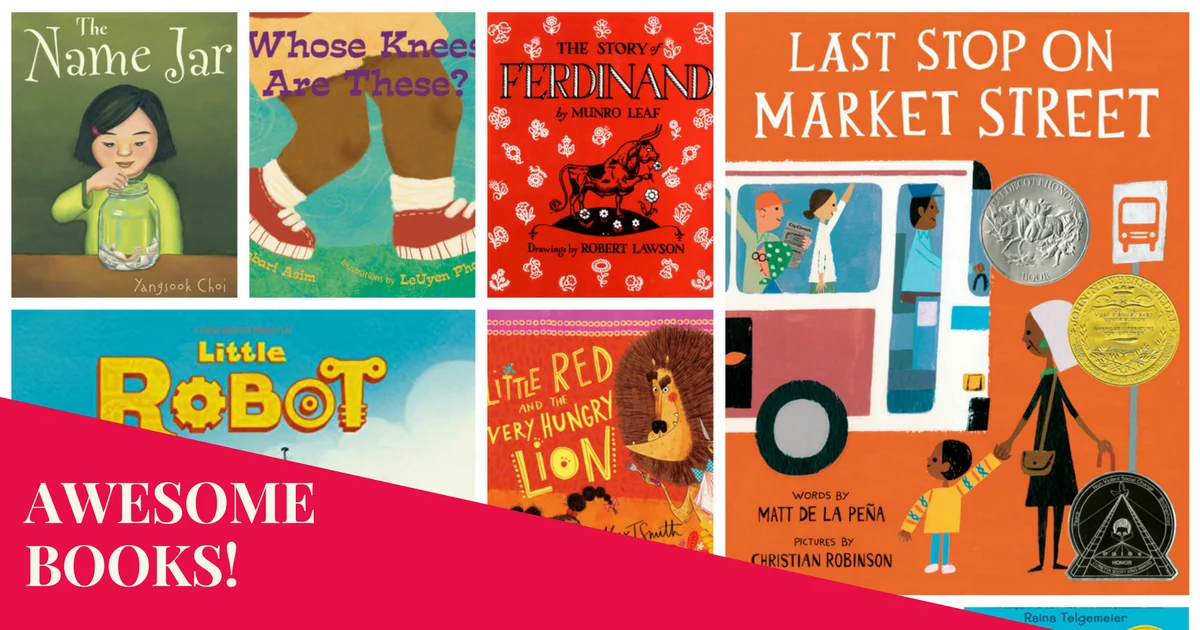
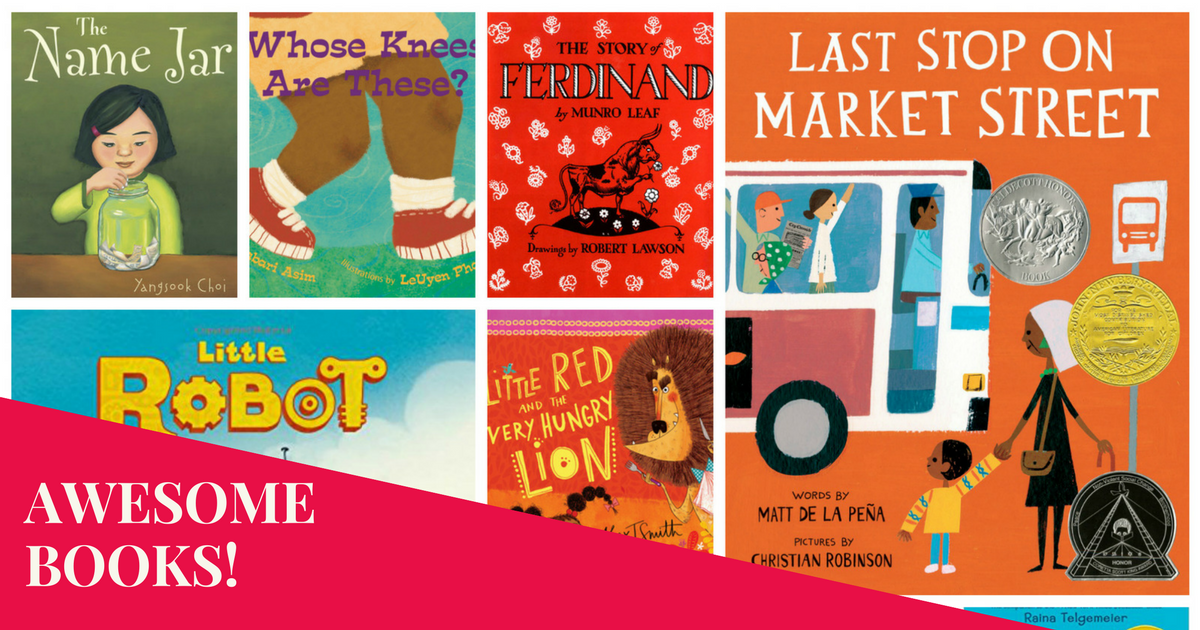
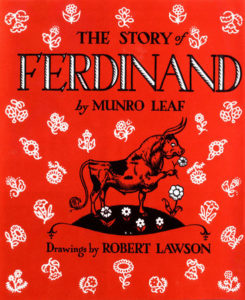
The Story of Ferdinand by Munro Leaf: A timeless classic, The Story of Ferdinand celebrates individuality and non-conformity. Ferdinand, a bull who prefers smelling flowers to bullfighting, challenges societal expectations. This story can be interpreted as a celebration of those who don’t fit traditional molds, which can encompass a broad spectrum of differences.
-
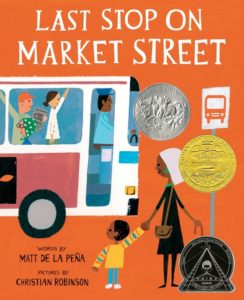
Last Stop on Market Street by Matt de la Peña: This Newbery Medal winner offers a poignant narrative about a young boy and his grandmother taking a bus ride through their diverse urban neighborhood. The story beautifully illustrates themes of community, gratitude, and finding beauty in the everyday, featuring characters of various ethnicities and ages. The illustrations by Christian Robinson are vibrant and inclusive.
-
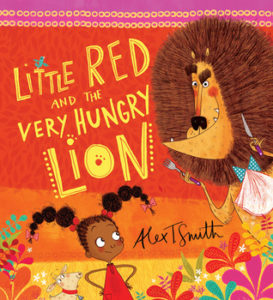
Little Red and the Very Hungry Lion by Alexia T. Coley: A delightful reimagining of the classic fairy tale set in the African jungle. This version features a brave young girl and a formidable lion, with vibrant illustrations that celebrate a different cultural context. It offers a playful and engaging narrative that avoids the darker elements of the original tale.
-
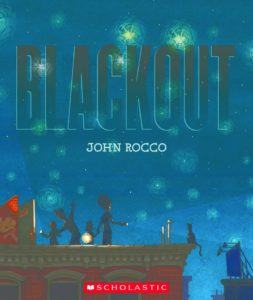
Blackout by John Rocco: A Caldecott Honor book, Blackout is a visually stunning, largely wordless story about a family and their community coming together when the power goes out. It highlights intergenerational connection and the strength of collective experience, showcasing a diverse urban family.
-
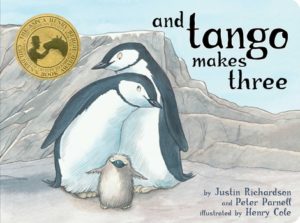
And Tango Makes Three by Justin Richardson and Peter Parnell: Based on a true story, this book tells the heartwarming tale of two male penguins at the Central Park Zoo who form a pair and are given an egg to raise. It is a pioneering book for its straightforward and positive depiction of a same-sex couple raising a family, offering a rare and important representation for young children.
-
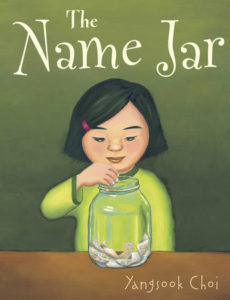
The Name Jar by Yangsook Choi: This book addresses the anxieties of a new immigrant child, Unhei, who is afraid her Korean name will be difficult for her new classmates to pronounce. The story explores themes of cultural identity, belonging, and the acceptance of one’s name and heritage. It sensitively portrays the experience of being an outsider and finding one’s voice.
-
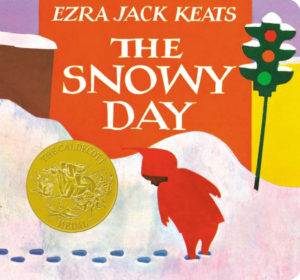
The Snowy Day by Ezra Jack Keats: A landmark in children’s literature, this Caldecott Medal winner features Peter, a young Black boy, experiencing the joy of a snowy day in his urban neighborhood. Its groundbreaking inclusion of a Black protagonist in a mainstream children’s book was revolutionary for its time and continues to be cherished for its simple beauty and relatable depiction of childhood wonder.
-
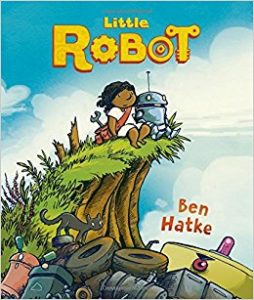
Little Robot by Ben Hatke: This wordless graphic novel tells the story of a small robot who is befriended by a young girl. While the characters’ ethnicities are not explicitly defined, the heartwarming narrative of friendship and connection between a robot and a human child can resonate with all children. Ben Hatke’s work often features strong, capable female protagonists.
Books for Bigger Kids (Older Children and Early Middle Grade)
For older children, books can tackle more complex themes and nuanced character arcs, providing deeper explorations of diversity and identity.
-
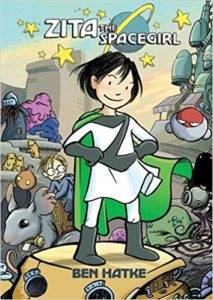
Zita the Spacegirl series by Ben Hatke: This engaging graphic novel series follows Zita, a courageous and resourceful Earth girl who embarks on an epic space adventure. Hatke’s work consistently features strong female leads and explores themes of bravery, friendship, and problem-solving. The alien worlds and diverse characters encountered by Zita offer a rich tapestry of imaginative representation.
-
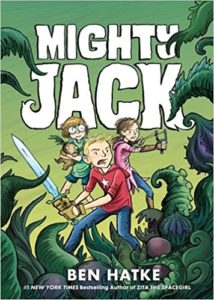
Mighty Jack series by Ben Hatke: A creative retelling of "Jack and the Beanstalk," this graphic novel series introduces Maddy, Jack’s sister, who has autism and is nonverbal. Her relationship with Jack is central to the plot, offering a sensitive portrayal of sibling dynamics within a family that also navigates divorced parents. The series is praised for its action-packed story, humor, and the meaningful inclusion of a character with autism.
-
El Deafo by Cece Bell: A Newbery Honor book, El Deafo is a memoir in graphic novel form about the author’s childhood experience of losing her hearing and navigating school with a hearing aid. She creates a superhero alter ego, "El Deafo," to cope with her feelings of difference. The book is celebrated for its humor, honesty, and its exploration of disability, identity, and finding one’s inner strength.
-
Sisters by Raina Telgemeier: This popular graphic novel explores the complex relationship between two sisters, their family dynamics, and a memorable road trip. Telgemeier’s work is known for its relatable characters and engaging storytelling. While Sisters focuses on sibling rivalry, other books by Telgemeier, such as Ghost (featuring a protagonist with cystic fibrosis) and Drama (including a character exploring his sexuality), offer further examples of diverse representation within her oeuvre.
Broader Impact and Implications
The sustained effort to increase diverse representation in children’s literature has significant societal implications. It contributes to the dismantling of harmful stereotypes and prejudices by presenting a more accurate and nuanced picture of humanity. When children’s books actively showcase individuals from various backgrounds, they help to normalize differences and foster a culture of empathy and understanding.
The publishing industry, historically slow to embrace diversity, is gradually responding to calls for more inclusive content. However, challenges remain in ensuring that diverse voices are not only present but also authentically represented and that the industry actively supports creators from underrepresented backgrounds. Initiatives aimed at promoting diverse authors and illustrators, as well as encouraging diverse content creation, are vital steps in this ongoing process.
The impact of inclusive literature extends beyond the individual child. It shapes the educational landscape, influencing curriculum development and classroom discussions. It informs public perception and contributes to a more equitable and just society. As more diverse stories reach the hands of children, they will be better equipped to understand, respect, and celebrate the world in all its glorious complexity.
The journey towards truly inclusive children’s literature is ongoing. The books highlighted here represent a fraction of the wealth of diverse stories available, and the conversation must continue. By actively seeking out and sharing these narratives, parents, educators, and librarians play a pivotal role in nurturing a generation that is more understanding, empathetic, and prepared to embrace the richness of human diversity. The demand for such literature signals a growing awareness and a collective commitment to ensuring that every child can find themselves reflected in the magic of a story.
