


Implantation bleeding can occur approximately 10 to 14 days after conception, a subtle yet significant event marking the fertilized egg’s attachment to the interior lining of the uterus. This pivotal biological process, known as implantation, involves the embryo burrowing into the richly prepared endometrial wall, which can sometimes lead to a minor disruption of superficial blood vessels, resulting in light bleeding or spotting. While entirely normal and generally not requiring medical intervention, this phenomenon is experienced by roughly one-third of pregnant women. Its timing, often coinciding with when a woman might expect her next menstrual period, frequently leads to confusion, making it a critical, albeit often misidentified, early indicator of pregnancy.
The Biological Basis of Implantation Bleeding

To fully comprehend implantation bleeding, it is essential to understand the intricate biological cascade that follows conception. After fertilization, which typically occurs in the fallopian tube, the single-celled zygote begins a rapid series of mitotic cell divisions, transforming into a multicellular structure known as a blastocyst. This blastocyst then embarks on a journey down the fallopian tube, arriving in the uterus approximately 5 to 7 days post-fertilization. During this period, the uterine lining, or endometrium, has been meticulously prepared by a surge in progesterone following ovulation. This hormonal influence causes the endometrium to thicken, become more vascular, and enrich itself with nutrients, creating an optimal, receptive environment for the developing embryo.
Implantation itself is a highly sophisticated process where the blastocyst adheres to the uterine wall and begins to invade the endometrial tissue. This "nesting" or "burrowing" process is not always entirely quiescent; as the blastocyst embeds, its trophoblast cells actively remodel the maternal blood vessels to establish a connection for nutrient exchange. This delicate interaction can sometimes cause a minor, localized rupture of tiny blood vessels in the superficial layers of the endometrium. The resulting discharge, often minimal in volume, is what is clinically termed implantation bleeding. The precise timing of this event – typically occurring between day 6 and day 12 after ovulation, which translates to approximately 10 to 14 days after conception – is critical. This window directly overlaps with when a woman might anticipate the onset of her next menstrual period if conception had not occurred, usually around 11 to 14 days post-ovulation, thereby contributing significantly to the common confusion between the two.
Distinguishing Implantation Bleeding from Menstruation

While both implantation bleeding and a menstrual period involve vaginal bleeding, several key characteristics differentiate them, providing crucial clues for women attempting to discern a potential pregnancy from their regular cycle. Understanding these distinctions is vital for accurate self-assessment and can help alleviate anxiety, guiding individuals on appropriate next steps, such as when to take a pregnancy test or seek professional medical advice.
Color and Appearance:
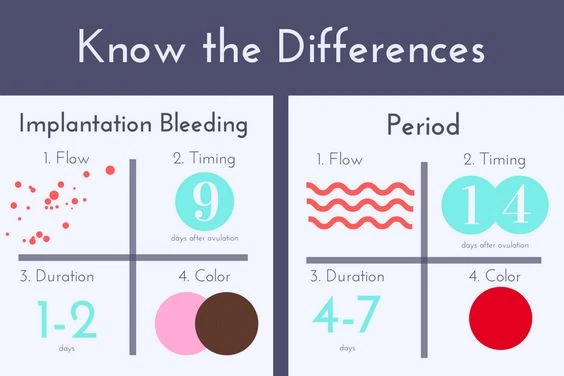
Implantation bleeding typically manifests as light pink, reddish-brown, or rust-colored spotting. This coloration is often attributed to older blood or blood that has mixed with cervical mucus, indicating a slow flow or minimal vascular disruption. In stark contrast, a typical menstrual period usually begins with a brighter, vivid red flow, signifying fresh arterial blood. The darker, less vibrant hue of implantation bleeding is a significant diagnostic indicator.
Volume and Flow:
The most pronounced differentiator lies in the volume and intensity of the blood flow. Implantation bleeding is characterized by very light spotting or a minimal flow, often described as barely staining underwear or only noticeable when wiping after using the restroom. It is categorically never heavy enough to necessitate or saturate sanitary products like pads or tampons. A regular menstrual period, conversely, involves a moderate to heavy flow that consistently requires the use of sanitary protection and may include small blood clots. If a woman experiences a full flow that rapidly saturates sanitary products, it is highly improbable that she is experiencing implantation bleeding.
Duration:
Implantation bleeding is inherently transient. It typically lasts anywhere from a few hours to a maximum of three full days. Many women report it as a single episode of spotting or intermittent light bleeding over a day or two. A regular menstrual period, in contrast, adheres to a more consistent pattern, generally lasting between three to seven days, with a predictable ebb and flow of intensity. If bleeding persists beyond three days, particularly if its intensity increases, it strongly suggests a different underlying cause.
Associated Cramping:
While some women may experience mild, subtle cramping concurrent with implantation, it is generally described as a dull ache, light pressure, or a mild abdominal flutter. This discomfort is significantly less intense than the often-pronounced or even debilitating cramps associated with a full menstrual period, which can range from moderate to severe. Implantation cramps are typically localized to the lower abdomen, do not radiate widely, and do not escalate in severity to the degree of menstrual pain. The absence of severe, throbbing, or persistent pain is a key distinguishing factor.
Timing in the Menstrual Cycle:
As previously highlighted, implantation bleeding occurs before a missed period, typically within the week leading up to the expected menstrual cycle. For example, if a woman anticipates her period on January 25th, any light, atypical spotting observed between approximately January 18th and January 25th could potentially be attributed to implantation. Bleeding that occurs after a period is already expected or has already been missed is considerably less likely to be implantation bleeding and warrants further investigation. This precise temporal overlap is a primary source of confusion, leading many individuals to mistakenly believe their period has arrived unusually early or is uncharacteristically light.

Commonly Associated Early Pregnancy Symptoms
Beyond the bleeding itself, implantation can coincide with a constellation of other early pregnancy symptoms. However, it is critically important to acknowledge that many of these symptoms frequently overlap with those experienced during premenstrual syndrome (PMS) or ovulation, thus complicating self-diagnosis based on symptoms alone.
Some of the symptoms that may accompany implantation bleeding include:

- Mild Cramping: As elaborated, a subtle, dull ache or sensation of pressure in the lower abdomen.
- Breast Tenderness or Swelling: Early hormonal changes, particularly rising progesterone and estrogen, can lead to heightened sensitivity, soreness, or noticeable swelling in the breasts.
- Nausea (often colloquially termed "Morning Sickness"): Although typically becoming more pronounced a few weeks later, some women report experiencing early, mild queasiness or a heightened sensitivity to certain smells during the implantation window.
- Fatigue: Profound and unexplained tiredness can be one of the earliest signs, as the body expends significant energy adapting to and supporting the initial stages of pregnancy.
- Headaches: Hormonal fluctuations characteristic of early pregnancy can occasionally trigger mild headaches.
- Mood Swings: Emotional lability, including sudden shifts between irritability, sadness, and joy, is common due to the rapid changes in hormone levels.
- Food Cravings or Aversions: Individuals may develop sudden, inexplicable cravings for certain foods or an intense aversion to foods they previously enjoyed.
- Increased Sensitivity to Smells: A heightened olfactory sense can make certain everyday odors unbearable or trigger nausea.
It is paramount to reiterate that experiencing these symptoms, even in conjunction with pinkish or brownish spotting, does not definitively confirm pregnancy. A conclusive diagnosis requires a positive pregnancy test, followed by medical confirmation from a healthcare provider.
When to Be Concerned: Red Flags and Medical Attention
While implantation bleeding is a benign physiological event, not all vaginal bleeding in early pregnancy is harmless. It is absolutely paramount for women to understand when bleeding necessitates immediate medical attention, as delays can have serious implications. True pregnancy concerns rarely originate from implantation bleeding itself but rather from other forms of bleeding that occur after a missed period or are more severe in nature.

Signs that bleeding is NOT implantation bleeding or requires urgent medical evaluation:
- Heavy Bleeding: Any bleeding that rapidly soaks through one or more sanitary pads or tampons within an hour, or persists at a heavy flow.
- Bright Red Blood: Indicative of fresh, active bleeding, which is generally more concerning than the older, darker blood associated with implantation.
- Presence of Blood Clots: While small clots can occur during normal menstruation, the presence of large or numerous blood clots during suspected early pregnancy bleeding is a significant red flag.
- Prolonged Duration: Bleeding that lasts for more than three days, particularly if its intensity increases over time.
- Severe or Worsening Pain: Intense, sharp, or persistent abdominal pain, especially if it is localized to one side of the lower abdomen, or if it radiates to the shoulder.
- Accompanied by Other Alarming Symptoms: Such as severe dizziness, lightheadedness, fainting, fever, chills, or the visible passage of tissue.
Potential Serious Causes of Early Pregnancy Bleeding:
Ectopic Pregnancy: This life-threatening condition occurs when a fertilized egg implants outside the uterus, most commonly within a fallopian tube. As the embryo grows, it can rupture the tube, leading to severe internal bleeding. Symptoms typically include sharp, often one-sided abdominal pain, vaginal bleeding (which can vary), dizziness, and shoulder pain. An ectopic pregnancy is a medical emergency requiring immediate diagnosis and intervention. The American College of Obstetricians and Gynecologists (ACOG) strongly emphasizes prompt evaluation for any bleeding accompanied by significant pain or signs of hypovolemic shock.

Miscarriage (Early Pregnancy Loss): Unfortunately, vaginal bleeding in early pregnancy can be a distressing sign of an impending or ongoing miscarriage. This typically involves heavier bleeding, often bright red, accompanied by increasing and severe abdominal cramping, and sometimes the visible passage of fetal tissue or clots. While implantation bleeding is a normal occurrence, bleeding after a missed period is not considered normal. Data from the National Institutes of Health (NIH) indicates that approximately 10-20% of clinically recognized pregnancies end in miscarriage, with the vast majority occurring in the first trimester. The March of Dimes frequently highlights bleeding and cramping as key indicators of potential early pregnancy loss.
Molar Pregnancy: A rare and abnormal form of pregnancy resulting from a non-viable fertilization event. It involves the abnormal proliferation of trophoblastic tissue (which would normally form the placenta) in the uterus. This condition can present with irregular vaginal bleeding, severe nausea and vomiting (hyperemesis gravidarum), and an unusually enlarged uterus for gestational age. While distinct from a viable pregnancy, its early symptoms can be confusing and necessitate prompt medical attention.
Other Causes of Spotting in Early Pregnancy:
Even if not indicative of implantation bleeding or severe complications, light spotting in early pregnancy can sometimes be attributed to less critical causes, such as:

- Cervical Irritation: During pregnancy, the cervix becomes highly vascular and sensitive, making it prone to light bleeding after sexual intercourse or a routine pelvic examination.
- Infections: Vaginal or cervical infections (e.g., yeast infections, bacterial vaginosis, STIs) can cause irritation and subsequent spotting.
- Subchorionic Hematoma: This refers to a collection of blood between the uterine wall and the chorion (the outer membrane of the gestational sac). While it often resolves spontaneously, it can cause bleeding and warrants medical monitoring.
It is crucial to remember that available medical literature suggests at least 50% of women who experience spotting or bleeding (other than implantation bleeding) in early pregnancy will still go on to have a normal, healthy pregnancy. However, any bleeding outside of the clearly defined characteristics of implantation bleeding warrants a prompt consultation with a healthcare provider.
Guidance for Seeking Medical Advice:
- First Trimester: Always inform your healthcare provider about any spotting or bleeding, regardless of how minor it seems.
- Second or Third Trimester: Contact your healthcare provider immediately about any spotting or bleeding, as it can indicate more serious complications such as placental issues or preterm labor.
- Heavy Bleeding at Any Point: Seek emergency medical care immediately if you experience heavy bleeding (soaking a pad an hour) at any stage of pregnancy.
Navigating Pregnancy Tests

Given the inherent ambiguity surrounding early pregnancy symptoms and bleeding, a home pregnancy test remains the most accessible and reliable initial diagnostic step. However, the accuracy of these tests is heavily dependent on proper timing.
Home pregnancy tests function by detecting the presence of human chorionic gonadotropin (hCG), a hormone uniquely produced by the placenta shortly after implantation. As the pregnancy progresses, hCG levels rise exponentially in the mother’s blood and urine. Taking a test too early, particularly during or immediately after the period of implantation bleeding, may result in a false negative because hCG levels may not yet be sufficiently elevated to be detected by over-the-counter tests.
The American Pregnancy Association, in line with general medical consensus, recommends waiting at least three days after implantation bleeding or spotting stops before taking a pregnancy test. For the highest accuracy, ideally, waiting a full week after the expected missed period is recommended, as hCG levels would typically be robustly elevated by then. If a test yields a negative result after your period was due and you have adhered to the recommended waiting period, it is a strong indication that you are not pregnant. For those who remain uncertain, have persistent symptoms, or continue to experience atypical bleeding, contacting a pregnancy educator or healthcare provider for further guidance and testing is always the most prudent course of action.
Expert Consensus and Resources
The medical community consistently provides clear guidance regarding implantation bleeding and early pregnancy. Leading organizations such as the American College of Obstetricians and Gynecologists (ACOG), the March of Dimes, the National Institute of Child Health and Human Development (NICHD), and prominent institutions like the Mayo Clinic all offer comprehensive guidelines. These guidelines uniformly emphasize the critical distinction between normal, self-limiting implantation bleeding and other, more concerning forms of vaginal bleeding that may occur during pregnancy. These organizations collectively advocate for prompt consultation with healthcare providers for any unusual, heavy, or prolonged bleeding, particularly if it occurs outside the very early, expected implantation window. They underscore the importance of accurate, evidence-based information for individuals trying to conceive and expectant parents, offering invaluable resources such as toll-free helplines, online educational materials, and directories for connecting with qualified medical professionals.
Final Recommendations

Implantation bleeding is a common, normal, and generally harmless physiological event that can serve as an early, albeit often confusing, sign of potential pregnancy. While it shares some superficial similarities with a light menstrual period, understanding its distinct characteristics – including its lighter flow, specific color palette (pinkish, brownish), shorter duration, and precise timing relative to the menstrual cycle – is paramount for accurate identification. However, it is equally critical to remain vigilant for "red flag" symptoms that unequivocally signal a need for immediate medical attention. Any instance of heavy bleeding, bright red blood, severe or escalating abdominal pain, or bleeding that occurs later in pregnancy must prompt a swift consultation with a healthcare provider. Ultimately, while self-awareness of one’s bodily changes is an invaluable asset, a definitive diagnosis of pregnancy and the professional assessment of any associated bleeding should always be made by a qualified medical professional. Utilizing available, reputable resources, such as pregnancy helplines and trusted medical websites, can provide invaluable support, accurate information, and crucial guidance throughout the preconception and early pregnancy journey.
