

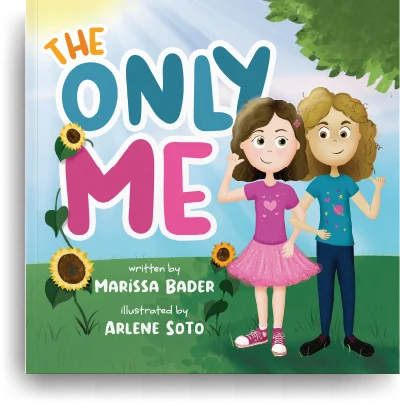
The landscape of children’s literature welcomed a significant new voice in August 2022 with the publication of The Only Me, a debut picture book by author Marissa Bader. Addressing the often-overlooked psychological impact of identity formation in multiples, the book centers on fraternal twins Stella and Paige, exploring Stella’s journey to self-recognition amidst constant comparison. While specifically crafted with twins in mind, the narrative’s universal message—that every child is a unique individual deserving of separate acknowledgment and appreciation—resonates broadly with parents of all children.
The Genesis of The Only Me and Bader’s Personal Inspiration
Marissa Bader, a mother of 6-year-old fraternal twins, Mila and Grace, drew directly from her personal experiences to craft The Only Me. Since their birth, Bader observed a common societal tendency to refer to her daughters collectively as "the twins" rather than by their distinct names. This pervasive habit, she noted, often created a singular, undifferentiated identity for her children, as if their individual selves were incomplete without the other. This external labeling, coupled with frequent comparisons of their physical appearance and mental aptitudes, led to feelings of frustration, insecurity, and confusion regarding their own identities among her daughters. They began to feel "unseen" and, at times, inferior to one another, highlighting a subtle yet profound challenge faced by many multiples.
The book’s protagonist, Stella, mirrors these real-world experiences. At seven years old, Stella finds herself perpetually contrasted with her sister, Paige, despite their inherent differences. This constant external evaluation leaves Stella feeling inadequate and longing for recognition as an individual. Her quest for self-affirmation forms the core of The Only Me, chronicling her journey as she gradually identifies and embraces her unique strengths, ultimately learning to value herself independently of her twin. This narrative arc serves as a gentle yet powerful reminder to young readers, and their caregivers, about the importance of self-acceptance and celebrating individual distinctiveness.
Initially conceived under the working title The Twins Who Were Different, the scope of Bader’s book expanded significantly during its development. A pivotal moment occurred during her research for a 2021 article published on Lucie’s List, which underscored the critical importance of treating all siblings as distinct individuals. This research revealed a compelling insight: despite shared genetics and environment, siblings are often no more similar in personality or cognitive abilities than any two unrelated individuals. This revelation solidified Bader’s conviction that the book’s message of embracing differences, honoring individual strengths, and fostering self-pride transcended the specific experience of twins, extending its relevance to all children navigating the complexities of identity within family dynamics.
Psychological Underpinnings of Individual Identity in Multiples
The phenomenon Bader observes in her own children and portrays in The Only Me is well-documented in developmental psychology. For twins, particularly identical twins who share nearly identical genetic makeups and often similar appearances, the external pressure to be viewed as a unit can be immense. However, even identical twins are distinct individuals shaped by unique prenatal environments (e.g., blood supply differences in the womb, even subtle variations in uterine positioning) and, more significantly, by their divergent postnatal experiences. Fraternal twins, like Bader’s, are genetically no more alike than any other siblings, sharing approximately 50% of their DNA, yet they too face the challenge of being perceived and treated as a singular entity.
Developmental psychologists emphasize that the formation of a strong, independent self-concept is fundamental to a child’s healthy psychological development. Erik Erikson’s stages of psychosocial development, for instance, highlight the critical role of developing autonomy and initiative in early childhood, which lay the groundwork for a robust sense of identity later in adolescence. When children, especially multiples, are consistently grouped, compared, or labeled collectively, it can impede this crucial process. This can lead to what psychologists term "identity confusion," where a child struggles to differentiate their personal traits, preferences, and aspirations from those of their sibling.
Research indicates that constantly comparing siblings, even with positive intentions, can foster sibling rivalry, diminish self-esteem in the child perceived as "lesser," and create an unhealthy competitive environment. Studies on self-concept in twins have shown that twins who are actively encouraged to develop their individual interests and are recognized for their distinct personalities tend to exhibit higher levels of self-esteem and greater psychological well-being. Conversely, those consistently lumped together may struggle more with individuation, potentially leading to anxiety, resentment, or a feeling of being perpetually overshadowed.
The "unique environmental factors" that differentiate even genetically identical individuals are manifold. These include distinct friendships, varied interests and hobbies, different responses from teachers or other adults, and even subtle variations in parental interactions. Each of these experiences contributes to the unique neural pathways and psychological frameworks that define an individual. Therefore, recognizing and nurturing these differences is not merely a matter of politeness but a vital component of healthy child development.
Chronology and Public Reception
The journey of The Only Me from concept to publication reflects a thoughtful and organic development. The initial inspiration struck Bader approximately six years prior to the book’s release, coinciding with the birth of her fraternal twins, Mila and Grace. The observations of how her children were perceived and treated as a collective unit sparked the initial idea for a narrative exploring individual identity among multiples.
The concept matured significantly in the year leading up to the book’s August 2022 publication. In 2021, Bader penned an article for Lucie’s List, a prominent parenting resource, which delved into the broader importance of recognizing and nurturing the individuality of all siblings. This research proved transformative for the book project, broadening its scope from a twin-specific narrative to one with universal applicability, prompting the title change from The Twins Who Were Different to The Only Me.
Upon its release in August 2022, The Only Me quickly garnered attention, with Bader appearing on CBS News Minnesota to discuss the book and its poignant message. This public platform allowed her to articulate the core themes of self-discovery and the celebration of uniqueness, resonating with a wider audience of parents, educators, and children alike. The media engagement underscored the timely relevance of the book’s topic in contemporary discussions about child development and inclusive parenting.
Broader Impact and Implications for Parenting
The message embedded within The Only Me extends far beyond the realm of twins, offering profound implications for all caregivers. It serves as a powerful reminder of the incredible opportunity and responsibility parents and guardians hold in shaping a child’s sense of value and self-esteem. By consciously treating each child as a unique individual, praising their distinct pursuits, acknowledging their varying personalities, and celebrating their diverse strengths, caregivers lay a robust foundation for confidence, security, and a strong sense of self.
This approach—often termed "individualized parenting"—contrasts with a tendency, sometimes unconscious, to compare siblings or to encourage them to conform to a single family ideal. While fostering a sense of family unity is important, it should not come at the expense of individual identity. When children feel seen and respected for who they are, rather than for how they measure up against a sibling or a peer, they are better equipped to develop resilience, embrace their authentic selves, and navigate the world with greater self-assurance.
Educational experts and child development specialists consistently advocate for practices that support individual identity formation. In classrooms, this translates to personalized learning approaches and recognition of diverse talents. In homes, it means valuing a child’s unique interests, even if they differ markedly from those of siblings or parents, and avoiding labels that pigeonhole children into specific roles.
Bader’s initiative to gather parental experiences further underscores the ongoing relevance and complexity of this topic. By inviting parents to share stories of how their multiples are both similar and different, she is not only enriching her understanding but also fostering a community dialogue around individualized parenting. This collaborative approach recognizes that while psychological theories provide frameworks, the lived experiences of families offer invaluable insights into the practical application of these principles. The collection of these narratives promises to contribute to a deeper, more nuanced understanding of how to best support the individual growth of children within multi-child families.
In conclusion, The Only Me by Marissa Bader is more than just a children’s book; it is a catalyst for conversation, a guide for parents, and a beacon for children seeking to understand and appreciate their own unique place in the world. By highlighting the often-unseen struggles of identity among multiples and offering a path to self-acceptance, Bader has contributed a valuable resource to children’s literature, one that champions the inherent worth and distinctiveness of every child. The book’s enduring message is a testament to the idea that while family bonds are foundational, true strength lies in the celebration of each member’s irreplaceable individuality.
