

Millions of individuals worldwide cherish the rich aroma, comforting warmth, and invigorating taste of a well-brewed cup of coffee. For a significant demographic, particularly those contemplating pregnancy, currently pregnant, or breastfeeding, the enjoyment of coffee often necessitates a critical shift: reducing or eliminating caffeine intake. This growing health consciousness has propelled the demand for high-quality decaffeinated coffee, placing a spotlight on the methods used to remove caffeine from beans. Amidst various decaffeination techniques, the Swiss Water Process has emerged as a globally recognized "gold standard," distinguished by its commitment to a 100% chemical-free, water-based extraction, making it an optimal choice for discerning consumers prioritizing purity and well-being.
The Growing Demand for Decaffeinated Coffee
The market for decaffeinated coffee has expanded considerably, driven by diverse consumer needs and health recommendations. Health organizations worldwide, including the American College of Obstetricians and Gynecologists (ACOG) and the World Health Organization (WHO), advise pregnant and breastfeeding individuals to limit their caffeine consumption to moderate levels, typically below 200 mg per day. This guideline is aimed at minimizing potential risks such as miscarriage, low birth weight, and preterm birth, although research on these links is ongoing and often debated. Beyond pregnancy, many individuals opt for decaf to manage anxiety, reduce sleep disturbances, or avoid caffeine’s stimulant effects due to underlying health conditions or personal preference. This diverse demand underscores the importance of not just caffeine removal, but the integrity and safety of the decaffeination process itself.
A Historical Look at Decaffeination Methods

The quest to remove caffeine from coffee beans dates back to the early 20th century. The first commercially successful decaffeination method was developed in 1905 by German merchant Ludwig Roselius. His method involved steaming green coffee beans with acids or bases, then using benzene—a known carcinogen—as a solvent to extract the caffeine. While groundbreaking at the time, the health risks associated with benzene led to its eventual discontinuation in food processing.
Over the decades, other solvents were introduced, becoming the predominant methods for industrial decaffeination. The most common solvent-based techniques today are:
- Direct Method: Green coffee beans are steamed and then directly soaked in a chemical solvent, most commonly methylene chloride (dichloromethane) or ethyl acetate. The solvent bonds with the caffeine molecules, which are then drained away. The beans are rinsed and steamed again to remove residual solvent.
- Indirect Method: The beans are first steeped in hot water, which extracts both caffeine and flavor compounds. The water is then separated from the beans, and a chemical solvent is added to the water to extract the caffeine. The now caffeine-free water, still containing the flavor compounds, is then reintroduced to the beans for reabsorption before the beans are dried. This method aims to prevent direct contact between the beans and the solvent.
While regulatory bodies like the U.S. Food and Drug Administration (FDA) and the European Food Safety Authority (EFSA) have established maximum residue limits for these solvents in decaffeinated coffee, public concern over the use of chemicals in food processing has steadily grown. Methylene chloride, for instance, is also used as a paint stripper and degreaser, raising questions among consumers about its presence, even in trace amounts, in a daily beverage. Ethyl acetate is considered more "natural" as it can be derived from fruits, but it is still a solvent.
The Emergence of Chemical-Free Alternatives

The increasing consumer demand for "clean label" products and a greater awareness of food processing techniques spurred the development of alternative decaffeination methods that avoid chemical solvents entirely. Two primary solvent-free methods emerged:
- CO2 Method: Supercritical carbon dioxide (CO2) is used as a solvent. Under high pressure and temperature, CO2 behaves like both a liquid and a gas, allowing it to penetrate the coffee beans and selectively dissolve the caffeine. This method is highly effective and leaves no chemical residue.
- Water Process Methods (e.g., Swiss Water Process): These methods rely solely on water and osmotic pressure to remove caffeine, preserving the coffee’s inherent flavors and characteristics without the introduction of any chemical agents.
The Swiss Water Process: A Detailed Examination
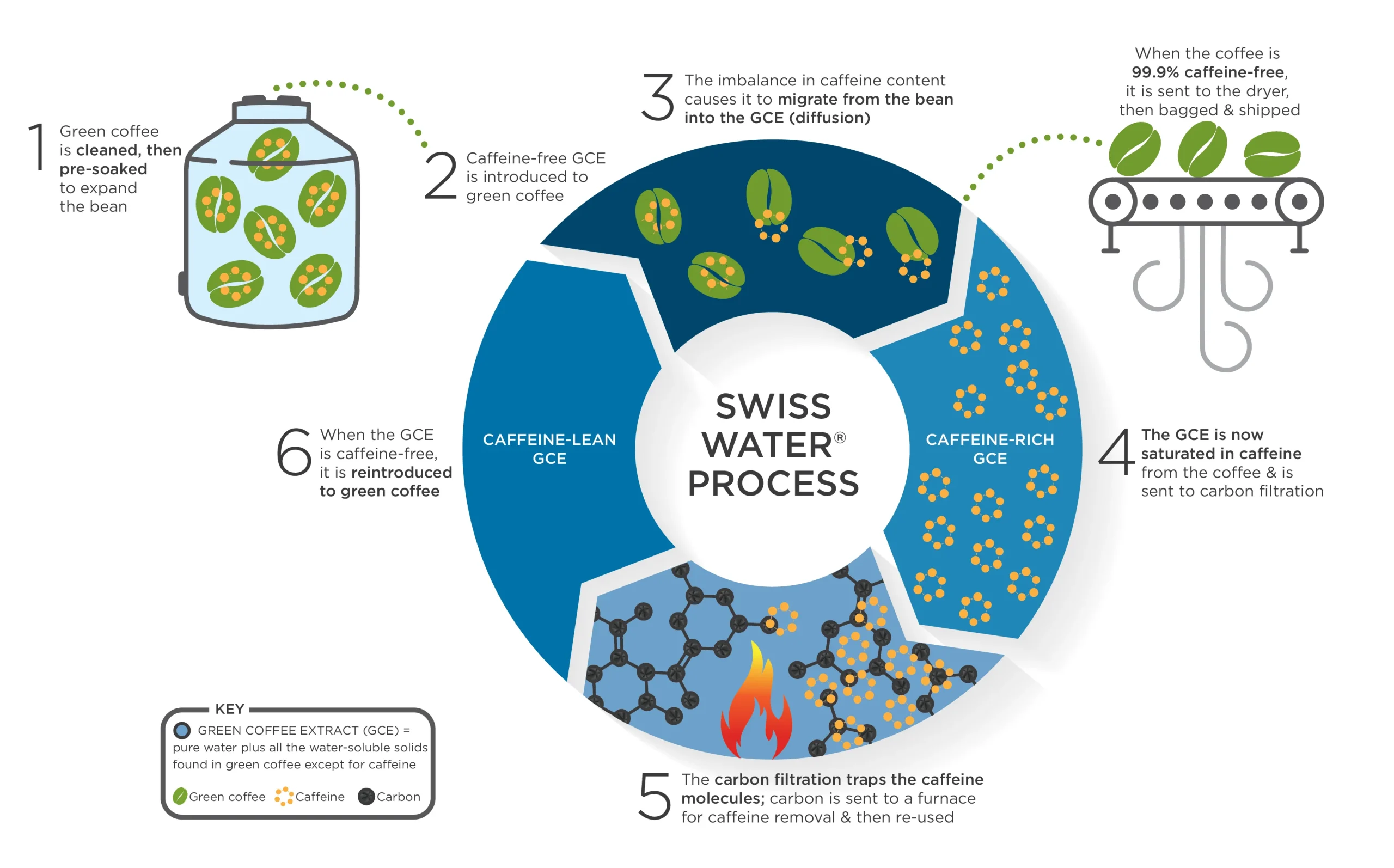
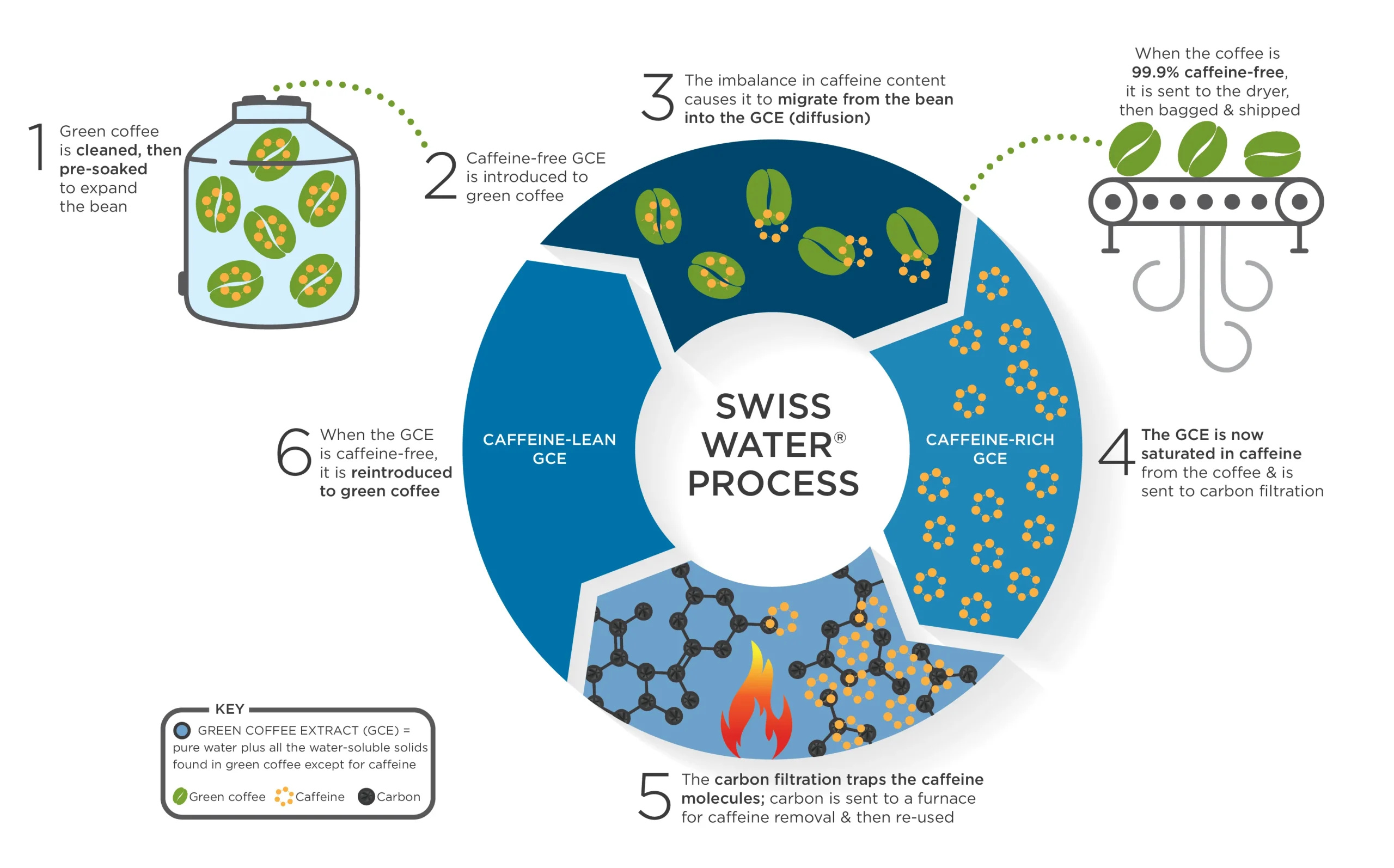
The Swiss Water Process stands as a beacon of innovation and purity in the decaffeination landscape. Developed in Switzerland in 1933 and formally introduced for commercial use by the Swiss Water Decaffeinated Coffee Company in British Columbia, Canada, in 1988, this patented method is celebrated for its commitment to maintaining the unique origin flavor of coffee beans while achieving 99.9% caffeine removal.
The process is intricate, involving several distinct phases:
-
Sourcing and Preparation: The journey begins with carefully selected green coffee beans. The Swiss Water Process emphasizes starting with high-quality, often organic, beans to ensure the best possible flavor outcome. These beans are initially cleaned and hydrated, expanding their cellular structure and making the caffeine molecules more soluble and accessible for extraction. This initial soaking phase is crucial as it prepares the beans for the gentle removal of caffeine.
-
The Green Coffee Extract (GCE) Secret: This is where the Swiss Water Process truly differentiates itself. A separate batch of green coffee beans is soaked in hot water, creating a solution known as Green Coffee Extract (GCE). This GCE is unique because it is saturated with the full spectrum of water-soluble flavor components from coffee, but crucially, it is entirely free of caffeine. How is this achieved? After the initial batch of beans has imparted its flavor and caffeine into the water, this water is then passed through a proprietary activated carbon filter system. These filters are specifically designed to trap only the larger caffeine molecules, allowing the smaller, flavor-carrying compounds to pass through, resulting in caffeine-free GCE.
-
Caffeine Removal Through Carbon Filtration: The pre-hydrated beans from the first step are then introduced to this caffeine-free GCE. Because the GCE is already saturated with coffee’s flavor solids but contains no caffeine, a natural osmotic pressure gradient is created. The caffeine, which is highly soluble, preferentially migrates from the green coffee beans into the GCE, moving from an area of higher concentration (in the beans) to an area of lower concentration (in the GCE). This process continues until the caffeine content in the beans is reduced by 99.9%. Throughout this 8-10 hour cycle, the GCE is continuously recirculated through the activated carbon filters, which diligently remove the newly extracted caffeine molecules, ensuring the GCE remains caffeine-free and ready to draw more caffeine from the beans. The precise sizing of the carbon filters is paramount, as they act like molecular sieves, capturing caffeine while allowing the delicate flavor components to remain in the GCE.
-
Flavor Restoration and Finalization: Once the beans have reached the target caffeine reduction, they are removed from the GCE. Since the GCE was already saturated with flavor compounds, the beans largely retain their original flavor profile, having lost primarily caffeine. The decaffeinated beans are then meticulously dried to their original moisture content, preparing them for roasting. Rigorous quality control checks are performed at every stage, including spectrophotometric analysis to confirm caffeine levels and sensory evaluations to ensure flavor integrity. The entire process is certified organic, affirming its chemical-free nature and adherence to strict environmental standards.

Health and Safety: Why the Method Matters
The choice of decaffeination method carries significant implications for consumer health and product quality.
-
Caffeine Guidelines for Vulnerable Populations: For pregnant and breastfeeding individuals, adhering to recommended caffeine limits is crucial. Decaffeinated coffee provides a viable option to continue enjoying coffee rituals without exceeding these limits. The assurance of a 99.9% caffeine-free product from the Swiss Water Process offers peace of mind.
-
The Controversy of Chemical Solvents: The use of chemical solvents like methylene chloride and ethyl acetate, while regulated, remains a point of contention for many consumers. Methylene chloride, classified as a probable human carcinogen by the Environmental Protection Agency (EPA) in high exposure scenarios, raises concerns, despite FDA’s stance that trace amounts in decaf coffee are safe. Ethyl acetate, while generally regarded as safer and sometimes labeled as "natural" due to its presence in fruits, is still a chemical solvent that some prefer to avoid in their food. News reports and consumer advocacy groups frequently highlight these concerns, pushing for greater transparency and stricter regulations. For instance, in February 2024, the FDA announced it would grant a petition to ban methylene chloride as a paint stripper, adding to the public dialogue about its use in other applications, including decaffeination.

-
Ensuring Purity and Flavor Integrity: Beyond chemical residues, solvent-based methods can sometimes strip away some of the delicate flavor compounds, leading to a less robust or altered taste profile. The Swiss Water Process, by using a GCE already rich in flavor, minimizes this loss. This focus on flavor preservation ensures that the decaf experience is as close as possible to its caffeinated counterpart, a significant factor for coffee connoisseurs.
Industry Responses and Consumer Advocacy
The landscape of decaffeination is witnessing a shift, driven by both consumer demand and evolving industry standards. Companies employing solvent-based methods often emphasize that their processes are safe and compliant with regulatory limits. They may point to the efficiency and cost-effectiveness of their methods, which allows for broader accessibility of decaffeinated options.
However, consumer advocacy groups and health organizations continue to champion greater transparency in food labeling and the adoption of chemical-free processing. Campaigns often educate the public on the various decaffeination methods, empowering them to make informed purchasing decisions. This pressure has led to an increase in roasters and coffee brands proudly marketing their use of the Swiss Water Process or other chemical-free methods, responding directly to consumer preference for "clean" products. The Swiss Water Decaffeinated Coffee Company itself actively promotes its method, highlighting its health and environmental benefits, and partnering with coffee producers globally who share their commitment to quality and sustainability.

The Broader Implications for Coffee and Consumer Health
The rise of the Swiss Water Process and other chemical-free decaffeination methods signifies a broader trend in the food industry: a move towards natural, transparent, and sustainable practices. This impacts not only consumer health but also the global coffee supply chain.
- Empowering Consumer Choice: By understanding how coffee is decaffeinated, consumers are better equipped to align their purchases with their health values. This awareness fosters a more informed marketplace where quality and safety are paramount.
- Regulatory Evolution: The increasing public scrutiny of chemical processes could lead to more stringent regulations or mandatory labeling requirements regarding decaffeination methods in various countries. This would further differentiate products and provide clearer information to consumers.
- Environmental Considerations: Water-based processes, by eliminating the need for synthetic chemical solvents, reduce the environmental footprint associated with their production, transport, and disposal. This aligns with broader sustainability goals within the coffee industry, which is increasingly focused on ecological impact from farm to cup.
- Economic Impact: The premium associated with chemical-free decaffeination methods, such as the Swiss Water Process, can influence pricing and market segmentation. However, as demand grows, economies of scale may make these methods more competitive, further accelerating their adoption across the industry. This could also encourage more coffee producers to invest in organic certification, aligning with the preference for organic beans in these processes.
Making an Informed Choice
For individuals seeking to reduce their caffeine intake, especially during sensitive periods like pregnancy and breastfeeding, selecting decaffeinated coffee processed using the Swiss Water Method offers an optimal blend of safety, flavor integrity, and peace of mind. It represents a conscious choice for a product that is not only 99.9% caffeine-free but also 100% chemical-free, preserving the inherent goodness and natural taste of the coffee bean. As the global conversation around food purity and sustainable practices continues to evolve, understanding the nuances of how our everyday beverages are produced becomes increasingly vital, empowering us to make choices that support our health and the health of the planet.
