

Baby sign language (BSL) has emerged as a significant pedagogical tool in early childhood development, serving as a bridge between an infant’s innate desire to communicate and their physical ability to produce complex vocalizations. While traditional language acquisition typically begins with babbling and progresses to first words around the first birthday, the motor skills required for manual gesturing often develop months ahead of the intricate coordination needed for speech. By utilizing a simplified version of American Sign Language (ASL), parents and caregivers can establish a functional dialogue with infants as young as six months old, potentially reducing domestic frustration and fostering early cognitive growth.
The Historical and Scientific Context of Early Gestural Communication
The formal study of baby sign language gained momentum in the 1980s and 1990s, spearheaded by researchers such as Dr. Linda Acredolo and Dr. Susan Goodwyn. Their landmark research, funded by the National Institutes of Health (NIH), followed a cohort of infants to determine the long-term effects of symbolic gesturing. The findings suggested that infants who used signs not only experienced less frustration but also demonstrated accelerated verbal language development and higher IQ scores in later childhood compared to their non-signing peers.
From a neurological perspective, the efficacy of BSL lies in the brain’s "critical period" for language acquisition. The human brain is primed for language long before the vocal tract—including the larynx, tongue, and lips—is physically mature enough to articulate phonemes. Manual gestures utilize the motor cortex in a way that is accessible to infants, allowing them to categorize their world and express needs through physical symbols. This early stimulation of the brain’s language centers provides a robust foundation for future literacy and linguistic comprehension.
Developmental Chronology: When to Introduce Signing
The implementation of baby sign language is closely tied to an infant’s developmental milestones. While every child progresses at a unique pace, the following timeline is generally observed by pediatric experts:
- The Observation Phase (4 to 6 Months): At this stage, infants begin to develop the visual acuity necessary to track hand movements. While they lack the manual dexterity to mimic signs, introducing basic gestures during routine activities (such as feeding or bathing) begins the process of mental association.
- The Recognition Phase (6 to 8 Months): Infants start to show clear signs of understanding. They may smile or react excitedly when a parent signs "milk" or "eat," indicating that the brain has successfully linked the gesture to the object or action.
- The Production Phase (8 to 12 Months): As fine motor skills improve, infants begin to sign back. Initial signs may be "clumsy" or approximations of the adult version—much like "mama" is an approximation of a more complex thought—but they represent a breakthrough in intentional communication.
Methodological Approaches to Teaching BSL
Effective instruction in baby sign language requires a consistent, three-pronged approach: association, repetition, and reinforcement.
Start with the Familiar
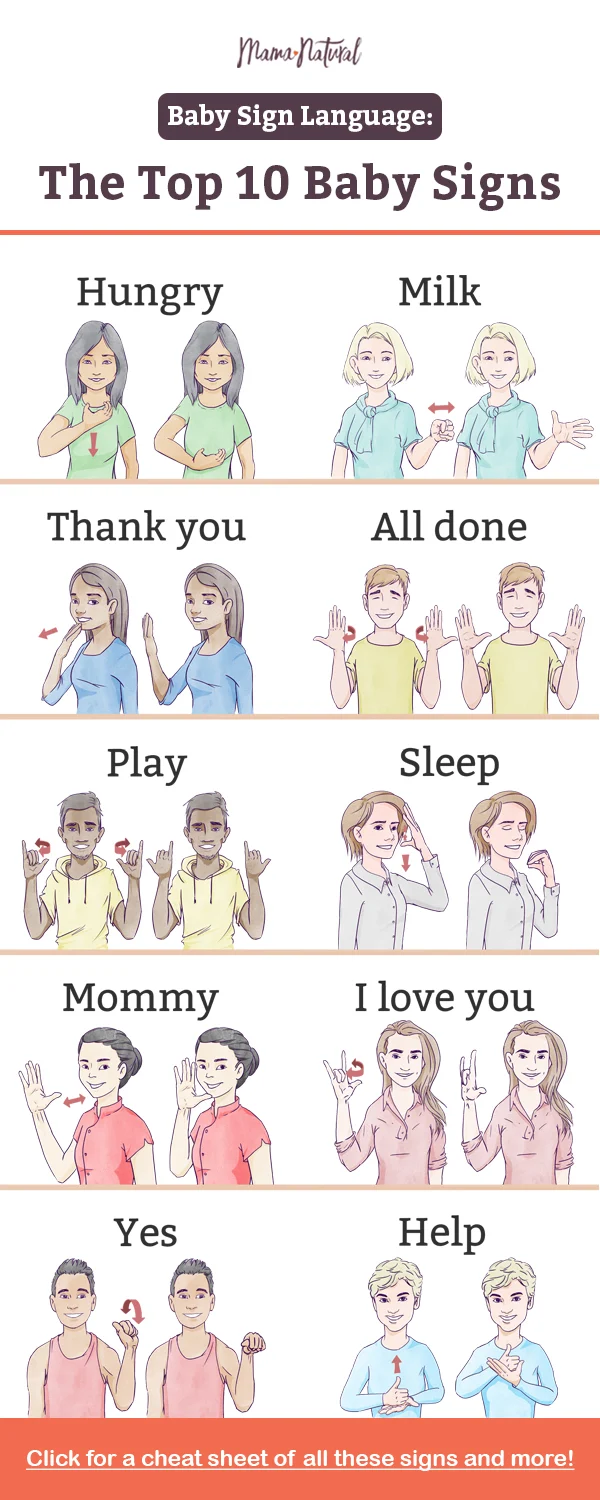
Pediatricians recommend beginning with "motivational signs"—gestures that represent things the baby highly desires or encounters frequently. These typically include "milk," "more," "eat," and "mommy" or "daddy." By focusing on high-utility words, the child receives immediate "functional feedback"; they make a sign and receive a tangible reward, which reinforces the value of communication.
The Power of Repetition
Consistency is the cornerstone of gestural learning. Caregivers are encouraged to sign every time they say the corresponding word. The auditory and visual inputs should be simultaneous to help the infant build a multi-sensory map of the concept. Experts suggest sticking to a small "vocabulary" of three to five signs for several weeks before expanding the lexicon.
Positive Reinforcement and Patience
The transition from observation to production can take several months. During this period, it is vital to maintain a low-stress environment. When a baby attempts a sign, even if it is physically inaccurate, caregivers should provide enthusiastic verbal and physical praise. This builds the child’s self-esteem and encourages further experimentation with language.
A Lexicon of Essential Signs: Descriptions and Techniques
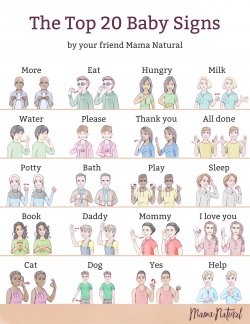
The following twenty signs represent the foundational vocabulary used in most baby sign language programs. These gestures are adapted from ASL to accommodate the limited fine motor control of infants.
- More: This is often the first sign learned. Bring the fingertips of both hands together to form a "O" shape with the thumbs, then tap the fingertips of both hands against each other repeatedly.
- Eat: Using the same hand shape as "more," tap your fingertips against your lips. This clearly communicates hunger or the start of a meal.
- Hungry: Place a flat palm against the chest, just below the neck, and slide the hand down toward the stomach. This follows the path of food and indicates a physical sensation.
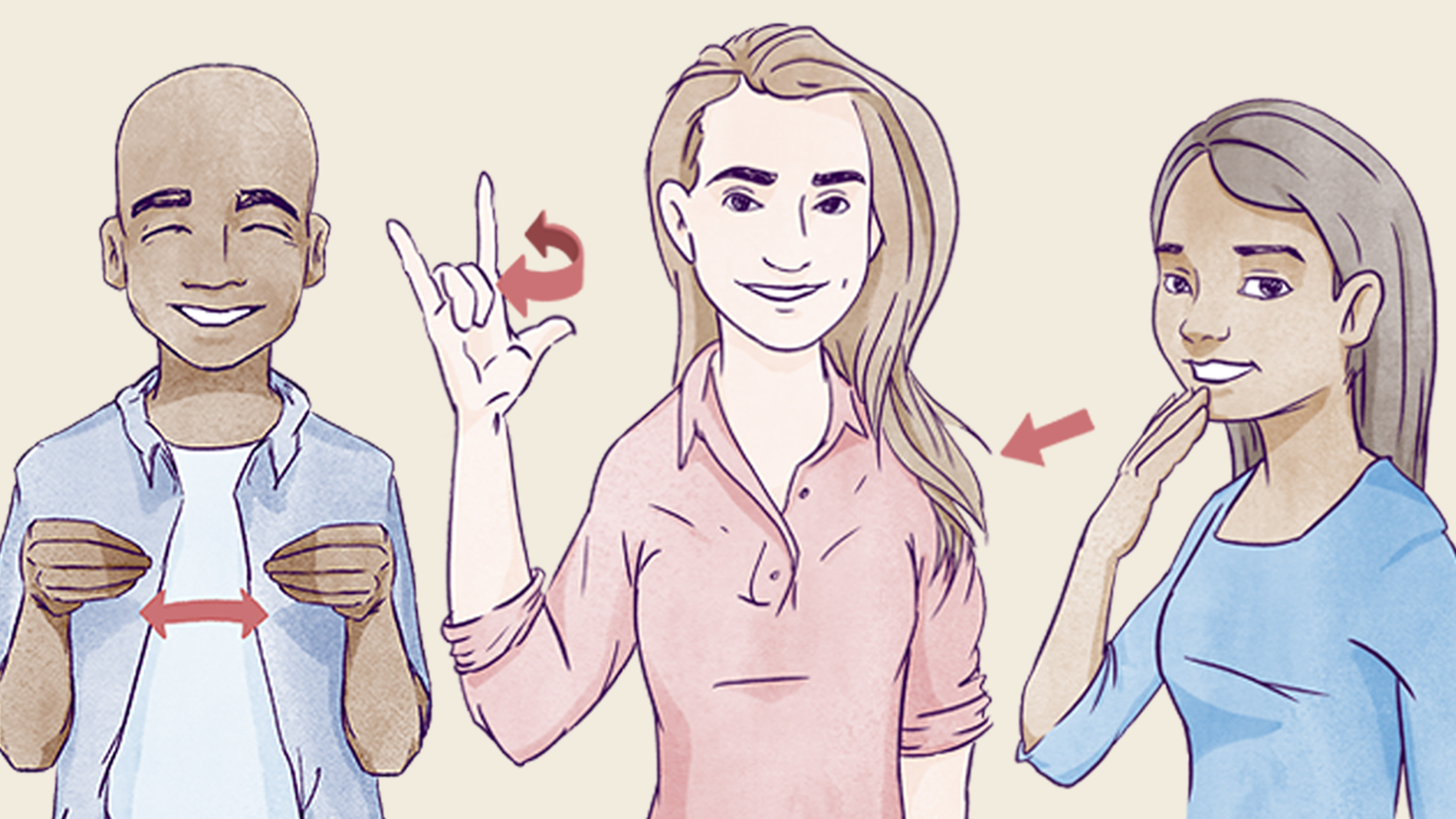
- Milk: One of the most vital signs for infants, this mimics the action of milking a cow. Form a fist and then open and close the fingers repeatedly.
- Water: Form a "W" with the three middle fingers (index, middle, ring) and tap the index finger against the chin.
- Please: Place a flat palm against the center of the chest and move it in a circular motion. This introduces early social etiquette and reduces demanding behavior.
- Thank You: Touch the fingertips to the chin and then move the hand forward and down toward the person being thanked, similar to blowing a kiss.
- All Done: Start with hands held up, palms facing the chest. Quickly flip the hands outward so the palms face away. This is essential for ending mealtime or playtime without a tantrum.
- Change: To indicate a diaper change, ball both hands into fists with the index fingers hooked. Cross the wrists and rotate the hands around each other.
- Potty: For parents practicing early potty training or "elimination communication," the sign involves making a fist with the thumb tucked between the index and middle fingers (the ASL letter ‘T’) and shaking it side-to-side.
- Bath: Form two fists and rub them up and down the chest, mimicking the action of scrubbing oneself clean.
- Play: Extend the thumbs and pinky fingers of both hands while keeping the middle fingers tucked. Twist the wrists back and forth.
- Sleep: Place an open hand over the forehead with the palm facing the face. Pull the hand down toward the chin while closing the fingers, symbolizing eyes closing.
- Book: Place both palms together, then open them while keeping the bottom edges touching, mimicking the opening of a book spine.
- Daddy: Spread the fingers of one hand and tap the thumb against the forehead.
- Mommy: Use the same hand shape as "daddy," but tap the thumb against the chin.
- Dog: Pat the side of the thigh and then snap the fingers, mimicking a common way of calling a canine companion.
- Cat: Use the thumb and index finger to "pinch" imaginary whiskers near the side of the mouth and pull them outward.
- I Love You: In BSL for infants, this is often simplified to crossing the arms over the chest in a self-hug, symbolizing a physical embrace.
- Yes/No: For "yes," form a fist and tilt it up and down like a nodding head. For "no," tap the index and middle fingers against the thumb.
- Help: Place a closed fist with the thumb up (a "thumbs up") on top of a flat, open palm. Move both hands upward together.
Quantitative Benefits and Socio-Emotional Impact
Data from various developmental studies highlight several key benefits of BSL implementation. A primary advantage is the significant reduction in "frustration-based" behaviors. Temper tantrums in the 12-to-24-month age range are frequently the result of a child knowing exactly what they want but lacking the phonetic capability to express it. When a child can sign "water" instead of screaming in the kitchen, the emotional climate of the household improves.
Furthermore, BSL has been shown to strengthen the parent-child bond. The requirement for face-to-face contact and focused attention during signing sessions increases the frequency of "joint attention" episodes, which are critical for social development. Children who feel "heard" and understood by their caregivers at an early age often exhibit higher levels of self-confidence and a more secure attachment style.
Expert Perspectives and Broader Implications
Speech-language pathologists (SLPs) generally support the use of baby sign language, provided it is used as a supplement to, rather than a replacement for, verbal communication. The American Academy of Pediatrics (AAP) notes that gesturing is a natural part of language development—pointing and waving "bye-bye" are themselves forms of signing. By expanding this natural repertoire, parents are simply leaning into the child’s existing developmental path.
Critically, research has debunked the myth that signing delays speech. On the contrary, the repetitive pairing of the sign with the spoken word provides a "double-coding" of the information in the brain. Most children naturally drop the signs as their verbal vocabulary expands, simply because speech is a more efficient and faster method of communication once mastered.
In a broader sense, the rise of baby sign language reflects a shift in modern parenting toward more responsive and evidence-based practices. By recognizing the cognitive capabilities of infants and providing them with the tools to express themselves, society is moving toward a more nuanced understanding of early childhood intelligence. The implications extend into long-term academic success, as the early "conversations" facilitated by BSL lay the neural groundwork for advanced literacy, emotional intelligence, and interpersonal communication skills that persist well into adulthood.
