


Implantation bleeding can occur approximately 10 to 14 days after conception, a pivotal moment when the fertilized egg, now a nascent embryo, successfully attaches to the nutrient-rich interior lining of the uterus. This delicate biological process can occasionally lead to light bleeding or spotting, a physiological event that, while often a source of confusion and anxiety for women, is entirely normal and typically requires no medical intervention. Current estimates suggest that roughly one-third of all pregnant individuals will experience some form of implantation bleeding, making it a relatively common, albeit subtle, early indicator of pregnancy. Despite its occurrence around the time a woman might expect her next menstrual period, implantation bleeding possesses distinct characteristics that differentiate it from regular menstruation, primarily its lighter nature and shorter duration.

The Biological Blueprint: Understanding Implantation
To fully appreciate the phenomenon of implantation bleeding, it is essential to contextualize it within the broader sequence of early reproductive events. Conception typically takes place in the fallopian tube when a sperm successfully fertilizes an egg, forming a zygote. Over the next five to seven days, this single-celled zygote undergoes rapid cellular division while simultaneously migrating down the fallopian tube towards the uterus. By the time it reaches the uterine cavity, it has developed into a blastocyst—a sophisticated structure comprising an inner cell mass (which will become the embryo) and an outer layer of cells called the trophoblast (which will form part of the placenta).
The uterine lining, or endometrium, has been meticulously prepared for this arrival under the influence of hormones, particularly progesterone, secreted by the corpus luteum. This preparation ensures the endometrium is thick, vascular, and receptive. Implantation is the critical process where the trophoblast cells of the blastocyst actively burrow into the receptive endometrial wall. This intricate cellular interaction involves the dissolution of some maternal blood vessels and tissues as the embryo embeds itself to establish a blood supply for its continued growth and development. It is this microscopic disruption of the delicate endometrial capillaries during the burrowing process that can sometimes result in the light bleeding known as implantation bleeding. This event is a testament to the remarkable precision of human embryogenesis, marking the definitive establishment of pregnancy within the maternal environment.
Distinguishing the Signals: Implantation Bleeding vs. Menstruation
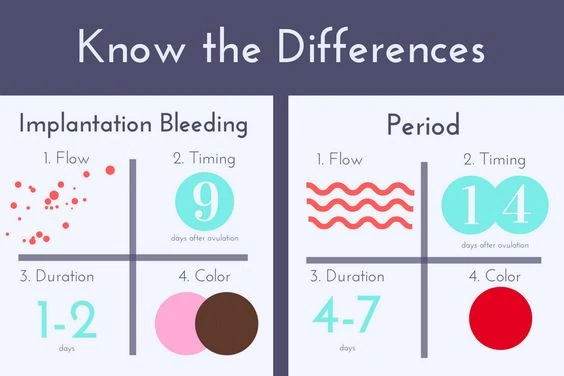
Given its timing, often coinciding with or just before an expected menstrual period, implantation bleeding is frequently mistaken for a light or early period. However, several key distinctions can help women differentiate between the two:
- Color: Implantation bleeding is typically characterized by a light pinkish, reddish-brown, or rust-colored discharge. This contrasts sharply with the brighter red, darker red, or crimson flow commonly associated with a regular menstrual period. The lighter color often indicates older blood or a very small quantity.
- Consistency: The texture of implantation bleeding is generally thin and watery, sometimes appearing as faint streaks. Menstrual blood, conversely, is often thicker and can contain small clots, particularly during heavier flow days.
- Flow and Volume: This is perhaps the most significant differentiator. Implantation bleeding is consistently light, manifesting as spotting or a very scant discharge, typically not enough to fully saturate a sanitary pad or tampon. It usually requires only a panty liner, if anything at all. A menstrual period, by definition, involves a more substantial flow that necessitates the use of sanitary products to manage.
- Duration: Implantation bleeding is transient, lasting anywhere from a few hours to a maximum of three days. It is rarely continuous. A typical menstrual period, however, generally spans three to seven days and follows a more predictable pattern of flow, often starting heavier and gradually tapering off.
- Cramping: While some women report mild, dull, or fluttering cramps during implantation, these are generally much less intense than the rhythmic, often debilitating, uterine contractions experienced during menstruation. The cramping associated with implantation is usually described as a light ache rather than a severe, throbbing pain.
Chronology of Early Pregnancy Events
Understanding the precise timeline from conception to implantation is crucial for discerning the nature of early bleeding:

- Day 0: Fertilization: The moment sperm meets egg, typically in the fallopian tube.
- Days 1-5: Zygote to Blastocyst: The fertilized egg begins rapid division, forming a blastocyst, and travels towards the uterus.
- Days 6-12 (post-fertilization): Implantation Window: The blastocyst reaches the uterus and begins to implant into the endometrial wall. Implantation bleeding, if it occurs, usually happens during this window, specifically around 6-12 days after fertilization. This places it approximately one week before the expected onset of a menstrual period. For example, if ovulation occurred on Day 14 of a 28-day cycle, and fertilization occurred shortly after, implantation might occur around Day 20-26.
- Post-Implantation: hCG Production: Once implantation is complete, the trophoblast cells begin producing human chorionic gonadotropin (hCG), the hormone detected by pregnancy tests. hCG levels double every 48-72 hours, allowing for detection via blood tests within days of implantation and urine tests typically around the time of a missed period.
This chronological framework helps explain why bleeding occurring significantly earlier or later than this window is less likely to be implantation bleeding.
Associated Symptoms and Their Nuances
Beyond the light spotting, several other early pregnancy symptoms may accompany implantation, though it is vital to note that these can also overlap with premenstrual syndrome (PMS) or ovulation signs, leading to further confusion:

- Mild Cramping: As discussed, a subtle, dull ache in the lower abdomen is common. This is distinct from the more intense, localized pain that might signal an ectopic pregnancy or the more generalized discomfort of a miscarriage.
- Breast Tenderness and Swelling: Hormonal shifts, particularly the surge in progesterone and estrogen, can lead to increased sensitivity, soreness, or fullness in the breasts.
- Fatigue: The rapid increase in progesterone levels immediately after conception can induce significant tiredness and a feeling of exhaustion.
- Nausea and Food Aversions: Often referred to as "morning sickness," these symptoms can begin surprisingly early, even before a missed period, driven by rising hCG levels and other hormonal changes.
- Heightened Sense of Smell: Some women report an unusually acute sense of smell, making certain odors unpleasant.
- Mood Swings: The dramatic hormonal fluctuations can impact emotional stability, leading to irritability or heightened emotional responses.
It is crucial for women to remain aware that the presence of these symptoms, even alongside pinkish/brownish spotting, does not definitively confirm pregnancy. A conclusive diagnosis requires a positive pregnancy test and, subsequently, confirmation by a healthcare provider.
When to Be Concerned: Red Flags and Medical Consultation
While implantation bleeding is typically benign, any bleeding during pregnancy, especially beyond the very early stages, warrants attention. Implantation bleeding itself should not be a cause for alarm and poses no risk to the developing embryo. However, if bleeding or spotting persists more than a few days after a missed period, it is unlikely to be implantation bleeding and requires medical evaluation. True pregnancy concerns rarely stem from implantation itself but can arise from other conditions.

Women should seek immediate medical attention if they experience any of the following symptoms:
- Heavy bleeding: A flow that is similar to or heavier than a normal period, especially if it saturates pads or tampons.
- Bright red or dark red blood: This color often indicates active bleeding, which is generally not characteristic of implantation bleeding.
- Passage of clots or tissue: This can be a sign of miscarriage.
- Severe abdominal pain: Especially sharp, persistent, or one-sided pain. This could indicate an ectopic pregnancy, a serious condition where the embryo implants outside the uterus.
- Dizziness or fainting: These, combined with bleeding, could signal significant blood loss or an ectopic pregnancy.
- Bleeding that lasts more than three days or increases in intensity over time.
Other potential causes of early pregnancy bleeding, distinct from implantation, include cervical irritation (e.g., after intercourse or a pelvic exam), vaginal infections, or, in more serious cases, a subchorionic hematoma (a collection of blood between the uterine wall and the chorionic membrane). While at least 50% of women who experience spotting or bleeding (other than implantation bleeding) in early pregnancy go on to have normal, healthy pregnancies, it is imperative to inform an OB/GYN or other healthcare provider about any bleeding, its characteristics, and any accompanying symptoms. This is particularly critical in the second and third trimesters, where bleeding can indicate more serious complications such as placental issues or preterm labor. In any trimester, heavy bleeding necessitates immediate emergency care.
For women experiencing nausea/vomiting, dizziness, and especially one-sided abdominal pain, an ectopic pregnancy must be ruled out immediately. While mild cramping is common in early pregnancy, any increase in pain intensity should prompt a call to a doctor.
The Psychological Landscape: Navigating Hope and Uncertainty
For individuals actively trying to conceive, the appearance of any bleeding can be an emotional rollercoaster. The initial sight of blood might bring disappointment, assuming it signifies the arrival of a period and another failed cycle. However, when the bleeding is lighter and different, it can spark a flicker of hope—could it be implantation bleeding? This period of uncertainty, often lasting a few days, can be emotionally taxing. Access to accurate, clear information is crucial to help manage expectations and reduce anxiety during this sensitive time. Understanding the nuances of implantation bleeding empowers women to interpret their bodily signals with greater clarity, though definitive confirmation ultimately rests with a pregnancy test.

The Role of Pregnancy Tests
Pregnancy tests work by detecting the presence of human chorionic gonadotropin (hCG) in urine or blood. This hormone is produced only after the embryo has successfully implanted in the uterine wall. Therefore, taking a pregnancy test too early, specifically during or immediately after the onset of implantation bleeding, might result in a false negative. The hCG levels may not yet be high enough for detection by most over-the-counter urine tests.
For the most accurate results, it is generally recommended to wait at least three days after any spotting or bleeding has ceased. Ideally, waiting a full week after the expected date of a missed period provides the most reliable window for a home pregnancy test, as hCG levels will have accumulated sufficiently to be detectable. If a woman suspects pregnancy but receives a negative test result, repeating the test a few days later, or consulting a healthcare provider for a blood test (which can detect lower levels of hCG earlier), is advisable.

Expert Perspectives and Recommendations
Medical organizations consistently affirm that implantation bleeding is a normal physiological occurrence and generally not a cause for concern. The American College of Obstetricians and Gynecologists (ACOG) and the March of Dimes highlight the variety of early pregnancy symptoms and the importance of professional medical guidance for any unusual bleeding. They emphasize that while many instances of light spotting are benign, a healthcare provider should always be informed to rule out more serious conditions. The American Pregnancy Association, through its resources and helpline, provides valuable support and information to women navigating these early stages of pregnancy, underscoring the importance of informed decision-making and timely medical consultation when necessary.
In conclusion, implantation bleeding stands as a unique and often bewildering phenomenon in the journey of early pregnancy. Characterized by its light, typically pinkish or brownish hue, scant flow, and short duration, it is a normal, non-threatening sign for approximately one-third of pregnant women. While it can mimic a light menstrual period, understanding its specific characteristics and timing relative to conception is key to differentiation. However, any bleeding during pregnancy that is heavy, bright red, prolonged, or accompanied by severe pain or other concerning symptoms should prompt immediate medical evaluation to ensure maternal and fetal well-being.
